Style combination · Pairs well
Andean Woven Graphic Systems × Bitmap
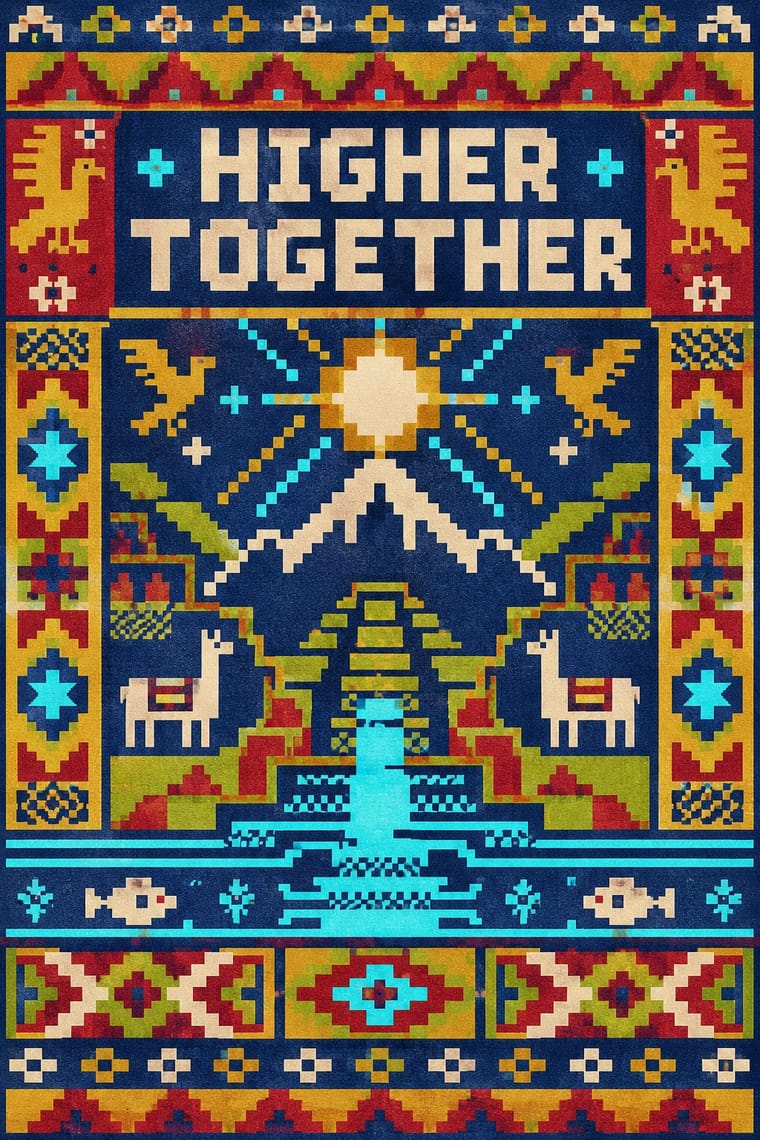
Woven cells and pixels are the same constraint; build icons and letters on a strict square grid with stepped diagonals, and credit the weaving source when you borrow its logic.
The woven cell of Andean tapestry is a pre-digital pixel grid; draw pixel icons with its stepped diagonals, but credit weaving communities rather than copying their motifs.
Mix them and make something Andean Woven Graphic Systems Bitmap
01
What each style brings
Each part of the design comes from the style with the stronger say in it, and each style gives at least two.
Andean Woven Graphic Systems Bitmap & Pixel Graphics
- Type from Bitmap
- Colour from Andean Woven Graphic Systems
- Form from Andean Woven Graphic Systems
- Composition from Andean Woven Graphic Systems
- Surface from Bitmap
02
The type
Open fonts standing in for each style’s own type, which is often hand-drawn or commercial.
Text · Andean Woven Graphic Systems
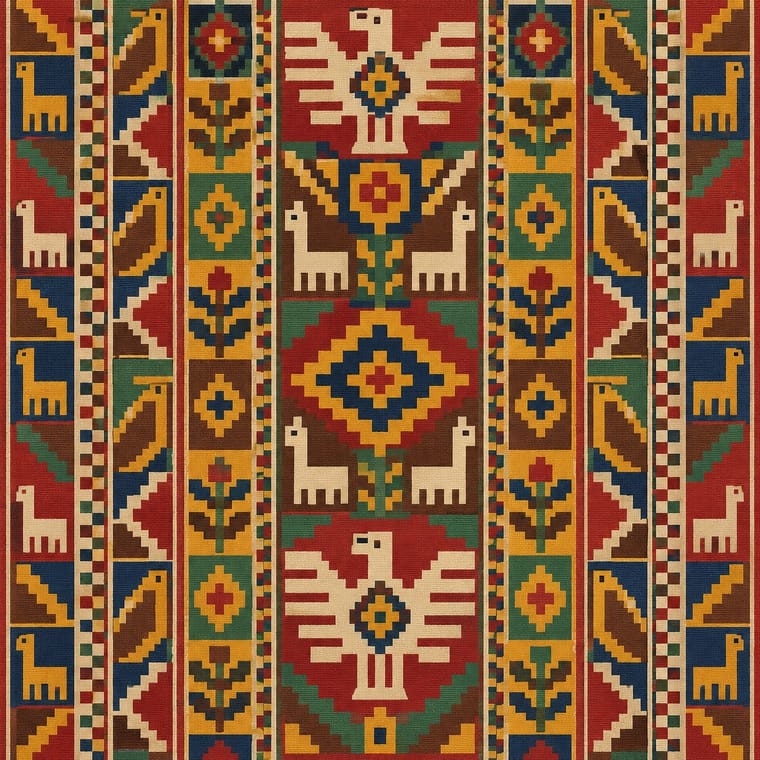
The graphic systems of Andean cloth, the region's most prestigious medium, in which every motif is built on the warp-and-weft grid. Wari tapestry tunics repeat staff-bearers and profile heads in columns, compressing and rotating them toward the edges until figure turns into geometry. Inca state cloth reduced design to t'oqapu, square cells of geometric signs granted as marks of rank, and living Quechua and Aymara weaving bands named pallay motifs between stripes.
Fira Sans; Andean Woven Graphic Systems used T'oqapu cells as a sign set standing where lettering would and Grid-built letterforms that share the woven cell, such as bitmap faces like Silkscreen
03
The colours
The ground and leading colours come from Andean Woven Graphic Systems, with a counter-accent from Bitmap. The ink reads on the ground at 4.5:1 or more.
Andean Woven Graphic Systems Bitmap & Pixel Graphics
-
#24345cground · 36% -
#ece3cfink · 14% -
#d9a62eaccent · 18% -
#9bbc0faccent · 14% -
#a3262aaccent · 10% -
#55ffffaccent · 8%
As CSS
:root {
  --ground: #24345c;
  --ink: #ece3cf;
  --accent-1: #d9a62e;
  --accent-2: #9bbc0f;
  --accent-3: #a3262a;
  --accent-4: #55ffff;
  --font-display: "Pixelify Sans", monospace;
  --font-text: "Fira Sans", sans-serif;
}
Use it with care
Andean Woven Graphic Systems: Andean textile motifs are living cultural property: pallay designs are named and taught within particular Quechua and Aymara communities, regional styles such as Jalq'a and Tarabuco mark community identity, and Inca t'oqapu were state-controlled insignia of rank. Do not lift motifs from museum tunics or market weavings onto products as generic 'Inca pattern'. Commission weavers through community-run organisations such as the Center for Traditional Textiles of Cusco, pay and credit them, and record which community each motif comes from.
04
The two styles
05
More combinations
With Andean Woven Graphic Systems
- Adinkra & Kente Symbol Systems Contrasts · Adinkra stamps named symbols into ruled squares and kente joins woven strips, whereas Andean cells are woven into one garment and distorted toward its edges; keep the two languages distinct.
- Brazilian Concrete Design Pairs well · Both vary a single module serially; apply the Wari rule of rotating and compressing one unit across a field to a systematic poster or identity.
- Islamic Geometric & Calligraphic Tradition Contrasts · Islamic pattern interlaces stars around radial centres while Andean geometry is orthogonal, stepped and deliberately irregular; choose one as the structural logic rather than blending them.
- Diné (Navajo) Weaving Design Contrasts · Both build stepped geometry on the thread grid. Andean cloth repeats and distorts a figure across cells and columns, while a Diné rug is one planned symmetrical field around a centre, so choose one structural logic.
- Mixteca-Puebla Codex Painting Contrasts · Andean signs are built on the thread grid and repeated as pattern, while codex signs are painted freely in contour and strung along a narrative path; do not merge the two as generic 'pre-Columbian'.
- Square Kufic (Bannāʾī) Contrasts · T'oqapu also fill square cells on a grid, but with signs of rank rather than legible words; compare them to see how a grid can carry writing or emblem, and never blend the two sacred systems into a generic 'geometric' pattern.
With Bitmap
- Skeuomorphic UI Contrasts · Photoreal leather and glass are the opposite pole of 1-bit honesty; jump from one to the other to tell a story of interface history.
- International Typographic Style Pairs well · Snap pixel type and icons to a strict Swiss grid for a rational, screen-native take on modernist order.
- Art Nouveau Contrasts · Whiplash curves cannot survive a coarse pixel grid; staging that clash makes a memorable, deliberately jagged ornament.
- Kawaii Design Pairs well · Sprite-scale characters and kawaii roundness merge naturally; keep the palette limited so pixel mascots stay crisp.
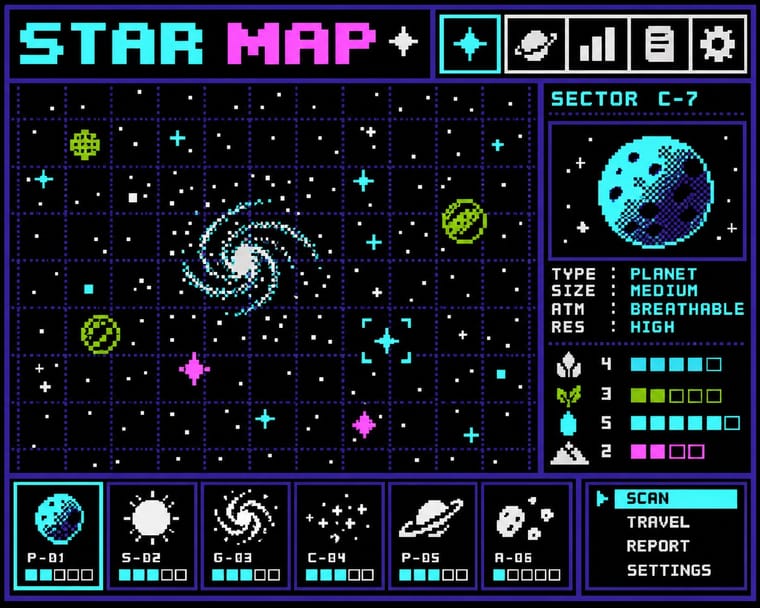
- Demoscene Graphics (Cracktros, Demos & Text-Mode Art) Contrasts · Bitmap graphics is the legible, flat pixel of icons, sprites and system fonts; scene graphics spend the same pixels on chrome, gradients and motion for show. Pick the icon grid for an interface and the scene logo for a title screen.
- Square Kufic (Bannāʾī) Pairs well · Both build letters from square units, and Sakkal compares building bricks to large pixels; set a bitmap Latin wordmark on the same cell size as a square-Kufic mark for a bilingual identity, but keep sacred formulas out of jokey, game-like pixel contexts.
- Isometric Pixel Art Contrasts · Same hand-placed pixels, but front-on icons and sprites under hardware limits against a crammed, full-colour 2:1 city made as a picture.
- Diné (Navajo) Weaving Design Pairs well · The weft step and the pixel are the same constraint. Draw icons and letters with stepped diagonals on a square grid, and credit the weaving logic rather than lifting particular rug designs.