Style combination · Contrasts
Andean Woven Graphic Systems × Mixteca-Puebla Codex Painting
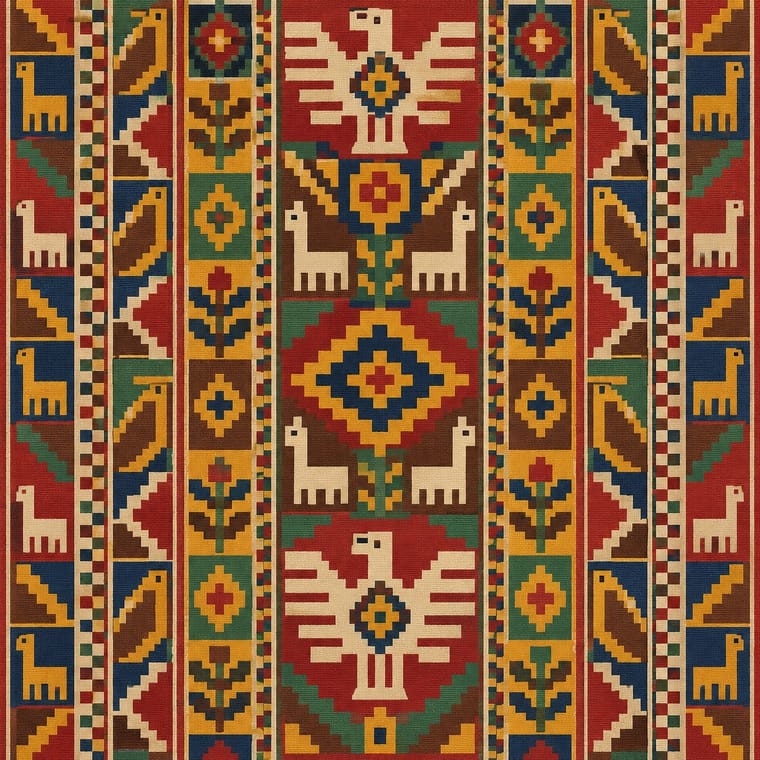
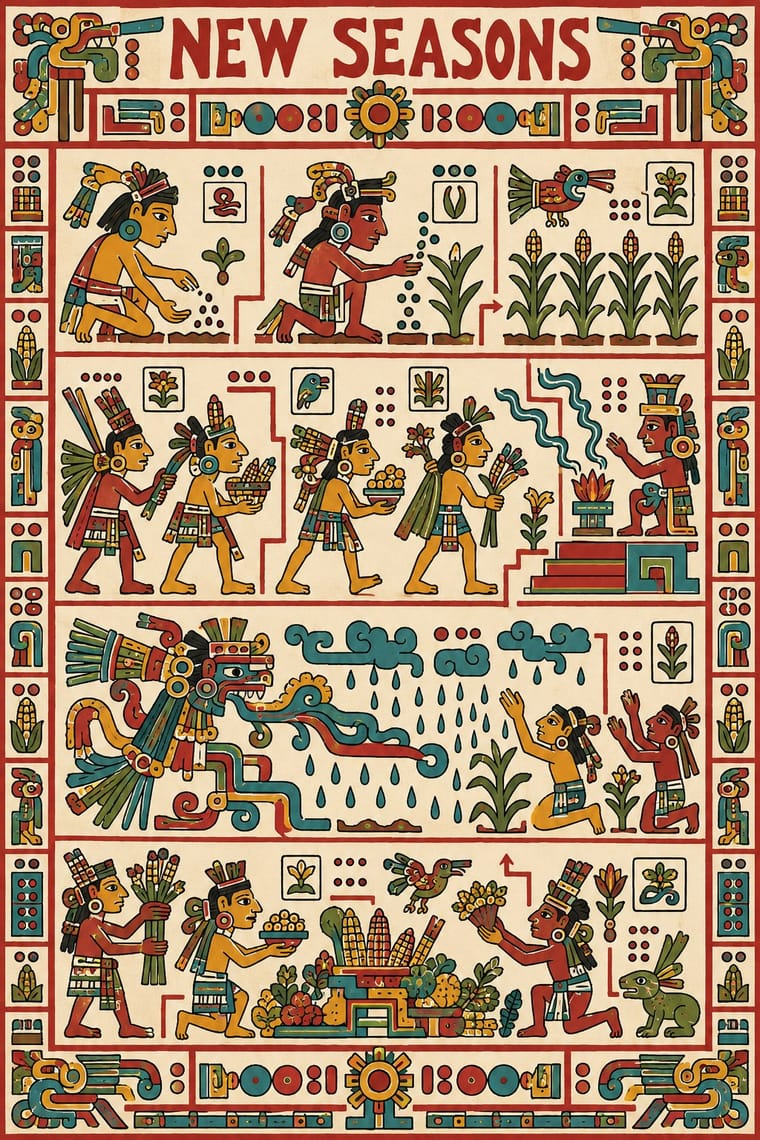
Andean signs are built on the thread grid and repeated as pattern, while codex signs are painted freely in contour and strung along a narrative path; do not merge the two as generic 'pre-Columbian'.
Mix them and make something Andean Woven Graphic Systems Mixteca-Puebla Codex Painting
01
What each style brings
Each part of the design comes from the style with the stronger say in it, and each style gives at least two.
Andean Woven Graphic Systems Mixteca-Puebla Codex Painting
- Type from Mixteca-Puebla Codex Painting
-
- Colour from Mixteca-Puebla Codex Painting
- Form from Andean Woven Graphic Systems
- Composition from Andean Woven Graphic Systems
- Surface from Andean Woven Graphic Systems
02
The type
Open fonts standing in for each style’s own type, which is often hand-drawn or commercial.
Display · Mixteca-Puebla Codex Painting
Public
Fira Sans, standing in for For accompanying text, a sturdy humanist sans with full diacritic support (e.g. Noto Sans) for Spanish and Mixtec (Tu'un Savi) orthographies, never a novelty 'Aztec' display font
Text · Mixteca-Puebla Codex Painting
The painted screenfold books of Postclassic southern and central Mexico (not the Maya codices): long strips of gesso-coated deerskin, folded like a screen and painted on both sides. In the Mixtec histories red guidelines lead the reader in a zigzag through the deeds and marriages of rulers; in the divinatory Borgia Group, pages pair deities with periods of the 260-day count. Profile figures with large heads, glyphs for names, dates and places, and flat colour inside an even black contour make picture and writing one codified system.
Fira Sans; Mixteca-Puebla Codex Painting used Calendar-name glyphs and Place signs, most built on a hill glyph that carries the attributes naming the town
03
The colours
The ground and leading colours come from Mixteca-Puebla Codex Painting, with a counter-accent from Andean Woven Graphic Systems. The ink reads on the ground at 4.5:1 or more.
Andean Woven Graphic Systems Mixteca-Puebla Codex Painting
-
#f1ead8ground · 36% -
#1a1714ink · 14% -
#d49a2aaccent · 18% -
#b22a2aaccent · 14% -
#3f8f97accent · 10% -
#6f7a34accent · 8%
As CSS
:root {
  --ground: #f1ead8;
  --ink: #1a1714;
  --accent-1: #d49a2a;
  --accent-2: #b22a2a;
  --accent-3: #3f8f97;
  --accent-4: #6f7a34;
  --font-display: "Fira Sans", sans-serif;
  --font-text: "Fira Sans", sans-serif;
}
Use it with care
Andean Woven Graphic Systems: Andean textile motifs are living cultural property: pallay designs are named and taught within particular Quechua and Aymara communities, regional styles such as Jalq'a and Tarabuco mark community identity, and Inca t'oqapu were state-controlled insignia of rank. Do not lift motifs from museum tunics or market weavings onto products as generic 'Inca pattern'. Commission weavers through community-run organisations such as the Center for Traditional Textiles of Cusco, pay and credit them, and record which community each motif comes from.
Mixteca-Puebla Codex Painting: These books are Indigenous sacred and dynastic records: Mixtec speakers called them ñee ñuhu, 'sacred skins'; the Borgia Group almanacs set out deities and the ritual 260-day count, and the Mixtec histories record the genealogies of ruling houses whose Ñuu Dzaui (Mixtec) descendants live in Oaxaca, Puebla, Guerrero and the diaspora today. Almost all surviving books left Mexico during the conquest, the colonial period or the nineteenth century and are now in European libraries and museums; the Codex Colombino in Mexico City is a rare exception. 'Mixteca-Puebla' itself is an archaeologists' label, not a name the painters used: George Vaillant described a Mixteca-Puebla 'culture' or 'civilization', H. B. Nicholson redefined it as a style shared by Nahua and Mixtec artists, and its questions remain open. Do not lift deities, calendar signs or named rulers as decoration, logos or generic 'Aztec pattern', never invent pseudo-glyphs or present generated pages as historical, and work with Mixtec and Nahua scholars, artists and communities, crediting the codex and its people.
04
The two styles
05
More combinations
With Andean Woven Graphic Systems
- Bitmap & Pixel Graphics Pairs well · Woven cells and pixels are the same constraint; build icons and letters on a strict square grid with stepped diagonals, and credit the weaving source when you borrow its logic.
- Adinkra & Kente Symbol Systems Contrasts · Adinkra stamps named symbols into ruled squares and kente joins woven strips, whereas Andean cells are woven into one garment and distorted toward its edges; keep the two languages distinct.
- Brazilian Concrete Design Pairs well · Both vary a single module serially; apply the Wari rule of rotating and compressing one unit across a field to a systematic poster or identity.
- Islamic Geometric & Calligraphic Tradition Contrasts · Islamic pattern interlaces stars around radial centres while Andean geometry is orthogonal, stepped and deliberately irregular; choose one as the structural logic rather than blending them.
- Diné (Navajo) Weaving Design Contrasts · Both build stepped geometry on the thread grid. Andean cloth repeats and distorts a figure across cells and columns, while a Diné rug is one planned symmetrical field around a centre, so choose one structural logic.
- Square Kufic (Bannāʾī) Contrasts · T'oqapu also fill square cells on a grid, but with signs of rank rather than legible words; compare them to see how a grid can carry writing or emblem, and never blend the two sacred systems into a generic 'geometric' pattern.
With Mixteca-Puebla Codex Painting
- Chicano Screenprint Poster Pairs well · Chicano screenprinters reclaimed Mexica glyphs and calendar imagery for the movement; when contour-and-flat-colour glyphs meet a modern poster, follow their example of community context and credit. Mexica (Aztec) glyphs are a different source from these Mixtec and Borgia Group books: credit a codex source as such rather than folding it into 'Aztec'.
- Northwest Coast Formline Design Contrasts · Both are Indigenous American sign systems of contour and flat colour, but formline swells and tapers its line into ovoids and U-forms in symmetric crests, while the codex keeps an even, unmodulated contour around profile figures strung along a guided reading path; do not merge them as generic 'Native' art.
- Ligne Claire (Franco-Belgian Clear Line) Pairs well · Both keep a sequential story readable with an even, unmodulated contour and flat colour, without hatching or modelling; borrow the codex's red-guideline reading path for a clear-line page, as a formal analogy rather than a lineage.
- Isotype Pictorial Statistics Pairs well · Both tell information through standardised, repeatable signs and count by repeating units; codex day signs with counting dots are a precedent for pictogram-plus-number systems.
- Mexican Popular Graphics (Posada) Contrasts · Posada's broadsheets carve tone and texture into relief blocks under shouting type, whereas codex painting has no tone at all, only contour and flat colour; keep them apart when the brief just says 'Mexican'.
- Burmese Parabaik Painting (Konbaung Folding Books) Contrasts · Both are screenfold books, but the Mixtec codex reads glyphic figures along red guide-lines on flat colour, while the parabaik frames painted, captioned scenes with European depth.
- Ancient Egyptian Hieroglyphic & Register Composition Contrasts · Both are sacred pictorial records in contour and flat colour with no depth, but Mixtec screenfolds lead the eye in a zigzag along red guidelines past big-headed figures and name glyphs, while Egyptian pages keep strict horizontal registers and ruled columns of a largely phonetic script, with figures sized by rank and drawn to a canon; do not merge them as generic 'ancient glyphs'.