Style combination · Contrasts
Andean Woven Graphic Systems × Islamic Geometric
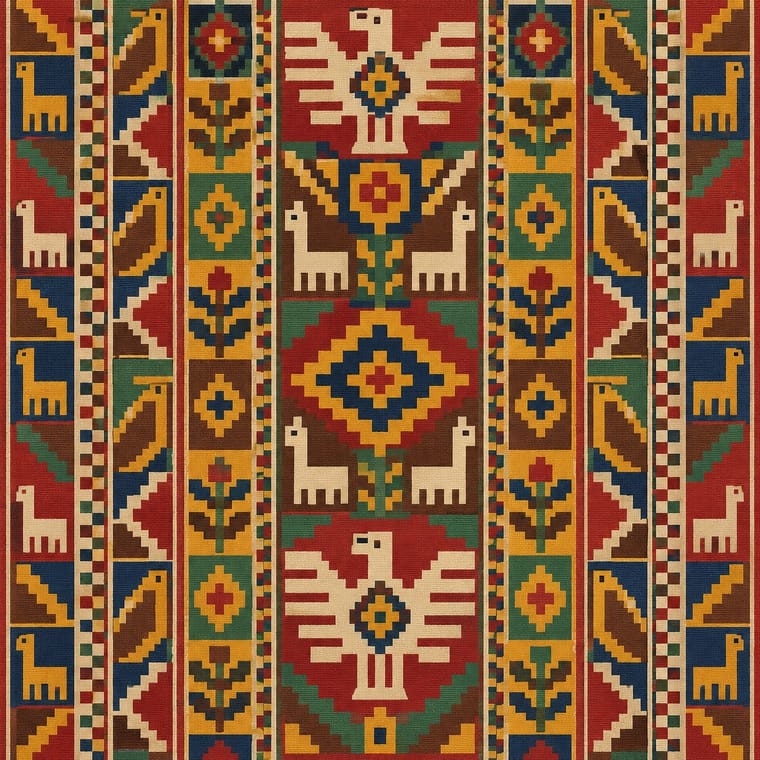
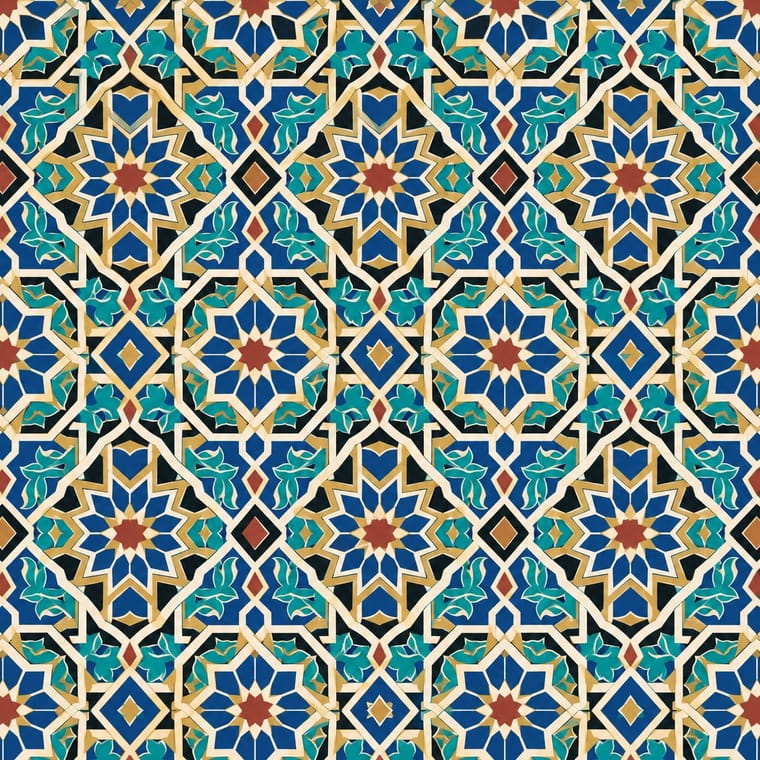
Islamic pattern interlaces stars around radial centres while Andean geometry is orthogonal, stepped and deliberately irregular; choose one as the structural logic rather than blending them.
Mix them and make something Andean Woven Graphic Systems Islamic Geometric
01
What each style brings
Each part of the design comes from the style with the stronger say in it, and each style gives at least two.
Andean Woven Graphic Systems Islamic Geometric & Calligraphic Tradition
- Type from Islamic Geometric
- Colour from Andean Woven Graphic Systems
- Form from Islamic Geometric
- Composition from Andean Woven Graphic Systems
- Surface from Andean Woven Graphic Systems
02
The type
Open fonts standing in for each style’s own type, which is often hand-drawn or commercial.
Text · Andean Woven Graphic Systems
The graphic systems of Andean cloth, the region's most prestigious medium, in which every motif is built on the warp-and-weft grid. Wari tapestry tunics repeat staff-bearers and profile heads in columns, compressing and rotating them toward the edges until figure turns into geometry. Inca state cloth reduced design to t'oqapu, square cells of geometric signs granted as marks of rank, and living Quechua and Aymara weaving bands named pallay motifs between stripes.
Fira Sans; Andean Woven Graphic Systems used T'oqapu cells as a sign set standing where lettering would and Grid-built letterforms that share the woven cell, such as bitmap faces like Silkscreen
03
The colours
The ground and leading colours come from Andean Woven Graphic Systems, with a counter-accent from Islamic Geometric. The ink reads on the ground at 4.5:1 or more.
Andean Woven Graphic Systems Islamic Geometric & Calligraphic Tradition
-
#24345cground · 36% -
#ece3cfink · 14% -
#d9a62eaccent · 18% -
#a3262aaccent · 14% -
#3d6b4aaccent · 10% -
#2a9d9baccent · 8%
As CSS
:root {
  --ground: #24345c;
  --ink: #ece3cf;
  --accent-1: #d9a62e;
  --accent-2: #a3262a;
  --accent-3: #3d6b4a;
  --accent-4: #2a9d9b;
  --font-display: "Reem Kufi", cursive;
  --font-text: "Fira Sans", sans-serif;
}
Use it with care
Andean Woven Graphic Systems: Andean textile motifs are living cultural property: pallay designs are named and taught within particular Quechua and Aymara communities, regional styles such as Jalq'a and Tarabuco mark community identity, and Inca t'oqapu were state-controlled insignia of rank. Do not lift motifs from museum tunics or market weavings onto products as generic 'Inca pattern'. Commission weavers through community-run organisations such as the Center for Traditional Textiles of Cusco, pay and credit them, and record which community each motif comes from.
Islamic Geometric & Calligraphic Tradition: Qur'anic verses, the names of God and the Prophet and other sacred phrases must not be cropped, distorted, mirrored, used as texture or printed on floors, footwear or throwaway packaging; have any Arabic-script text read and approved by a fluent reader or calligrapher. Abstract geometric pattern is far less sensitive than script, but credit the traditions and makers it comes from.
04
The two styles
05
More combinations
With Andean Woven Graphic Systems
- Bitmap & Pixel Graphics Pairs well · Woven cells and pixels are the same constraint; build icons and letters on a strict square grid with stepped diagonals, and credit the weaving source when you borrow its logic.
- Adinkra & Kente Symbol Systems Contrasts · Adinkra stamps named symbols into ruled squares and kente joins woven strips, whereas Andean cells are woven into one garment and distorted toward its edges; keep the two languages distinct.
- Brazilian Concrete Design Pairs well · Both vary a single module serially; apply the Wari rule of rotating and compressing one unit across a field to a systematic poster or identity.
- Diné (Navajo) Weaving Design Contrasts · Both build stepped geometry on the thread grid. Andean cloth repeats and distorts a figure across cells and columns, while a Diné rug is one planned symmetrical field around a centre, so choose one structural logic.
- Mixteca-Puebla Codex Painting Contrasts · Andean signs are built on the thread grid and repeated as pattern, while codex signs are painted freely in contour and strung along a narrative path; do not merge the two as generic 'pre-Columbian'.
- Square Kufic (Bannāʾī) Contrasts · T'oqapu also fill square cells on a grid, but with signs of rank rather than legible words; compare them to see how a grid can carry writing or emblem, and never blend the two sacred systems into a generic 'geometric' pattern.
With Islamic Geometric
- International Typographic Style Contrasts · Drop one tessellated panel into an asymmetric Swiss grid to make the tension between infinite pattern and white space the subject.
- Art Deco Pairs well · Borrow star polygons and stepped borders for Deco-style framing; both depend on strict symmetry and metallic accents.
- Iranian Modernist Graphic Design Pairs well · Set one calligraphic word or a fragment of girih against flat colour and a modernist grid instead of reproducing whole tile panels.
- Armenian Manuscript Illumination Contrasts · Horseshoe arches and vegetal and geometric ornament are shared, but the Islamic geometric tradition keeps its arches and fields aniconic, while Armenian books fill the same arches with birds, beasts and painted saints; choose whether a frame should carry figures or only pattern.
- Kamon (Japanese Family Crests) Contrasts · Both are built with compass and straight edge, but girih tiles the whole surface without end while a mon closes one motif inside a ring; borrow the tessellation for a ground and the crest for the single sign on it.
- Baghdad School of Arab Book Painting (Maqamat Illustration) Contrasts · Non-figural Islamic art is the contrast: this style puts people and satire where geometry would be. No descent is implied.
- Ethiopian Ge'ez Manuscript & Haräg Illumination Pairs well · Haräg interlace and Islamic strapwork share frame-and-band logic; compare them for headpieces, but keep the Ethiopian bands varied rather than strictly tiled.
- Batik Pattern Tradition Pairs well · Coastal batik already absorbs Arabic script and geometric lattices; combine the two for pattern that is both structured and hand-made.