Style combination · Pairs well
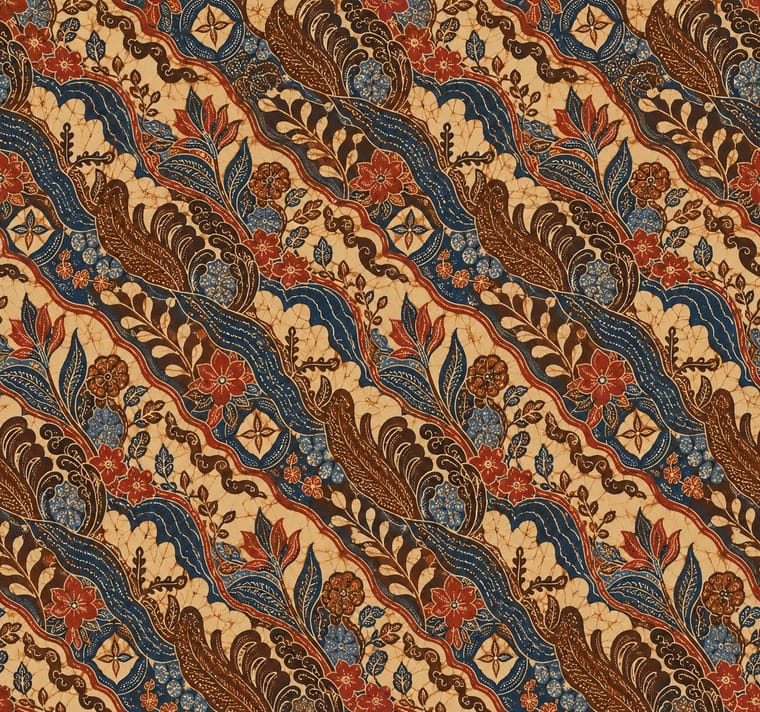
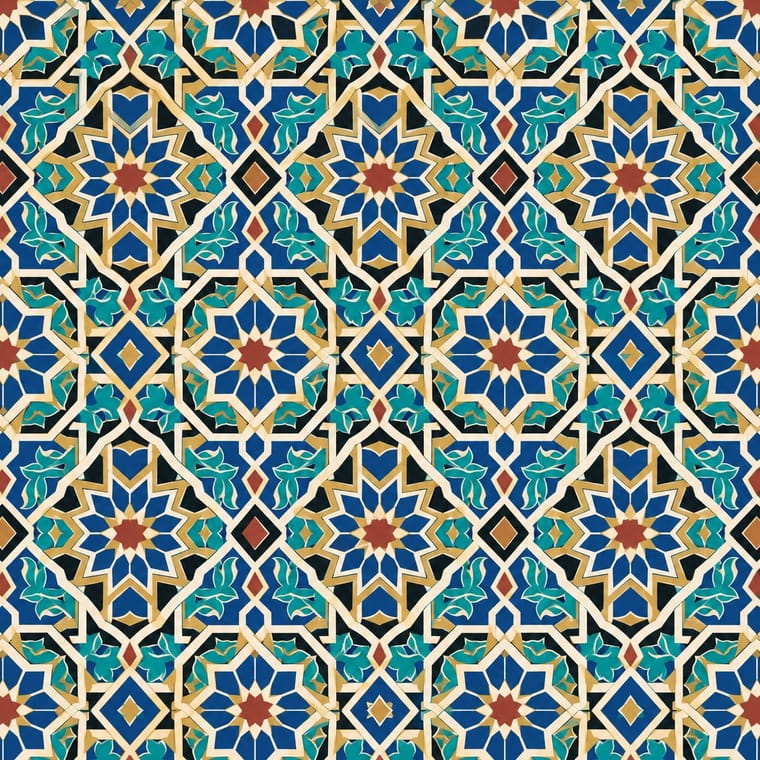
Batik Pattern Tradition × Islamic Geometric
Coastal batik already absorbs Arabic script and geometric lattices; combine the two for pattern that is both structured and hand-made.
Mix them and make something Batik Pattern Tradition Islamic Geometric
01
What each style brings
Each part of the design comes from the style with the stronger say in it, and each style gives at least two.
Batik Pattern Tradition Islamic Geometric & Calligraphic Tradition
- Type from Islamic Geometric
- Colour from Batik Pattern Tradition
- Form from Islamic Geometric
- Composition from Batik Pattern Tradition
- Surface from Batik Pattern Tradition
02
The type
Open fonts standing in for each style’s own type, which is often hand-drawn or commercial.
Text · Batik Pattern Tradition
The Javanese wax-resist textile tradition in which hot wax is drawn with a canting or stamped with a copper cap, then dyed in successive baths to build layered all-over patterns. Court batik of Yogyakarta and Surakarta keeps to indigo, soga brown and cream with diagonal parang and four-lobed kawung repeats; north-coast batik absorbs Chinese, Dutch and Arab motifs in brighter colour.
EB Garamond; Batik Pattern Tradition used Arabic calligraphy of batik besurek (Bengkulu) and Cirebon and Signed Latin script of batik Belanda workshops
03
The colours
The ground and leading colours come from Batik Pattern Tradition, with a counter-accent from Islamic Geometric. The ink reads on the ground at 4.5:1 or more.
Batik Pattern Tradition Islamic Geometric & Calligraphic Tradition
-
#2a1c14ground · 36% -
#ecdcbcink · 14% -
#a6322baccent · 18% -
#c8a046accent · 14% -
#2c6aa0accent · 10% -
#6b3e1eaccent · 8%
As CSS
:root {
  --ground: #2a1c14;
  --ink: #ecdcbc;
  --accent-1: #a6322b;
  --accent-2: #c8a046;
  --accent-3: #2c6aa0;
  --accent-4: #6b3e1e;
  --font-display: "Reem Kufi", cursive;
  --font-text: "EB Garamond", serif;
}
Use it with care
Batik Pattern Tradition: Batik is inscribed by UNESCO as Indonesian intangible cultural heritage (2009), and some court motifs such as parang rusak were historically reserved for royalty and carry philosophical meanings. Learn a motif's meaning before using it, credit the region and makers, and do not market printed batik-look fabric as hand-drawn or stamped batik.
Islamic Geometric & Calligraphic Tradition: Qur'anic verses, the names of God and the Prophet and other sacred phrases must not be cropped, distorted, mirrored, used as texture or printed on floors, footwear or throwaway packaging; have any Arabic-script text read and approved by a fluent reader or calligrapher. Abstract geometric pattern is far less sensitive than script, but credit the traditions and makers it comes from.
04
The two styles
05
More combinations
With Batik Pattern Tradition
- Minimalist Graphic Design Contrasts · Crop a single batik motif onto a large empty field to show its line quality instead of drowning a minimal layout in pattern.
- Art Nouveau Pairs well · Dutch Nieuwe Kunst designers such as Chris Lebeau worked in batik; pair its vegetal repeats with Art Nouveau linework for book covers and textiles.
- Psychedelic Poster Pairs well · Crackle texture and layered dyes suit psychedelic colour; keep batik's dense all-over repeat as the structure underneath.
- Guna Mola Contrasts · Batik builds pattern by resist-dyeing, molas by cutting and sewing; never render a mola as a printed texture, because the stepped, stitched edge is the whole point.
- Nieuwe Kunst (Dutch Art Nouveau) Pairs well · Its direct source: Dutch designers used wax-resist dyeing for covers in cotton, velvet and parchment; pair a constructed Nieuwe Kunst repeat with real batik colour layering, and credit the Javanese craft.
- Javanese Wayang Kulit (Tatah Sungging) Pairs well · Both are court arts of Yogyakarta and Surakarta; set one coded figure against batik's all-over repeat to pair a single focus with a patterned field.
- Mithila (Madhubani) Painting Contrasts · Batik spreads a resist-dyed repeat evenly across cloth; Mithila builds a unique, hand-drawn composition around a centre and closes it with borders. Borrow one or the other, not both, to keep pattern and picture distinct.
- African Wax & Fancy Print Pairs well · Set hand-drawn Javanese batik beside its industrial descendant to show resist turning into mass repeat, crackle and giant scale.
With Islamic Geometric
- International Typographic Style Contrasts · Drop one tessellated panel into an asymmetric Swiss grid to make the tension between infinite pattern and white space the subject.
- Art Deco Pairs well · Borrow star polygons and stepped borders for Deco-style framing; both depend on strict symmetry and metallic accents.
- Iranian Modernist Graphic Design Pairs well · Set one calligraphic word or a fragment of girih against flat colour and a modernist grid instead of reproducing whole tile panels.
- Armenian Manuscript Illumination Contrasts · Horseshoe arches and vegetal and geometric ornament are shared, but the Islamic geometric tradition keeps its arches and fields aniconic, while Armenian books fill the same arches with birds, beasts and painted saints; choose whether a frame should carry figures or only pattern.
- Kamon (Japanese Family Crests) Contrasts · Both are built with compass and straight edge, but girih tiles the whole surface without end while a mon closes one motif inside a ring; borrow the tessellation for a ground and the crest for the single sign on it.
- Baghdad School of Arab Book Painting (Maqamat Illustration) Contrasts · Non-figural Islamic art is the contrast: this style puts people and satire where geometry would be. No descent is implied.
- Ethiopian Ge'ez Manuscript & Haräg Illumination Pairs well · Haräg interlace and Islamic strapwork share frame-and-band logic; compare them for headpieces, but keep the Ethiopian bands varied rather than strictly tiled.
- Andean Woven Graphic Systems Contrasts · Islamic pattern interlaces stars around radial centres while Andean geometry is orthogonal, stepped and deliberately irregular; choose one as the structural logic rather than blending them.