Style combination · Pairs well
Guochao × Nianhua
Redraw door gods, carp and auspicious babies as clean vector characters for limited-edition packaging, keeping each rebus's meaning intact.
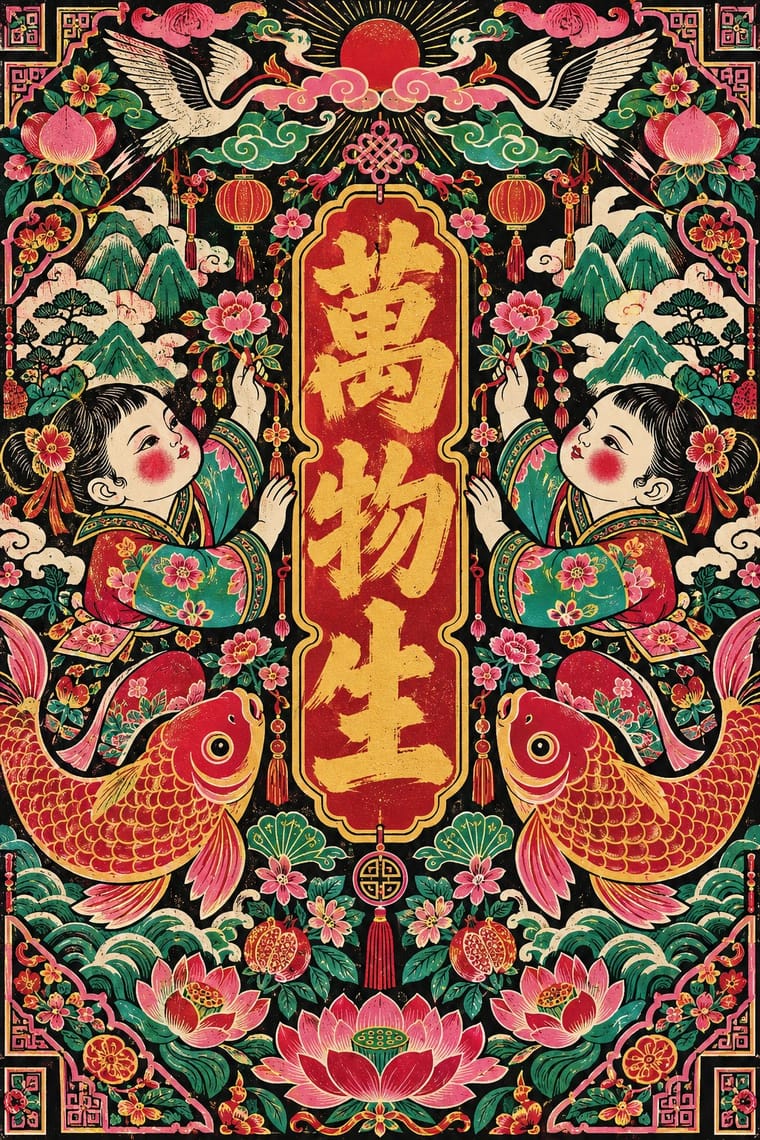
01
What each style brings
Each part of the design comes from the style with the stronger say in it, and each style gives at least two.
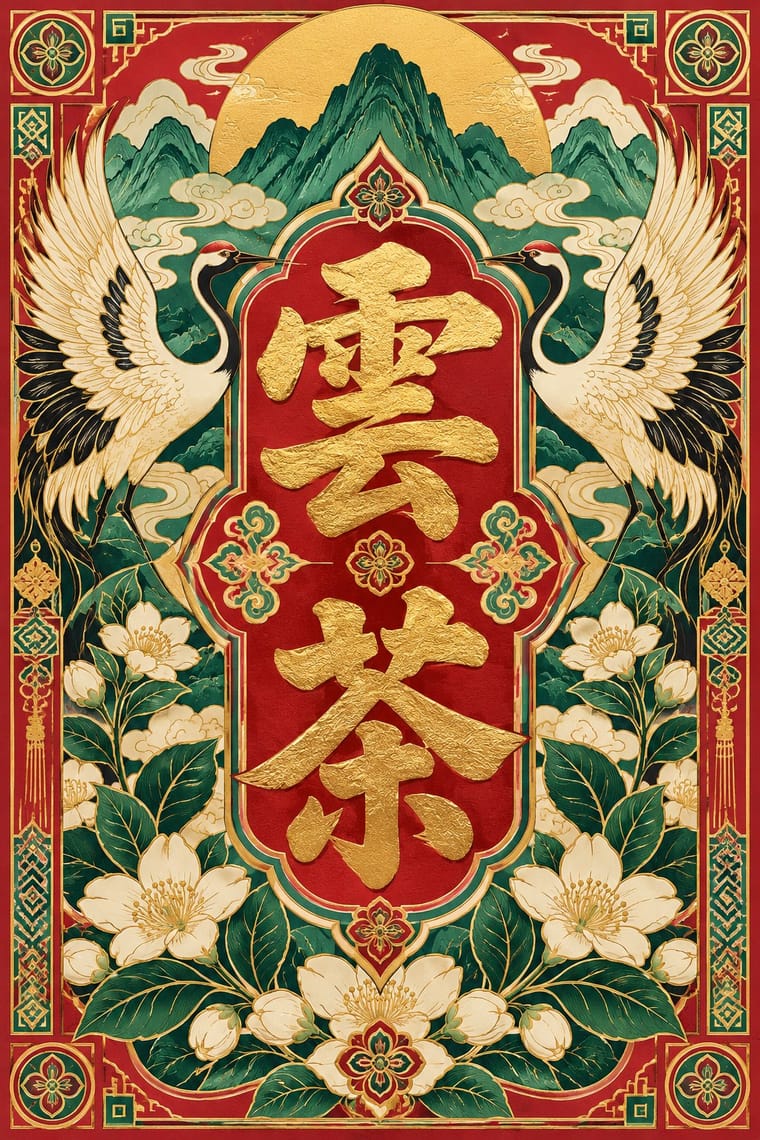
Guochao (China-Chic National Trend) Nianhua & Chinese Folk Print
- Type from Guochao
- Colour from Guochao
- Form from Nianhua
- Composition from Nianhua
- Surface from Nianhua
02
The type
Open fonts standing in for each style’s own type, which is often hand-drawn or commercial.
Display · Guochao
Hello
Kaushan Script, standing in for Bold brush calligraphy (kaishu and xingshu) for hero characters
Text · Nianhua
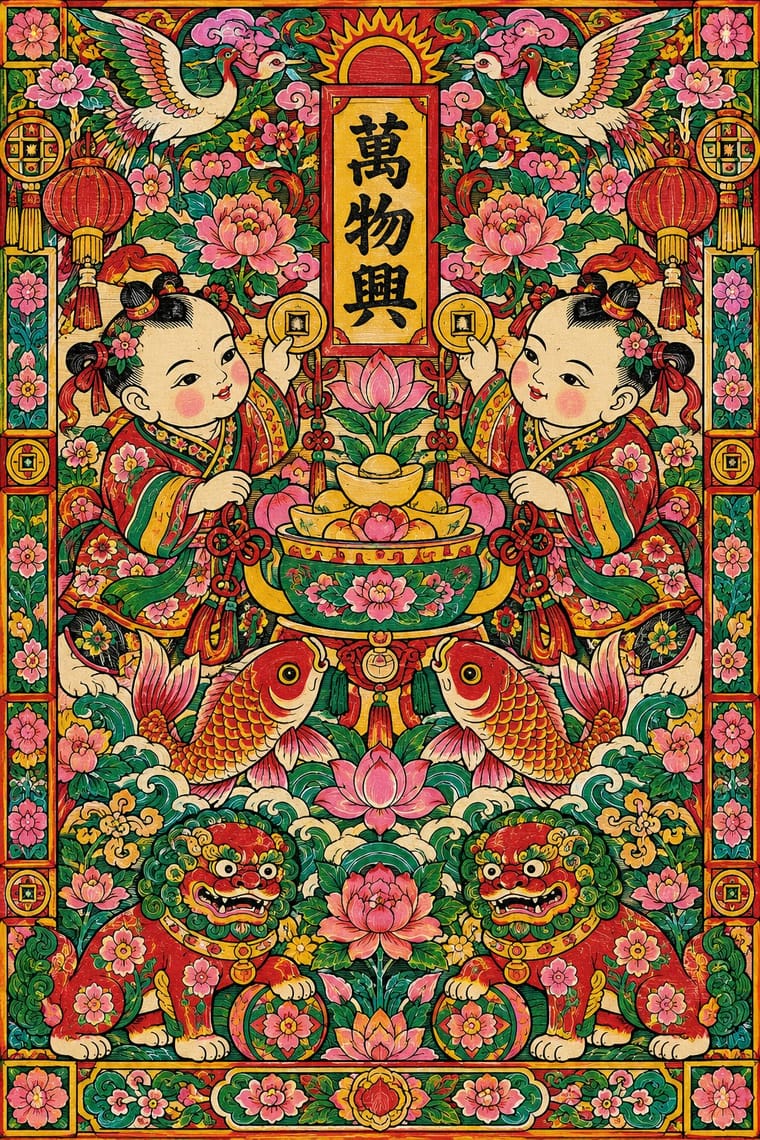
Woodblock pictures bought each New Year and pasted on doors, walls and kitchen shrines to invite luck and ward off harm: paired door gods, plump babies with carp, the Kitchen God, opera scenes and auspicious rebuses. A black keyline block is overprinted or hand-coloured in saturated red, green, yellow and pink, and compositions are dense, frontal and often mirrored in pairs.
Shippori Mincho; Nianhua used Kaishu and Lishu (clerical script) for auspicious couplets
03
The colours
The ground and leading colours come from Guochao, with a counter-accent from Nianhua. The ink reads on the ground at 4.5:1 or more.
Guochao (China-Chic National Trend) Nianhua & Chinese Folk Print
-
#161616ground · 36% -
#f3ead8ink · 14% -
#e3b33baccent · 18% -
#b8232faccent · 14% -
#3c8d72accent · 10% -
#e5739aaccent · 8%
As CSS
:root {
  --ground: #161616;
  --ink: #f3ead8;
  --accent-1: #e3b33b;
  --accent-2: #b8232f;
  --accent-3: #3c8d72;
  --accent-4: #e5739a;
  --font-display: "Kaushan Script", cursive;
  --font-text: "Shippori Mincho", serif;
}
Use it with care
Guochao (China-Chic National Trend): Guochao often lifts ethnic-minority crafts (Miao silverwork and embroidery, Dai and Mongolian motifs) and intangible-heritage techniques as packaging finishes. Credit and pay the communities and craftspeople whose patterns are used, commission or collaborate with practitioners rather than copying motifs, and remember that dragons, imperial yellow and national symbols carry political as well as decorative meaning.
04
The two styles
05
More combinations
With Guochao
- Graffiti & Hip-Hop Graphics Pairs well · Guochao's streetwear wing already borrows hip-hop lockups; treat a brush character as the tag and keep the heritage palette.
- DTC 'Blanding' / Millennial Minimalism Contrasts · Western direct-to-consumer brands strip identity to pastel sans-serif minimalism; guochao sells ornament and heritage instead, so use one to test the other.
- Shanghai Modern & Yuefenpai Pairs well · Republican-era meishuzi lettering and calendar-poster borders give guochao packaging period depth beyond imperial red and gold.
- Dazibao (Big-Character Posters) Contrasts · Both make huge characters the whole message; compare the handwritten political urgency of the big-character poster with guochao's polished commercial heritage.
- Contemporary Chinese Book Design ('Most Beautiful Books of China') Contrasts · Guochao shouts Chinese heritage with saturated jewel colours, gloss and folk motifs on packaging; these books whisper it with bare paper, thread, one red and at most a matte gilt edge, so choose between the loud and the quiet national voice.
- Chinese Calligraphy & Seal Carving (Shufa & Zhuanke) Pairs well · Guochao branding borrows brush characters and red seals; commission real calligraphy and a properly cut seal instead of a generic brush-texture font and a fake stamp.
- Chinese National-Style Animation (Shanghai Animation Film Studio) Pairs well · For China-chic packaging and campaigns, borrow the method (an opera-mask face, scrolling clouds, an ink wash on empty paper) rather than quoting the studio's licensed characters.
- Chinese Paper-Cut (Jianzhi) Pairs well · Guochao packaging borrows red cut-paper silhouettes; keep the real cut logic (joined lines, folded symmetry, correct auspicious characters) instead of a generic filigree texture.
With Nianhua
- Shanghai Modern & Yuefenpai Pairs well · Yuefenpai calendar posters grew from nianhua; mix its auspicious symbols with Shanghai's airbrushed modern figures.
- Indian Calendar & Bazaar Art Pairs well · Both are devotional bazaar prints; share frontal deities, saturated colour and decorative frames across a festive campaign.
- Socialist Realist Propaganda Poster Pairs well · The 1950s 'new New Year pictures' show how nianhua symmetry and colour can carry a contemporary message without losing folk warmth.
- Lubok Popular Print Pairs well · Russia's lubok is nianhua's closest counterpart, a hand-coloured market woodblock with captions and satire; share flat folk figures and rhymed text across a festive print series.
- Minimalist Graphic Design Contrasts · Isolate a single nianhua motif, such as a carp, on a blank minimalist ground to turn abundance into an emblem.
- Tibetan Woodblock Print Culture (Pecha & Prayer Flags) Contrasts · Both are popular devotional woodblock prints pasted or hung for good fortune. Nianhua floods the paper with saturated figure scenes, whereas the Tibetan print keeps to one ink and lets the dyed cloth or the lines of script carry the effect.
- Taiwan Floral Cloth (Huabu) Pairs well · Both use saturated red, pink and green and the same auspicious peony, phoenix and treasure vocabulary; set a nianhua-style figure or couplet on a plain panel over a floral-cloth ground for festive New Year packaging.
- Tarot de Marseille Woodcut Cards Pairs well · Door gods and many tarot trumps are single frontal figures cut in wood and brightly coloured by hand; set them side by side for a cross-cultural series of guardian or allegorical figures.