Style combination · Pairs well
Chinese Paper-Cut × Guochao
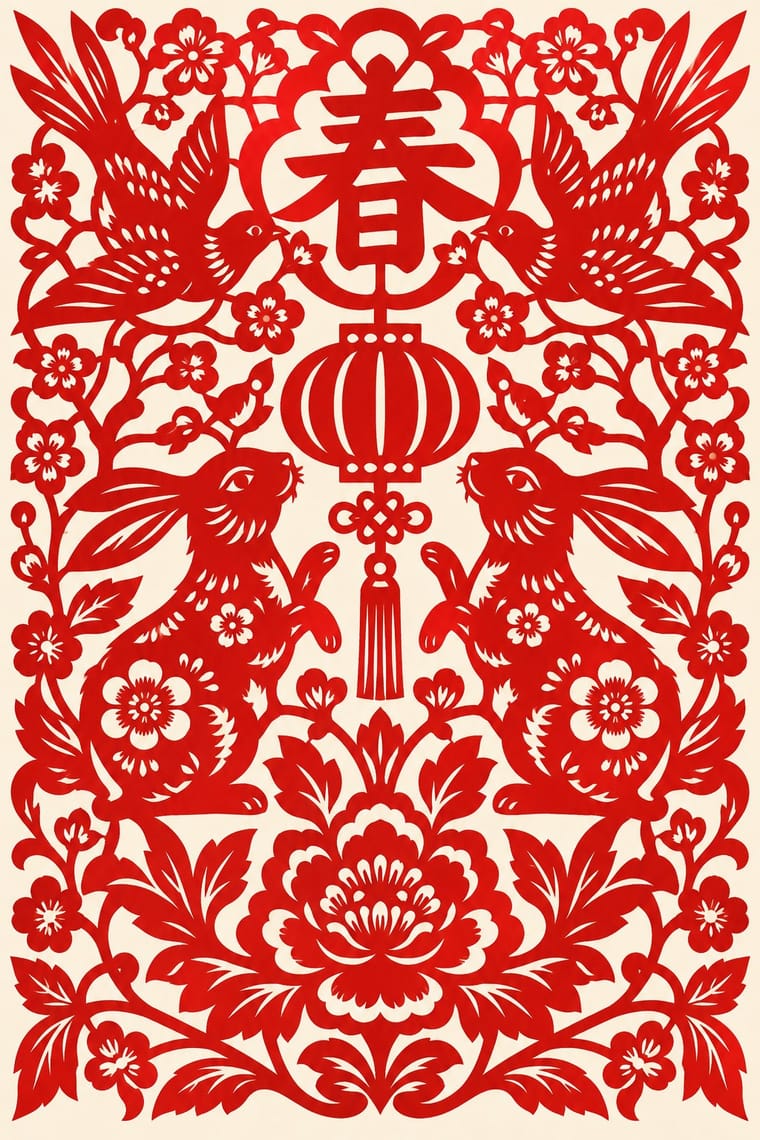
Guochao packaging borrows red cut-paper silhouettes; keep the real cut logic (joined lines, folded symmetry, correct auspicious characters) instead of a generic filigree texture.
01
What each style brings
Each part of the design comes from the style with the stronger say in it, and each style gives at least two.
Chinese Paper-Cut (Jianzhi) Guochao (China-Chic National Trend)
- Type from Guochao
- Colour from Chinese Paper-Cut
-
Guochao avoids monochrome: this is where the two pull against each other.
- Form from Chinese Paper-Cut
- Composition from Chinese Paper-Cut
- Surface from Guochao
02
The type
Open fonts standing in for each style’s own type, which is often hand-drawn or commercial.
Display · Guochao
Again
Kaushan Script, standing in for Bold brush calligraphy (kaishu and xingshu) for hero characters
Text · Chinese Paper-Cut
China's folk art of cut paper, made mostly by rural women and passed from mother to daughter, and by town guilds and workshops. A sheet, usually red, is cut with scissors or a knife into a silhouette that holds together; folding before cutting gives mirror and radial symmetry, and saw-tooth and crescent notches stand in for texture. Window flowers, wedding characters, lucky animals and embroidery patterns dress windows, beds and ceilings for festivals, weddings and prayers. Yuxian (Hebei) knife-cuts are dyed in many colours; Foshan backs cut metal foil (copper or gold) with coloured paper.
Shippori Mincho; Chinese Paper-Cut used Double happiness (囍) cut from folded red paper for weddings, the doubled character mirrored across the fold and Fu (福) and other auspicious characters cut as solid, bridged glyphs for the New Year
03
The colours
The ground and leading colours come from Chinese Paper-Cut, with a counter-accent from Guochao. The ink reads on the ground at 4.5:1 or more.
Chinese Paper-Cut (Jianzhi) Guochao (China-Chic National Trend)
-
#f5f0e6ground · 39% -
#c8161dink · 15% -
#c9a227accent · 20% -
#e0558aaccent · 15% -
#2f9e8faccent · 11%
As CSS
:root {
  --ground: #f5f0e6;
  --ink: #c8161d;
  --accent-1: #c9a227;
  --accent-2: #e0558a;
  --accent-3: #2f9e8f;
  --font-display: "Kaushan Script", cursive;
  --font-text: "Shippori Mincho", serif;
}
Use it with care
Chinese Paper-Cut (Jianzhi): Paper-cutting is a living craft, practised mostly by rural women who learn it from their mothers, and some cuts serve ritual ends, from invoking rain and warding off evil to calling back the spirit of the dead at funerals. Commission, buy from or credit named cutters and regional workshops rather than tracing their designs, keep auspicious characters correct and legible, do not use funerary or ritual cuts as festive decoration, and treat Miao embroidery-pattern cuts as part of a minority community's dress rather than a free motif bank. Use 囍 (double happiness) only for weddings, not as a generic Chinese luck motif; a 福 hung upside down at New Year is deliberate (倒福, a pun on 'fortune arrives'), so do not correct it, and do not flip other characters.
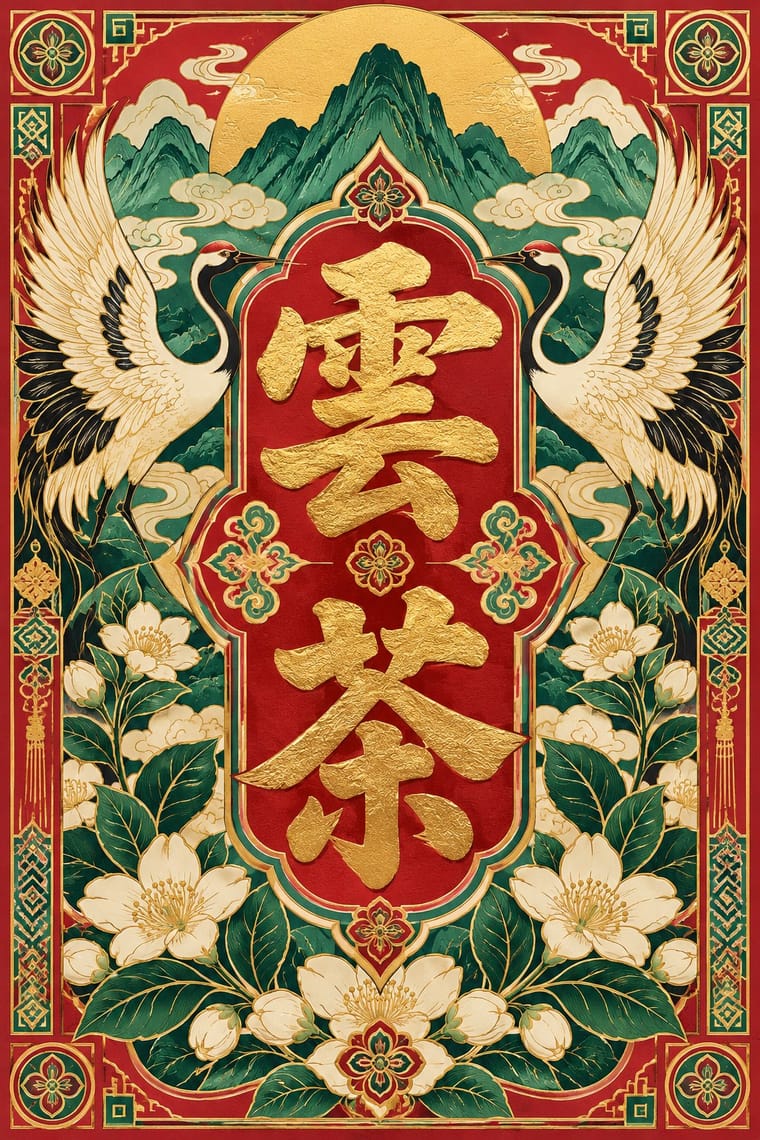
Guochao (China-Chic National Trend): Guochao often lifts ethnic-minority crafts (Miao silverwork and embroidery, Dai and Mongolian motifs) and intangible-heritage techniques as packaging finishes. Credit and pay the communities and craftspeople whose patterns are used, commission or collaborate with practitioners rather than copying motifs, and remember that dragons, imperial yellow and national symbols carry political as well as decorative meaning.
04
The two styles
05
More combinations
With Chinese Paper-Cut
- Guna Mola Contrasts · Molas cut through stacked layers of cloth and stitch the edges, so colour builds in echo bands; paper-cut stays one flat layer of colour seen against light.
- Stencil Street Art Pairs well · Both depend on bridges that hold every island of the design to the sheet; give a spray stencil the paper-cut's folded symmetry and saw-tooth texture.
- Kamon (Japanese Family Crests) Contrasts · Kamon reduce an emblem to a spare roundel silhouette; paper-cut fills the same roundel with saw-tooth texture and pierced pattern, so set restraint against abundance.
- Nianhua & Chinese Folk Print Pairs well · Both dress the home for the New Year; hang a single red window cut beside a dense, keylined door-god print so flat void and crowded colour work together.
- Swedish Painted Wall Hangings (Dalmålning, Bonadsmålning and Kurbits) Pairs well · A looser parallel: domestic wall decoration filled with symbolic flora, though cut paper rather than painted.
- Mithila (Madhubani) Painting Contrasts · Both are folk arts made mostly by rural women for weddings and other rites, with fish and lotus among their auspicious signs, but paper-cut is a silhouette, usually red, cut from one sheet and folded for mirror symmetry, while Mithila draws an outline and fills it with colour, hatching or rings until no ground is left. Use one of them, not a blend of the two.
- Javanese Wayang Kulit (Tatah Sungging) Contrasts · Both draw with holes cut through a flat sheet, but paper-cuts are usually folded, symmetrical and one-coloured, while a wayang figure is in profile, painted and gilded on both faces, and made to move.
- Kinngait (Cape Dorset) Inuit Printmaking Contrasts · Both are flat silhouettes with notches and cut patterns inside; paper-cut folds the sheet for exact mirror symmetry and fills the shape with lace, while Kinngait draws freehand, keeps a few incised marks and lets stencil colour grade inside the shape, often darkest at its tips.
With Guochao
- Nianhua & Chinese Folk Print Pairs well · Redraw door gods, carp and auspicious babies as clean vector characters for limited-edition packaging, keeping each rebus's meaning intact.
- Graffiti & Hip-Hop Graphics Pairs well · Guochao's streetwear wing already borrows hip-hop lockups; treat a brush character as the tag and keep the heritage palette.
- DTC 'Blanding' / Millennial Minimalism Contrasts · Western direct-to-consumer brands strip identity to pastel sans-serif minimalism; guochao sells ornament and heritage instead, so use one to test the other.
- Shanghai Modern & Yuefenpai Pairs well · Republican-era meishuzi lettering and calendar-poster borders give guochao packaging period depth beyond imperial red and gold.
- Dazibao (Big-Character Posters) Contrasts · Both make huge characters the whole message; compare the handwritten political urgency of the big-character poster with guochao's polished commercial heritage.
- Contemporary Chinese Book Design ('Most Beautiful Books of China') Contrasts · Guochao shouts Chinese heritage with saturated jewel colours, gloss and folk motifs on packaging; these books whisper it with bare paper, thread, one red and at most a matte gilt edge, so choose between the loud and the quiet national voice.
- Chinese Calligraphy & Seal Carving (Shufa & Zhuanke) Pairs well · Guochao branding borrows brush characters and red seals; commission real calligraphy and a properly cut seal instead of a generic brush-texture font and a fake stamp.
- Chinese National-Style Animation (Shanghai Animation Film Studio) Pairs well · For China-chic packaging and campaigns, borrow the method (an opera-mask face, scrolling clouds, an ink wash on empty paper) rather than quoting the studio's licensed characters.