Style combination · Pairs well
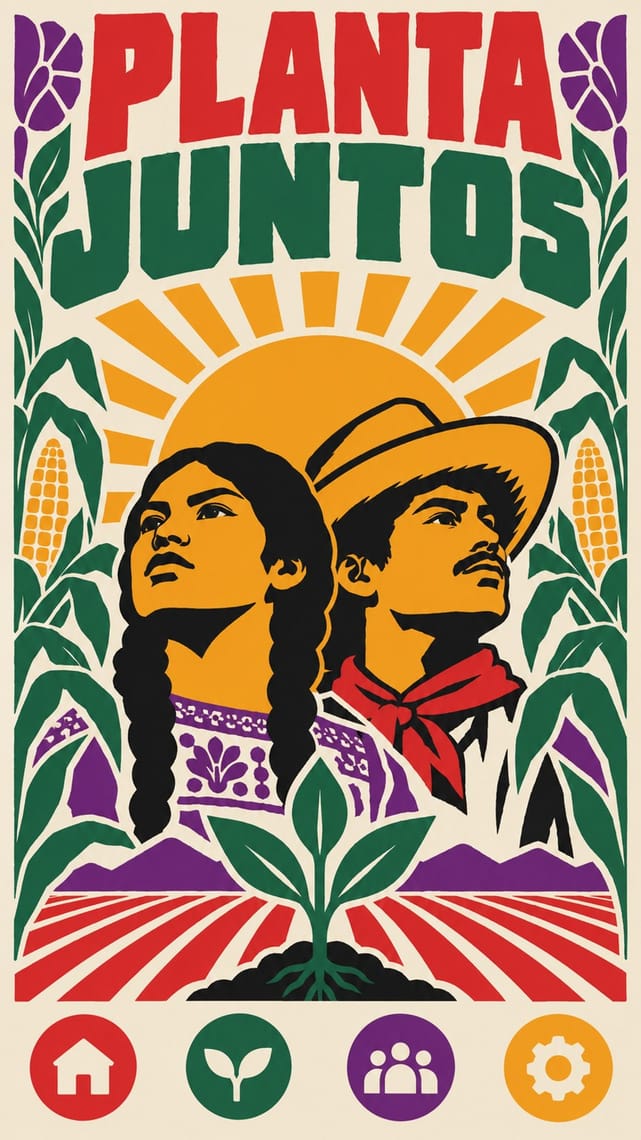
Chicano Screenprint Poster × Mexican Popular Graphics
Posada's calaveras are a shared ancestor; mix his relief skeletons with flat screen colour for Día de Muertos work with a political edge.
Mix them and make something Chicano Screenprint Poster Mexican Popular Graphics
01
What each style brings
Each part of the design comes from the style with the stronger say in it, and each style gives at least two.
Chicano Screenprint Poster Mexican Popular Graphics (Posada)
- Type from Mexican Popular Graphics
- Colour from Chicano Screenprint Poster
- Form from Chicano Screenprint Poster
- Composition from Chicano Screenprint Poster
- Surface from Mexican Popular Graphics
02
The type
Open fonts standing in for each style’s own type, which is often hand-drawn or commercial.
Display · Mexican Popular Graphics
Ours
Alfa Slab One, standing in for Nineteenth-century display types: Egyptians, Tuscans and Latins
Text · Chicano Screenprint Poster
The screenprinted poster of the Chicano Movement and its heirs, made from the mid-1960s in community workshops across California and the Southwest for farmworker strikes and boycotts, teatro, dances, anti-war marches and immigrant rights. Flat opaque inks, posterised portraits and bilingual slogans recast Mexican icons (the UFW eagle, the Virgin of Guadalupe, Posada's calaveras, Mexica glyphs) for the US barrio, often by parodying American packaging.
Archivo; Chicano Screenprint Poster used Hand-cut screen-stencil lettering and Bold sans and hand-drawn capitals for bilingual strike and boycott slogans
03
The colours
The ground and leading colours come from Chicano Screenprint Poster, with a counter-accent from Mexican Popular Graphics. The ink reads on the ground at 4.5:1 or more.
Chicano Screenprint Poster Mexican Popular Graphics (Posada)
-
#f2eadbground · 36% -
#141414ink · 14% -
#f4a11caccent · 18% -
#f0d14aaccent · 14% -
#d7262eaccent · 10% -
#d6337faccent · 8%
As CSS
:root {
  --ground: #f2eadb;
  --ink: #141414;
  --accent-1: #f4a11c;
  --accent-2: #f0d14a;
  --accent-3: #d7262e;
  --accent-4: #d6337f;
  --font-display: "Alfa Slab One", serif;
  --font-text: "Archivo", sans-serif;
}
Use it with care
Chicano Screenprint Poster: The Virgin of Guadalupe is a devotional image for many Mexicans and Chicanos, and Chicana feminist reworkings of her have met protest. Mexica glyphs and calendar imagery carry Indigenous meaning, and the UFW black eagle is the union's own emblem, not a free motif. Use them with community context, credit the movement, and commission Chicanx printmakers rather than lifting the look for marketing.
04
The two styles
05
More combinations
With Chicano Screenprint Poster
- Corporate Identity Modernism Contrasts · Chicano parody works by quoting the clean corporate mark and corrupting it; study the brand's grammar before you subvert it.
- Cuban Revolutionary Poster (OSPAAAL & ICAIC) Pairs well · Both are solidarity screenprints; borrow OSPAAAL's single bold image and add Chicano bilingual wordplay and barrio iconography.
- Mixteca-Puebla Codex Painting Pairs well · Chicano screenprinters reclaimed Mexica glyphs and calendar imagery for the movement; when contour-and-flat-colour glyphs meet a modern poster, follow their example of community context and credit. Mexica (Aztec) glyphs are a different source from these Mixtec and Borgia Group books: credit a codex source as such rather than folding it into 'Aztec'.
- AfriCOBRA Pairs well · Movement screenprints of the same years, made in and for their own communities: Chicano posters set one emblematic figure on flat colour, often parodying American packaging; AfriCOBRA packs the figure into a lettered, many-coloured field and stays sincere. Pair them, as both pair with the Panthers, for coalition work.
- Fania and Nuyorican Salsa LP Sleeves Pairs well · Another US Latino graphic voice; borrow its community iconography.
- Puerto Rican Silkscreen Poster (DIVEDCO & ICP) Pairs well · Two Spanish-language screenprint traditions of the Americas; add Chicano bilingual slogans and posterised portraits to Puerto Rican letrismo for community event posters.
- Chilean Unidad Popular & Nueva Canción Graphics Pairs well · Both tie community walls to cheap posters for a movement; combine a black-contoured Ramona Parra frieze with Chicano bilingual screenprints for coalition street graphics.
- Lotería Card Imagery (Mexican Lotería) Pairs well · Chicano artists from Carmen Lomas Garza's 1972 tablas onward redraw the lotería card as a sign of Mexican-American home life; frame a screenprinted slogan or portrait as a numbered, named card to borrow that recognition.
With Mexican Popular Graphics
- Punk & DIY Zine Pairs well · Both are cheap, fast and irreverent; reuse stock cuts and coloured paper in zines for the same street-sheet energy.
- Minimalist Graphic Design Contrasts · Isolate one calavera on an empty field to show how much of the style's force comes from crowding.
- Taller de Gráfica Popular Pairs well · The TGP took Posada as its ancestor; combine his calavera satire with linocut political posters for socially engaged print.
- Literatura de Cordel Woodcut Pairs well · Brazil's cordel covers are a parallel relief-picture-on-cheap-paper tradition; pair Posada-style broadsides with cordel woodcuts for street ephemera that tells a story in one picture.
- Lubok Popular Print Pairs well · Posada's broadsheets and lubki share cheap paper, crude relief cuts and street humour; brush lubok-style washes over a black relief broadsheet.
- Imagerie d'Épinal & European Bilderbogen Pairs well · Posada's hojas volantes are another pedlar broadsheet with a crude relief picture over a block of text; add Épinal's stencil colour to a black relief broadsheet for a hand-coloured street print.
- Estridentismo (Stridentist) Graphics Contrasts · Same Mexico City walls a generation apart: Posada's broadsheets of skeletons, crimes and saints against Maples Arce's broadside of radio, speed and skyscrapers; set one beside the other to stage folk memory against the machine future.
- Lira Popular (Chilean Illustrated Verse Broadsheets) Pairs well · A sibling street broadside; borrow Posada's coloured paper and single big cut, or keep the Chilean frieze of cuts over many ruled verse columns.