Style combination · Contrasts
Baghdad School of Arab Book Painting × Islamic Geometric
Non-figural Islamic art is the contrast: this style puts people and satire where geometry would be. No descent is implied.
Mix them and make something Baghdad School of Arab Book Painting Islamic Geometric
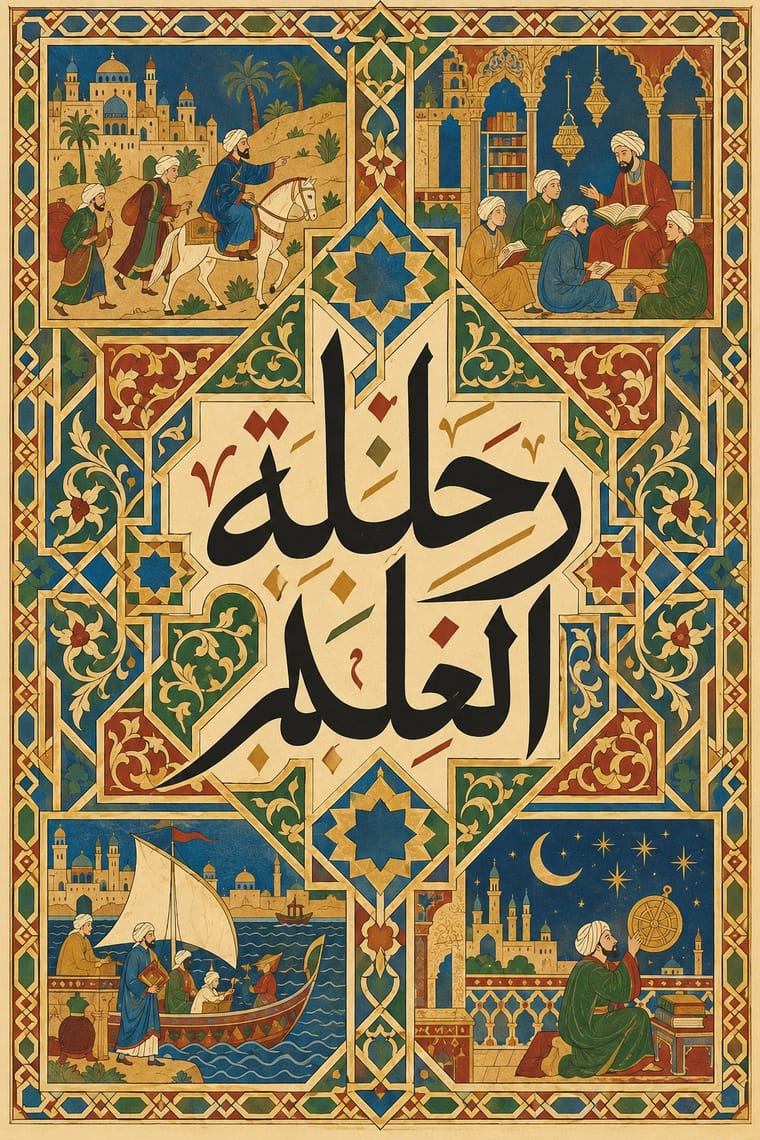
01
What each style brings
Each part of the design comes from the style with the stronger say in it, and each style gives at least two.
Baghdad School of Arab Book Painting (Maqamat Illustration) Islamic Geometric & Calligraphic Tradition
- Type from Islamic Geometric
- Colour from Baghdad School of Arab Book Painting
- Form from Islamic Geometric
- Composition from Baghdad School of Arab Book Painting
- Surface from Baghdad School of Arab Book Painting
02
The type
Open fonts standing in for each style’s own type, which is often hand-drawn or commercial.
Text · Baghdad School of Arab Book Painting
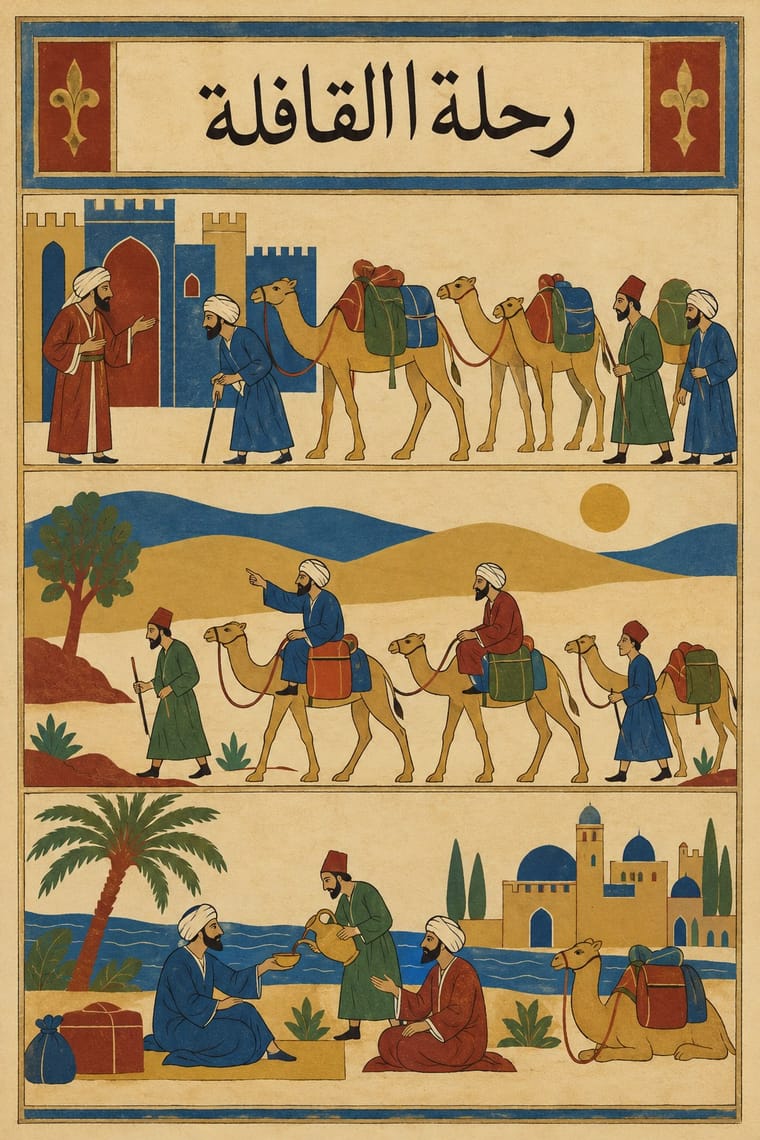
Illustrated copies of al-Hariri's satirical Maqamat made in Iraq, Syria and Egypt from about 1200 to the 1330s. Small framed miniatures, many touched with gold, interrupt the red and black Arabic text and show everyday urban scenes, with costume marking each figure's social type. A secular, comic, figural book art. Caution: the name 'Baghdad school' is a convenience; the BnF calls the Schefer Hariri 'Mesopotamian' and a Baghdad origin is conjectural. The costume and skin-tone coding of servants reflects period social hierarchy and should not be reproduced uncritically.
Space Mono; Baghdad School of Arab Book Painting used Arabic naskh book hand and Arabic display headings in thuluth-style script
03
The colours
The ground and leading colours come from Baghdad School of Arab Book Painting, with a counter-accent from Islamic Geometric. The ink reads on the ground at 4.5:1 or more.
Baghdad School of Arab Book Painting (Maqamat Illustration) Islamic Geometric & Calligraphic Tradition
-
#e8d9b5ground · 36% -
#1b1b1bink · 14% -
#c8a23aaccent · 18% -
#8c2f1faccent · 14% -
#2f5d7caccent · 10% -
#4a6b3faccent · 8%
As CSS
:root {
  --ground: #e8d9b5;
  --ink: #1b1b1b;
  --accent-1: #c8a23a;
  --accent-2: #8c2f1f;
  --accent-3: #2f5d7c;
  --accent-4: #4a6b3f;
  --font-display: "Reem Kufi", cursive;
  --font-text: "Space Mono", monospace;
}
Use it with care
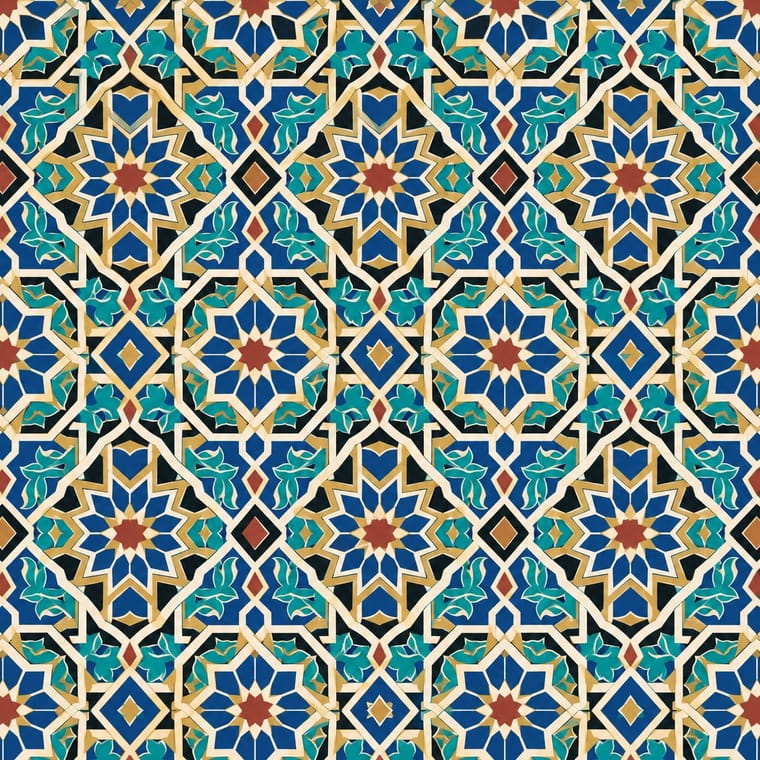
Islamic Geometric & Calligraphic Tradition: Qur'anic verses, the names of God and the Prophet and other sacred phrases must not be cropped, distorted, mirrored, used as texture or printed on floors, footwear or throwaway packaging; have any Arabic-script text read and approved by a fluent reader or calligrapher. Abstract geometric pattern is far less sensitive than script, but credit the traditions and makers it comes from.
04
The two styles
05
More combinations
With Baghdad School of Arab Book Painting
- Persian Miniature (Ilkhanid, Timurid and Safavid Book Painting) Pairs well · Both are figural book painting; borrow the Persian jewel palette and panel framing, but keep the Arab school's plainer, documentary social types.
- Egyptian Painted Film Poster Pairs well · Both stage popular comic or melodramatic scenes in painted figures; the book scale gives the earlier, quieter version.
With Islamic Geometric
- International Typographic Style Contrasts · Drop one tessellated panel into an asymmetric Swiss grid to make the tension between infinite pattern and white space the subject.
- Art Deco Pairs well · Borrow star polygons and stepped borders for Deco-style framing; both depend on strict symmetry and metallic accents.
- Iranian Modernist Graphic Design Pairs well · Set one calligraphic word or a fragment of girih against flat colour and a modernist grid instead of reproducing whole tile panels.
- Armenian Manuscript Illumination Contrasts · Horseshoe arches and vegetal and geometric ornament are shared, but the Islamic geometric tradition keeps its arches and fields aniconic, while Armenian books fill the same arches with birds, beasts and painted saints; choose whether a frame should carry figures or only pattern.
- Kamon (Japanese Family Crests) Contrasts · Both are built with compass and straight edge, but girih tiles the whole surface without end while a mon closes one motif inside a ring; borrow the tessellation for a ground and the crest for the single sign on it.
- Ethiopian Ge'ez Manuscript & Haräg Illumination Pairs well · Haräg interlace and Islamic strapwork share frame-and-band logic; compare them for headpieces, but keep the Ethiopian bands varied rather than strictly tiled.
- Andean Woven Graphic Systems Contrasts · Islamic pattern interlaces stars around radial centres while Andean geometry is orthogonal, stepped and deliberately irregular; choose one as the structural logic rather than blending them.
- Batik Pattern Tradition Pairs well · Coastal batik already absorbs Arabic script and geometric lattices; combine the two for pattern that is both structured and hand-made.