Style combination · Pairs well
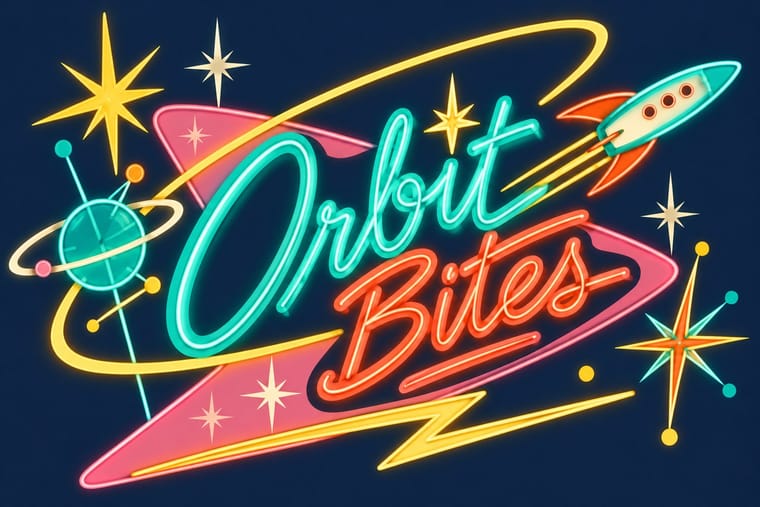
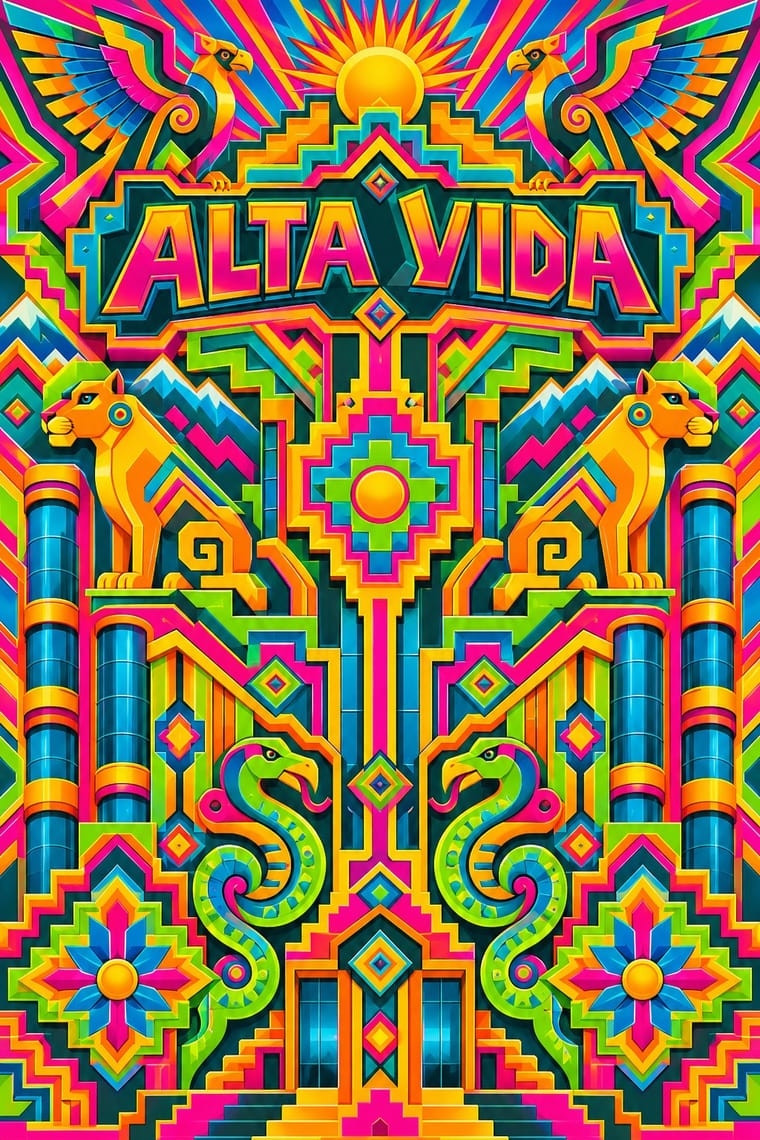
Googie × Neo-Andean Architecture
Both turn commercial buildings into giant futurist signs; borrow Googie's upswept angles and neon to push a cholet front toward the Space Age.
01
What each style brings
Each part of the design comes from the style with the stronger say in it, and each style gives at least two.
Googie & Atomic Age Neo-Andean Architecture (Cholets)
- Type from Googie
- Colour from Neo-Andean Architecture
- Form from Googie
- Composition from Neo-Andean Architecture
-
Googie avoids central symmetry: this is where the two pull against each other.
- Surface from Neo-Andean Architecture
02
The type
Open fonts standing in for each style’s own type, which is often hand-drawn or commercial.
Text · Neo-Andean Architecture
The facades and party halls of El Alto, Bolivia, begun by the Aymara builder-architect Freddy Mamani in 2005 for a new Aymara merchant class. A tall block stacks shops, a salón de eventos, rental flats and the owner's rooftop chalet behind one symmetrical front of Andean crosses, diagonal planes, circles and sweeping curves drawn from Tiwanaku carving, in fluorescent colours taken from awayo cloth and set with reflective tinted glass. Ballrooms add colour gradients, LED lines, chandeliers and stained glass; recent cholets add giant pop-culture figures.
Jost; Neo-Andean Architecture used No lettering tradition of its own is documented; for graphics, draw angular, stepped display capitals from the facade's chakana and diagonal-plane geometry and Heavy geometric sans capitals cut from flat panels, like the facade's own planes, for a salón's name in Aymara or Spanish
03
The colours
The ground and leading colours come from Neo-Andean Architecture, with a counter-accent from Googie. The ink reads on the ground at 4.5:1 or more.
Googie & Atomic Age Neo-Andean Architecture (Cholets)
-
#ffd800ground · 36% -
#2f4f4aink · 14% -
#ff8c00accent · 18% -
#f2673aaccent · 14% -
#e6007eaccent · 10% -
#40b5adaccent · 8%
As CSS
:root {
  --ground: #ffd800;
  --ink: #2f4f4a;
  --accent-1: #ff8c00;
  --accent-2: #f2673a;
  --accent-3: #e6007e;
  --accent-4: #40b5ad;
  --font-display: "Yellowtail", cursive;
  --font-text: "Jost", sans-serif;
}
Use it with care
Neo-Andean Architecture (Cholets): Neo-Andean architecture is the living work of named Aymara builders, makers and their clients in El Alto, and its chakana, Tiwanaku, Pachamama and awayo motifs carry Aymara identity and ritual meaning. Credit Freddy Mamani and the other makers by name, among them facade sculptors such as Ramiro Sirpa. Do not pass the motifs off as generic 'Inca' decoration, and do not use the look as a joke about kitsch or new money: its owners built it after decades of contempt for Indigenous migrants. 'Cholet' joins chalet with cholo, a word long used as a slur against people of Indigenous origin (though some in Bolivia now reclaim it), and Mamani does not much like the label, so call the style Neo-Andean or new Andean architecture.
04
The two styles
05
More combinations
With Googie
- Y2K Futurism Pairs well · Both sell a glossy future; add Googie starbursts and orbit lines to Y2K chrome for retro-futurism that spans both millennia.
- HfG Ulm Systematic Design Contrasts · Ulm's anti-styling functionalism is its sober opposite; use the contrast to calibrate how much showmanship a brand can bear.
- Hand-Painted Signage & Vernacular Lettering Pairs well · Pair Googie forms with sign-painter scripts and shaded lettering for convincing diner, motel and bowling-alley signage.
- Memphis Design Pairs well · Memphis revived its boomerangs and squiggles; mix the two for a playful atomic-meets-postmodern pattern system.
- City Pop Illustration Pairs well · Googie's motels, diners and boomerang roadside signs are the American architecture these painters idealised; borrow its signage and script for the fascias in a city pop street scene.
- Polish Cold War Neon (PRL Neonisation) Contrasts · Googie sold motels and coffee shops to passing drivers with starbursts, boomerangs and swept-back sign panels; the Polish signs answered to state planners rather than to passing trade and kept to a script name and a line figure on a modernist block. Borrow googie's bounce when a Polish-style sign feels too polite.
- Art Deco Pairs well · Googie's atomic starbursts extend Deco's celestial ornament; mix them for retro hospitality and signage.
- Streamline Moderne Pairs well · Googie is Streamline's post-war heir; combine their curves and speed lines for retro diner, travel or automotive branding.
With Neo-Andean Architecture
- Minimalist Graphic Design Contrasts · Its exact opposite on ornament and colour; one symmetrical fluorescent panel in a white, empty layout reads as a loud statement of identity.
- Art Deco Pairs well · Deco's stepped chevrons and luxurious halls are close kin; combine them with chakana crosses for opulent, symmetrical interiors, but keep the fluorescent palette.