Style combination · Pairs well
Art Deco × Neo-Andean Architecture
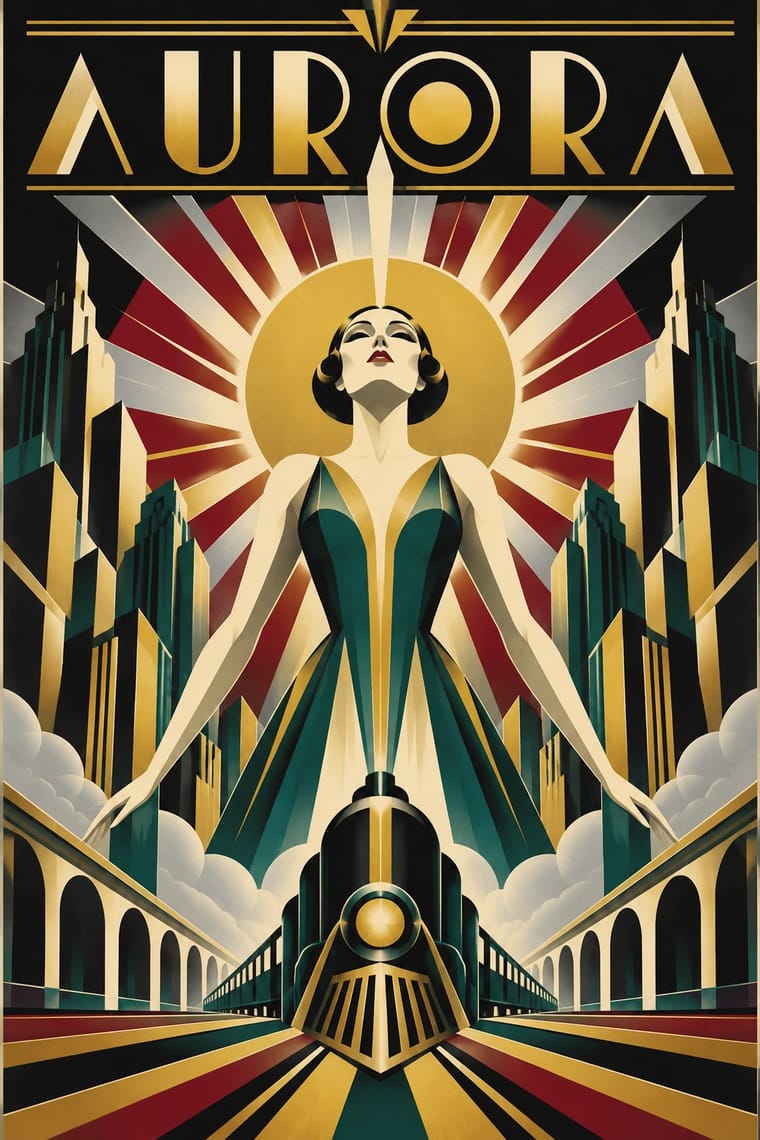
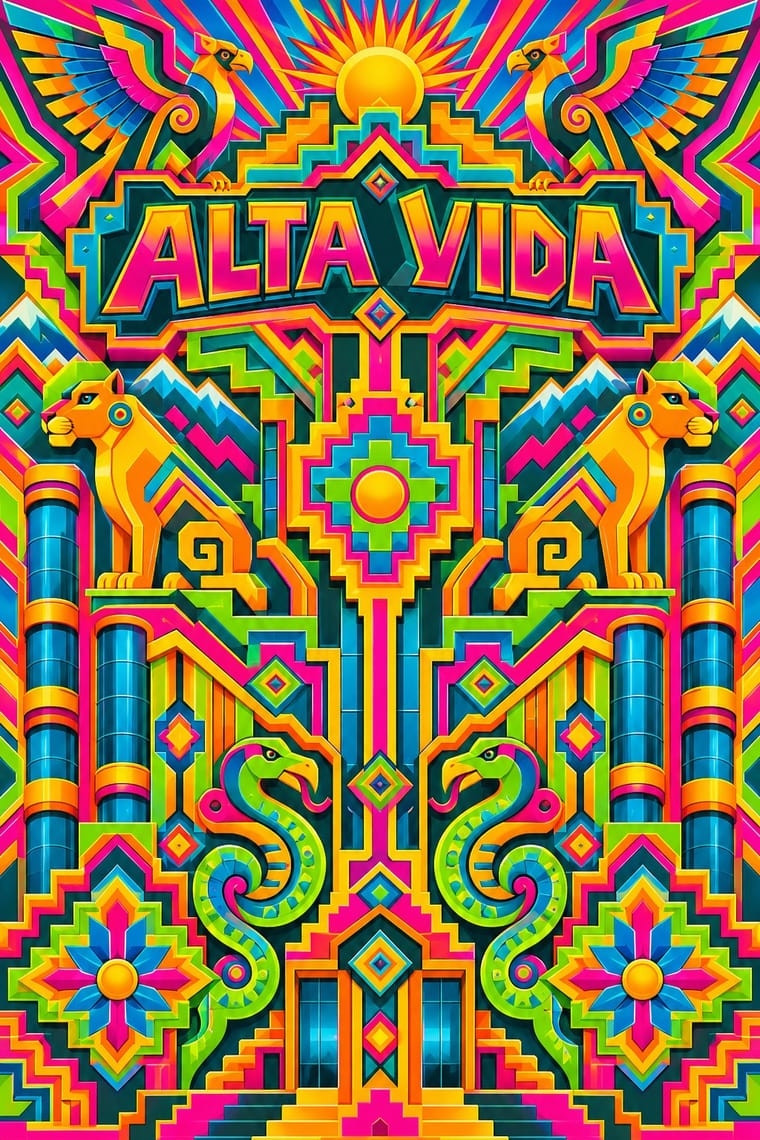
Deco's stepped chevrons and luxurious halls are close kin; combine them with chakana crosses for opulent, symmetrical interiors, but keep the fluorescent palette.
Mix them and make something Art Deco Neo-Andean Architecture
01
What each style brings
Each part of the design comes from the style with the stronger say in it, and each style gives at least two.
Art Deco Neo-Andean Architecture (Cholets)
- Type from Art Deco
- Colour from Neo-Andean Architecture
- Form from Art Deco
- Composition from Neo-Andean Architecture
- Surface from Neo-Andean Architecture
02
The type
Open fonts standing in for each style’s own type, which is often hand-drawn or commercial.
Text · Neo-Andean Architecture
The facades and party halls of El Alto, Bolivia, begun by the Aymara builder-architect Freddy Mamani in 2005 for a new Aymara merchant class. A tall block stacks shops, a salón de eventos, rental flats and the owner's rooftop chalet behind one symmetrical front of Andean crosses, diagonal planes, circles and sweeping curves drawn from Tiwanaku carving, in fluorescent colours taken from awayo cloth and set with reflective tinted glass. Ballrooms add colour gradients, LED lines, chandeliers and stained glass; recent cholets add giant pop-culture figures.
Jost; Neo-Andean Architecture used No lettering tradition of its own is documented; for graphics, draw angular, stepped display capitals from the facade's chakana and diagonal-plane geometry and Heavy geometric sans capitals cut from flat panels, like the facade's own planes, for a salón's name in Aymara or Spanish
03
The colours
The ground and leading colours come from Neo-Andean Architecture, with a counter-accent from Art Deco. The ink reads on the ground at 4.5:1 or more.
Art Deco Neo-Andean Architecture (Cholets)
-
#ffd800ground · 36% -
#2f4f4aink · 14% -
#ff8c00accent · 18% -
#c9a227accent · 14% -
#e6007eaccent · 10% -
#8c1c26accent · 8%
As CSS
:root {
  --ground: #ffd800;
  --ink: #2f4f4a;
  --accent-1: #ff8c00;
  --accent-2: #c9a227;
  --accent-3: #e6007e;
  --accent-4: #8c1c26;
  --font-display: "Poiret One", sans-serif;
  --font-text: "Jost", sans-serif;
}
Use it with care
Neo-Andean Architecture (Cholets): Neo-Andean architecture is the living work of named Aymara builders, makers and their clients in El Alto, and its chakana, Tiwanaku, Pachamama and awayo motifs carry Aymara identity and ritual meaning. Credit Freddy Mamani and the other makers by name, among them facade sculptors such as Ramiro Sirpa. Do not pass the motifs off as generic 'Inca' decoration, and do not use the look as a joke about kitsch or new money: its owners built it after decades of contempt for Indigenous migrants. 'Cholet' joins chalet with cholo, a word long used as a slur against people of Indigenous origin (though some in Bolivia now reclaim it), and Mamani does not much like the label, so call the style Neo-Andean or new Andean architecture.
04
The two styles
05
More combinations
With Art Deco
- Googie & Atomic Age Pairs well · Googie's atomic starbursts extend Deco's celestial ornament; mix them for retro hospitality and signage.
- Punk & DIY Zine Contrasts · Puncture Deco polish with a single torn, photocopied edge when luxury needs irony.
- Art Nouveau Contrasts · Deco straightened Nouveau's whiplash; place a rigid sunburst beside one sinuous curve to show the evolution.
- Streamline Moderne Pairs well · Fold Streamline speed lines and rounded corners into a Deco layout to move from stepped geometry toward aerodynamic sweep.
- Basel Object Poster (Swiss Sachplakat) Contrasts · A source as well as a foil: Leupin studied at the École Paul Colin in Paris in 1935-36 and took strong impressions from Colin and from Colin's rival Cassandre. Both make a product a heroic icon, but Deco stylises it into a geometric silhouette with airbrushed gradation and geometric capitals, while Basel paints the real object, its material and its label, as a still life.
- Estridentismo (Stridentist) Graphics Pairs well · Both drew the 1920s skyline; pair Deco's setback towers and block display letters with Stridentist black-and-white relief for a skyscraper poster with a rougher, revolutionary edge.
- Vienna Secession Pairs well · Carry the Secession's squares, chequers and gold into Deco's stepped geometry for a luxurious but disciplined look.
- Greek Tourism Modernism (EOT) Contrasts · Katzourakis studied poster design under Paul Colin in Paris; set a Deco travel poster's heroic, airbrushed destination beside this flat, cut-out sign to show how the tourist poster was stripped down after the war.
With Neo-Andean Architecture
- Minimalist Graphic Design Contrasts · Its exact opposite on ornament and colour; one symmetrical fluorescent panel in a white, empty layout reads as a loud statement of identity.
- Googie & Atomic Age Pairs well · Both turn commercial buildings into giant futurist signs; borrow Googie's upswept angles and neon to push a cholet front toward the Space Age.