Style combination · Contrasts
Chinese Paper-Cut × Kinngait Inuit Printmaking
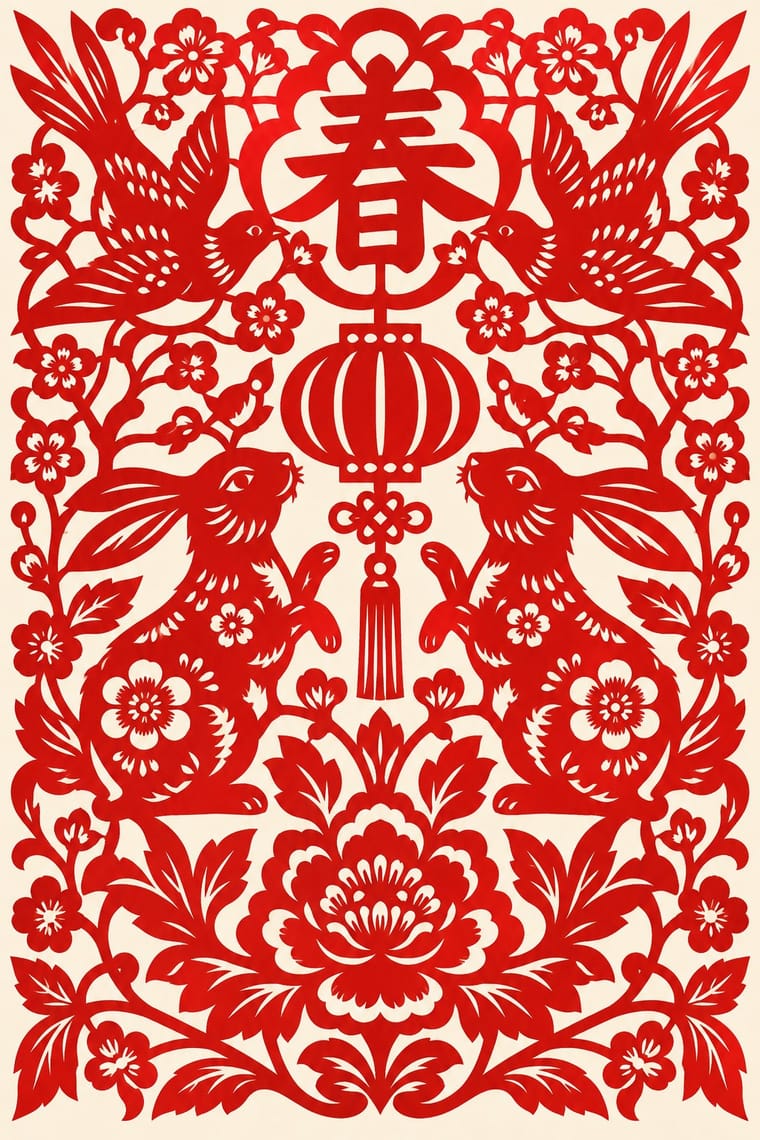
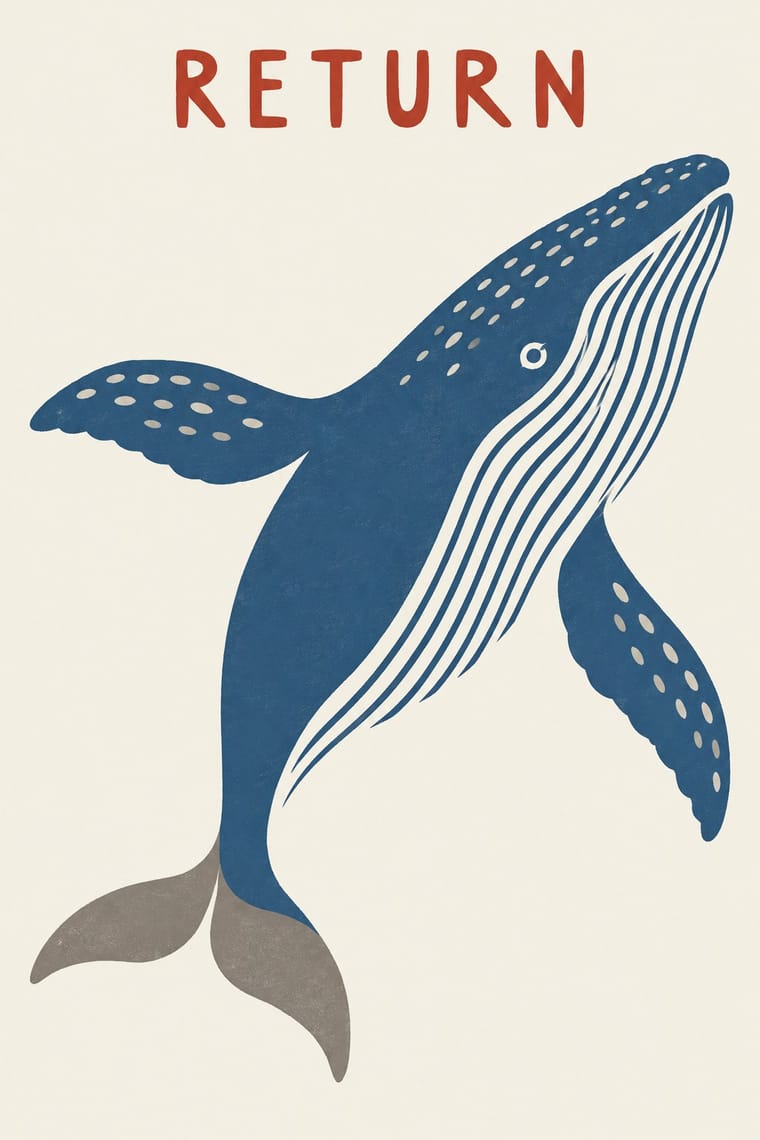
Both are flat silhouettes with notches and cut patterns inside; paper-cut folds the sheet for exact mirror symmetry and fills the shape with lace, while Kinngait draws freehand, keeps a few incised marks and lets stencil colour grade inside the shape, often darkest at its tips.
Mix them and make something Chinese Paper-Cut Kinngait Inuit Printmaking
01
What each style brings
Each part of the design comes from the style with the stronger say in it, and each style gives at least two.
Chinese Paper-Cut (Jianzhi) Kinngait (Cape Dorset) Inuit Printmaking
- Type from Chinese Paper-Cut
- Colour from Chinese Paper-Cut
- Form from Chinese Paper-Cut
- Composition from Kinngait Inuit Printmaking
- Surface from Kinngait Inuit Printmaking
02
The type
Open fonts standing in for each style’s own type, which is often hand-drawn or commercial.
Display · Chinese Paper-Cut
Ours
Shippori Mincho; Chinese Paper-Cut used Double happiness (囍) cut from folded red paper for weddings, the doubled character mirrored across the fold and Fu (福) and other auspicious characters cut as solid, bridged glyphs for the New Year
Text · Kinngait Inuit Printmaking
Prints from the Inuit co-operative studio at Kinngait (Cape Dorset), Nunavut, with a catalogued collection every year since 1959. Inuit artists draw; Inuit printmakers cut the drawing in stone or a stencil and print it by hand in editions of thirty (1959) and then fifty. A single figure, most often a bird or animal, floats as a flat silhouette in one to three inks on unprinted paper, and stencil daubing grades the colour inside it. This is the classic idiom; lithographs and etchings followed from the 1970s, and Annie Pootoogook, Shuvinai Ashoona and others have drawn contemporary Inuit life.
Caveat; Kinngait Inuit Printmaking used From the mid-1970s, the artist's pencil signature beneath the image, beside the title and an edition number such as 43/50 and Small carved chops of artist and printer, often cut from linoleum floor tile, stacked with the studio's mark in a vertical column in the margin of the stonecuts and stencils, as reproduced in the 1959 and 1960 catalogues
03
The colours
The ground and leading colours come from Chinese Paper-Cut, with a counter-accent from Kinngait Inuit Printmaking. The ink reads on the ground at 4.5:1 or more.
Chinese Paper-Cut (Jianzhi) Kinngait (Cape Dorset) Inuit Printmaking
-
#f5f0e6ground · 36% -
#c8161dink · 14% -
#c9a227accent · 18% -
#2c5a8caccent · 14% -
#e0558aaccent · 10% -
#2f6a5aaccent · 8%
As CSS
:root {
  --ground: #f5f0e6;
  --ink: #c8161d;
  --accent-1: #c9a227;
  --accent-2: #2c5a8c;
  --accent-3: #e0558a;
  --accent-4: #2f6a5a;
  --font-display: "Shippori Mincho", serif;
  --font-text: "Caveat", cursive;
}
Use it with care
Chinese Paper-Cut (Jianzhi): Paper-cutting is a living craft, practised mostly by rural women who learn it from their mothers, and some cuts serve ritual ends, from invoking rain and warding off evil to calling back the spirit of the dead at funerals. Commission, buy from or credit named cutters and regional workshops rather than tracing their designs, keep auspicious characters correct and legible, do not use funerary or ritual cuts as festive decoration, and treat Miao embroidery-pattern cuts as part of a minority community's dress rather than a free motif bank. Use 囍 (double happiness) only for weddings, not as a generic Chinese luck motif; a 福 hung upside down at New Year is deliberate (倒福, a pun on 'fortune arrives'), so do not correct it, and do not flip other characters.
Kinngait (Cape Dorset) Inuit Printmaking: Kinngait printmaking is the living, collectively run art of an Inuit community, and its images belong to named Inuit artists and printmakers whose copyright the West Baffin Eskimo Co-operative manages as their agent: license or commission work through the co-operative or Dorset Fine Arts rather than tracing a print. Borrow the system (a lone silhouette floating on open paper, one to three inks, stencil-graded colour, stone-cut edges), not a particular artist's owl, sun or hand. Do not invent Inuit spirit beings, shamans, the sea goddess or hunting rites as decoration; picture the subject the brief supplies. Never add a syllabic signature, artist's or printer's chops, the studio's mark, an edition number or the igloo authenticity symbol to generated work, and never present it as a Kinngait or Inuit print. Say 'Inuit', not 'Eskimo', except in historical names such as the co-operative's, and do not let Kinngait stand for all Inuit art: other communities, such as Qamani'tuaq (Baker Lake), have their own print studios and styles.
04
The two styles
05
More combinations
With Chinese Paper-Cut
- Guna Mola Contrasts · Molas cut through stacked layers of cloth and stitch the edges, so colour builds in echo bands; paper-cut stays one flat layer of colour seen against light.
- Stencil Street Art Pairs well · Both depend on bridges that hold every island of the design to the sheet; give a spray stencil the paper-cut's folded symmetry and saw-tooth texture.
- Kamon (Japanese Family Crests) Contrasts · Kamon reduce an emblem to a spare roundel silhouette; paper-cut fills the same roundel with saw-tooth texture and pierced pattern, so set restraint against abundance.
- Nianhua & Chinese Folk Print Pairs well · Both dress the home for the New Year; hang a single red window cut beside a dense, keylined door-god print so flat void and crowded colour work together.
- Guochao (China-Chic National Trend) Pairs well · Guochao packaging borrows red cut-paper silhouettes; keep the real cut logic (joined lines, folded symmetry, correct auspicious characters) instead of a generic filigree texture.
- Swedish Painted Wall Hangings (Dalmålning, Bonadsmålning and Kurbits) Pairs well · A looser parallel: domestic wall decoration filled with symbolic flora, though cut paper rather than painted.
- Mithila (Madhubani) Painting Contrasts · Both are folk arts made mostly by rural women for weddings and other rites, with fish and lotus among their auspicious signs, but paper-cut is a silhouette, usually red, cut from one sheet and folded for mirror symmetry, while Mithila draws an outline and fills it with colour, hatching or rings until no ground is left. Use one of them, not a blend of the two.
- Javanese Wayang Kulit (Tatah Sungging) Contrasts · Both draw with holes cut through a flat sheet, but paper-cuts are usually folded, symmetrical and one-coloured, while a wayang figure is in profile, painted and gilded on both faces, and made to move.
With Kinngait Inuit Printmaking
- Rorke's Drift Linocut Contrasts · Two mid-century workshops where a community with no printmaking tradition began cutting blocks with an outside teacher: Rorke's Drift crowds a black-and-white story into banded scenes, Kinngait usually isolates one figure in colour on open paper; choose by whether the image should narrate or present.
- Ukiyo-e Woodblock Prints Contrasts · Houston studied with the sōsaku-hanga printmaker Un'ichi Hiratsuka in 1958–59, and Kinngait shares ukiyo-e's hand-rubbed relief, Japanese paper, margin seals and a split between designer, cutter and printer (which sōsaku hanga itself rejected); but ukiyo-e fills a cropped scene inside a carved keyline with cartouche text, while Kinngait usually floats a few silhouettes on open paper, so use ukiyo-e for a full scene and Kinngait for a lone presence.
- Kamon (Japanese Family Crests) Pairs well · Both set one emblem small and alone on a plain ground; kamon builds it from compass arcs in one colour, Kinngait cuts it freehand and fades its colour, so take kamon's geometry when the mark must survive any size and Kinngait's softness when it should feel drawn.
- Kalighat Pat & Battala Bazaar Prints Contrasts · Both isolate a stylised figure on pale paper with little else; Kalighat paints it with a loaded brush and a sweeping outline for a bazaar market, Kinngait cuts it in stone or daubs it through a stencil, so take Kalighat for a painted, satirical line and Kinngait for a still, printed silhouette.
- Northwest Coast Formline Design Contrasts · Both are Indigenous North American arts with their own protocols, but formline compresses a crest being until it fills its field, while Kinngait leaves open paper around a free silhouette; never blend the two into a generic 'Native' look.
- Torres Strait Islander Linocut Contrasts · Both are Indigenous community print studios whose cut marks pattern the inside of a figure, but Kinngait floats one flat silhouette in one to three inks on unprinted paper, while Torres Strait linocut packs a black field with incised pattern from edge to edge; choose Kinngait for a single quiet figure, Torres Strait for a dense cosmos, and keep Inuit and Torres Strait Islander imagery apart.