Style combination · Contrasts
Andean Woven Graphic Systems × Needlework Sampler Lettering
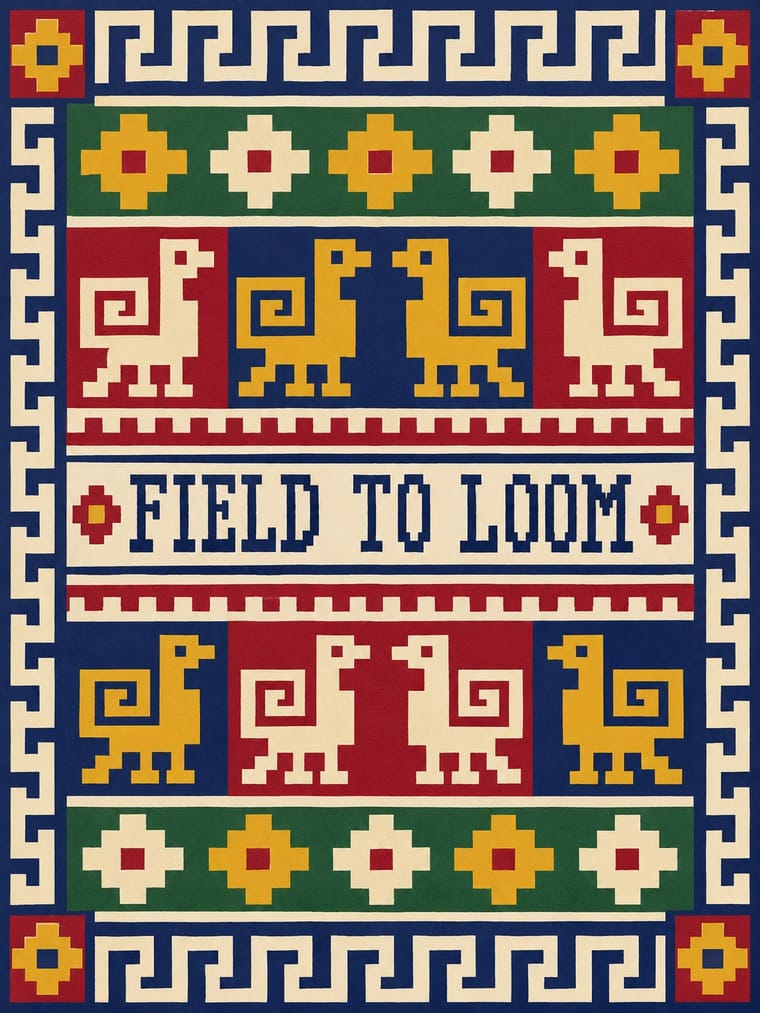
Woven sign systems carry meaning in repeated motifs; the sampler carries it in alphabets and verse.
Mix them and make something Andean Woven Graphic Systems Needlework Sampler Lettering
01
What each style brings
Each part of the design comes from the style with the stronger say in it, and each style gives at least two.
Andean Woven Graphic Systems Needlework Sampler Lettering
- Type from Needlework Sampler Lettering
- Colour from Andean Woven Graphic Systems
- Form from Needlework Sampler Lettering
- Composition from Andean Woven Graphic Systems
-
Needlework Sampler Lettering avoids modular grid: this is where the two pull against each other, which is the point of the contrast.
- Surface from Andean Woven Graphic Systems
02
The type
Open fonts standing in for each style’s own type, which is often hand-drawn or commercial.
Display · Needlework Sampler Lettering
Grace
Cinzel, standing in for Stepped counted-thread capitals and lowercase for verses and inscriptions
Text · Andean Woven Graphic Systems
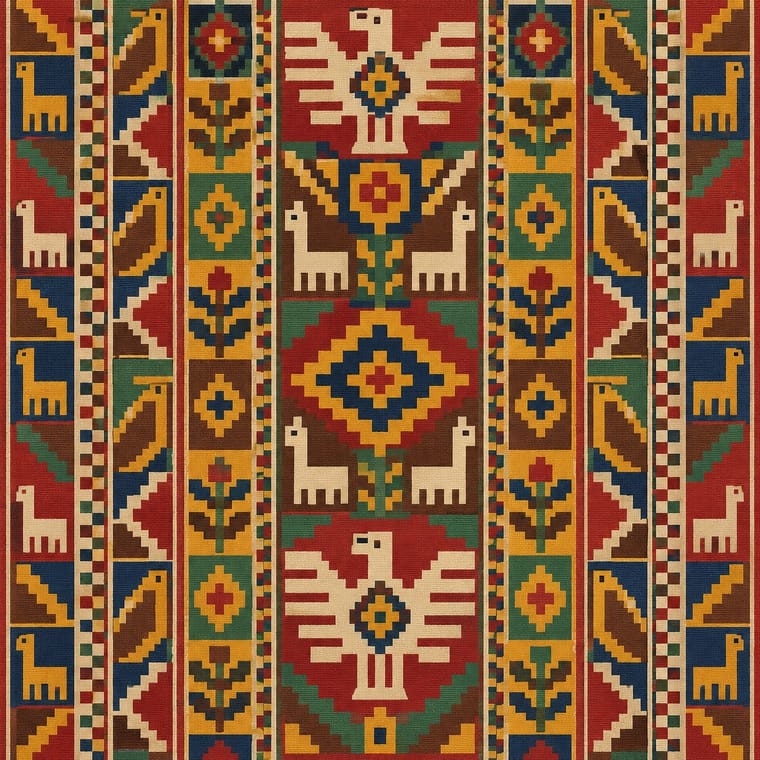
The graphic systems of Andean cloth, the region's most prestigious medium, in which every motif is built on the warp-and-weft grid. Wari tapestry tunics repeat staff-bearers and profile heads in columns, compressing and rotating them toward the edges until figure turns into geometry. Inca state cloth reduced design to t'oqapu, square cells of geometric signs granted as marks of rank, and living Quechua and Aymara weaving bands named pallay motifs between stripes.
Fira Sans; Andean Woven Graphic Systems used T'oqapu cells as a sign set standing where lettering would and Grid-built letterforms that share the woven cell, such as bitmap faces like Silkscreen
03
The colours
The ground and leading colours come from Andean Woven Graphic Systems, with a counter-accent from Needlework Sampler Lettering. The ink reads on the ground at 4.5:1 or more.
Andean Woven Graphic Systems Needlework Sampler Lettering
-
#24345cground · 39% -
#ece3cfink · 15% -
#d9a62eaccent · 20% -
#a3262aaccent · 15% -
#3d6b4aaccent · 11%
As CSS
:root {
  --ground: #24345c;
  --ink: #ece3cf;
  --accent-1: #d9a62e;
  --accent-2: #a3262a;
  --accent-3: #3d6b4a;
  --font-display: "Cinzel", serif;
  --font-text: "Fira Sans", sans-serif;
}
Use it with care
Andean Woven Graphic Systems: Andean textile motifs are living cultural property: pallay designs are named and taught within particular Quechua and Aymara communities, regional styles such as Jalq'a and Tarabuco mark community identity, and Inca t'oqapu were state-controlled insignia of rank. Do not lift motifs from museum tunics or market weavings onto products as generic 'Inca pattern'. Commission weavers through community-run organisations such as the Center for Traditional Textiles of Cusco, pay and credit them, and record which community each motif comes from.
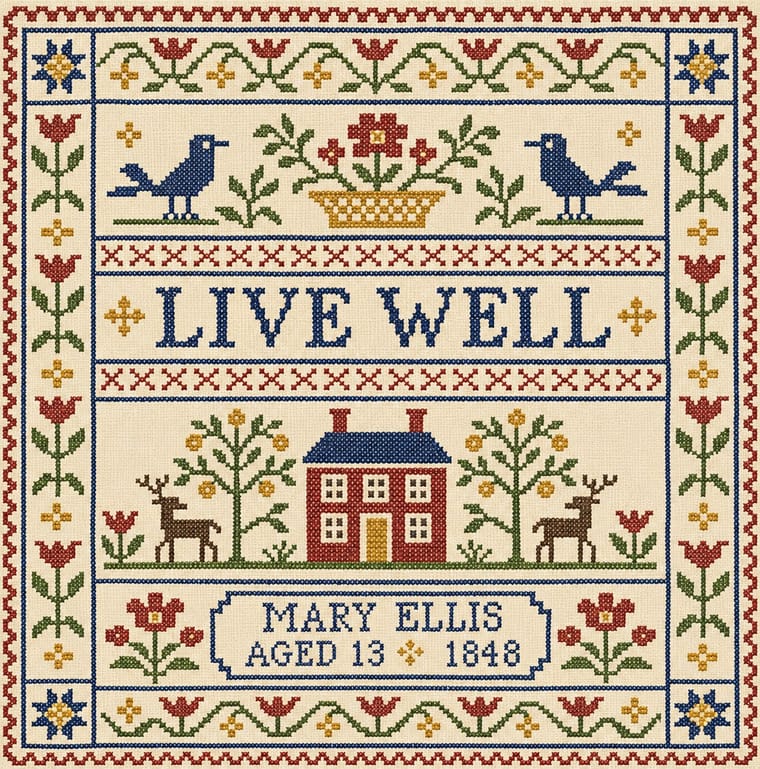
Needlework Sampler Lettering: This was largely girls' schoolwork and domestic training, so credit the individual makers by name where records survive and do not reduce it to anonymous cosy decoration; later packaging and contemporary embroidered typography are afterlives of the form, not proof of an uninterrupted tradition. One afterlife is Whitman's Sampler chocolate packaging (1912), whose stitched-look design echoes needlework samplers (Kent Delord House, kentdelordhouse.org/artifact-corner-whitmans-sampler-book/).
04
The two styles
05
More combinations
With Andean Woven Graphic Systems
- Bitmap & Pixel Graphics Pairs well · Woven cells and pixels are the same constraint; build icons and letters on a strict square grid with stepped diagonals, and credit the weaving source when you borrow its logic.
- Adinkra & Kente Symbol Systems Contrasts · Adinkra stamps named symbols into ruled squares and kente joins woven strips, whereas Andean cells are woven into one garment and distorted toward its edges; keep the two languages distinct.
- Brazilian Concrete Design Pairs well · Both vary a single module serially; apply the Wari rule of rotating and compressing one unit across a field to a systematic poster or identity.
- Islamic Geometric & Calligraphic Tradition Contrasts · Islamic pattern interlaces stars around radial centres while Andean geometry is orthogonal, stepped and deliberately irregular; choose one as the structural logic rather than blending them.
- Diné (Navajo) Weaving Design Contrasts · Both build stepped geometry on the thread grid. Andean cloth repeats and distorts a figure across cells and columns, while a Diné rug is one planned symmetrical field around a centre, so choose one structural logic.
- Mixteca-Puebla Codex Painting Contrasts · Andean signs are built on the thread grid and repeated as pattern, while codex signs are painted freely in contour and strung along a narrative path; do not merge the two as generic 'pre-Columbian'.
- Square Kufic (Bannāʾī) Contrasts · T'oqapu also fill square cells on a grid, but with signs of rank rather than legible words; compare them to see how a grid can carry writing or emblem, and never blend the two sacred systems into a generic 'geometric' pattern.
With Needlework Sampler Lettering
- Cottagecore Contrasts · Cottagecore takes the stitched look as soft pastoral mood; the sampler's core is the alphabet exercise and maker inscription.
- Guna Mola Contrasts · Both are textile image-making, but set the mola's colour density against the sampler's ordered rows.
- Arts & Crafts Movement Contrasts · Borrow its floral borders and handwork honesty, but keep the stepped thread-count letters instead of heavy book type.