Idea · Join two things
Fusion
Parts of two things joined into one object, both still recognisable.
It answers the question Which two things, brought together, make the idea? Also called hybrid object, hybrid metaphor or form substitution.
What it does
Says “this is that” in a single form: the classic visual metaphor.
A made-up example: a tree whose crown is a pair of lungs.
Fusion, put on a style
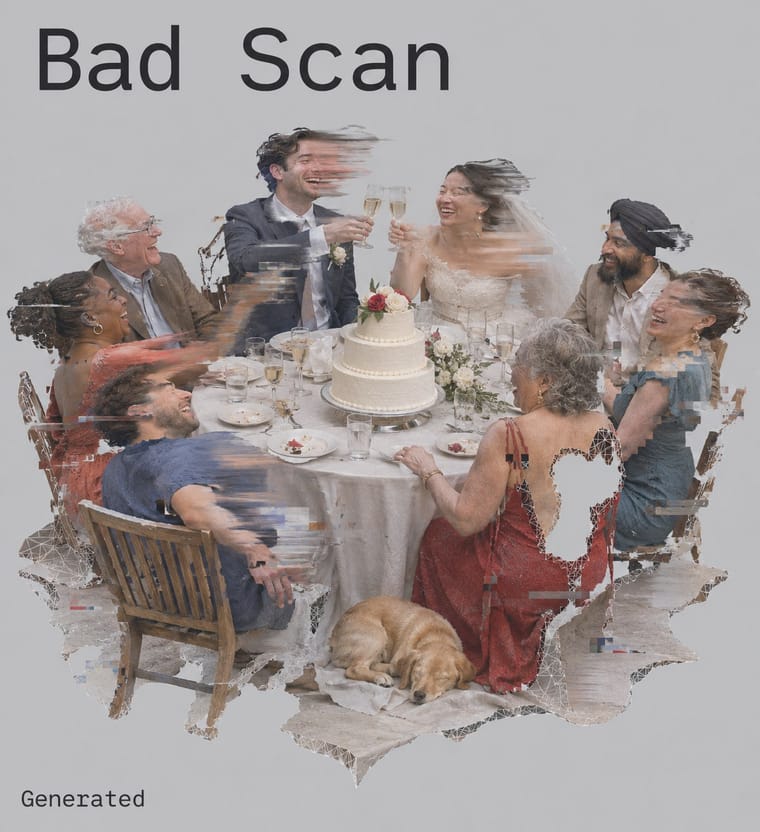
Each picture is a style from the atlas with this idea put on it, beside the same style as it is. All are AI-generated: none is a real or historical work.
-
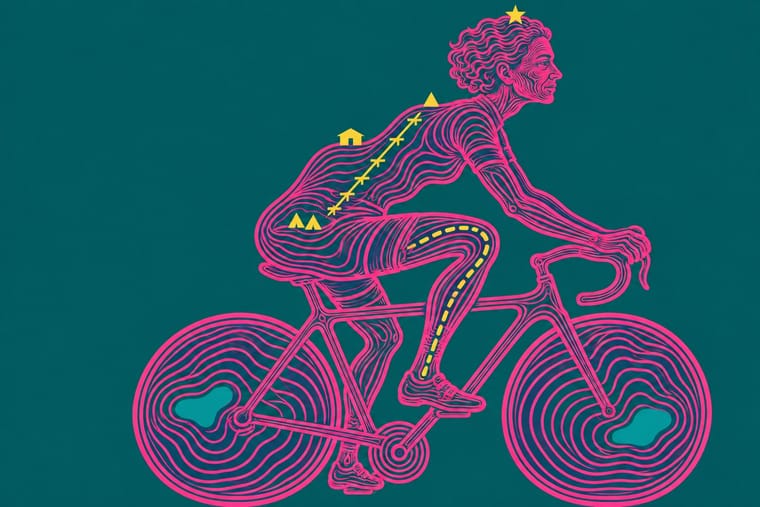
With fusion Contour Country Rider and bicycle are one range of hills joined by the trail from the pedal over her knee, so the ride and the rider are the same country.
-
As it is 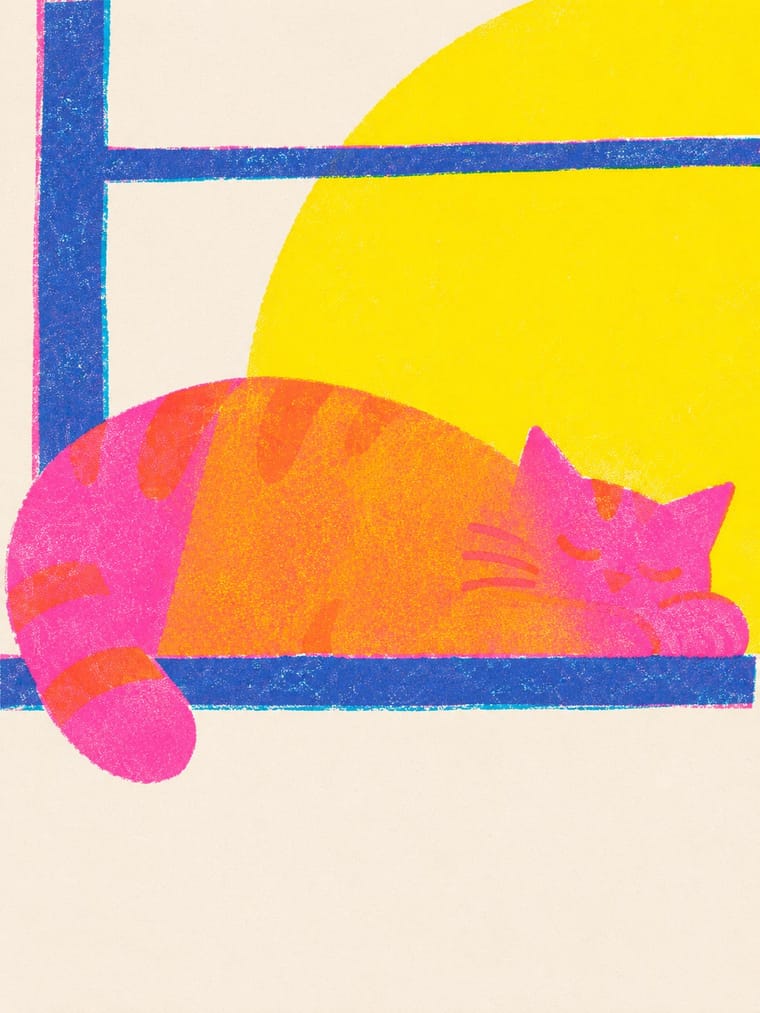
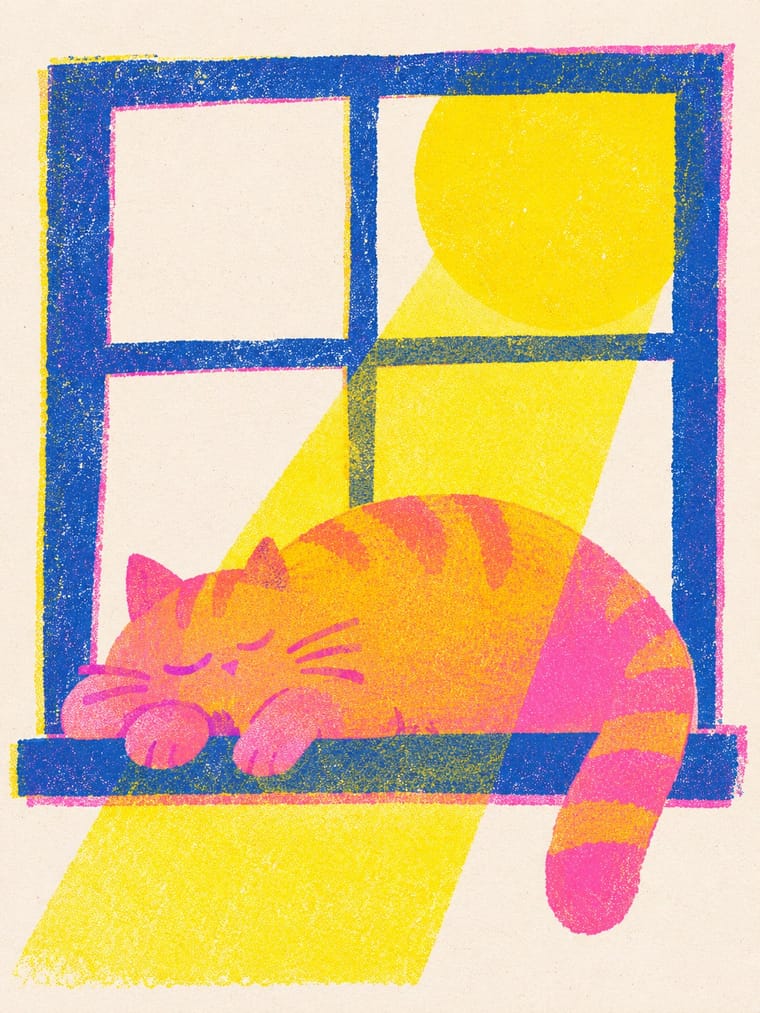
With fusion Risograph Cats Where the yellow sun overprints the pink cat the cat turns orange, so the warmth is printed into it.
-
As it is 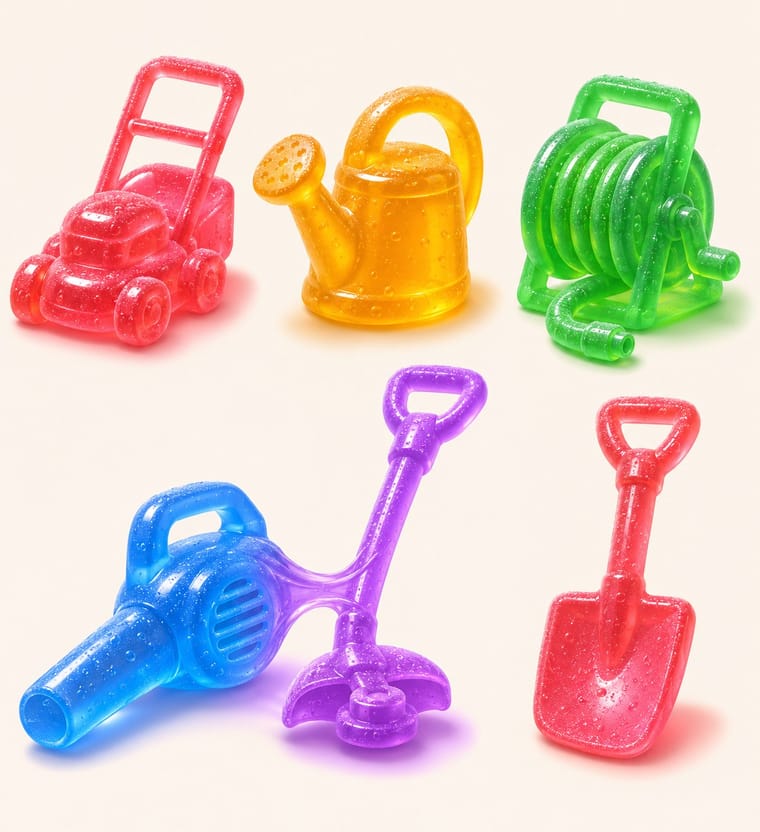
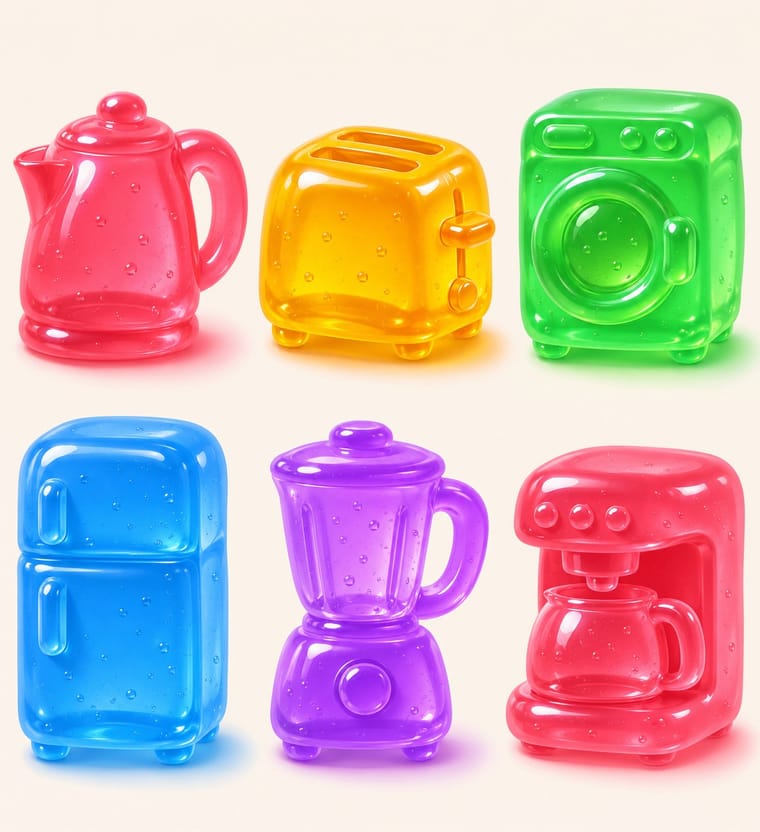
With fusion Gummy Machines The leaf blower and the strimmer have fused where they touched, as sweets do in a pocket.
-
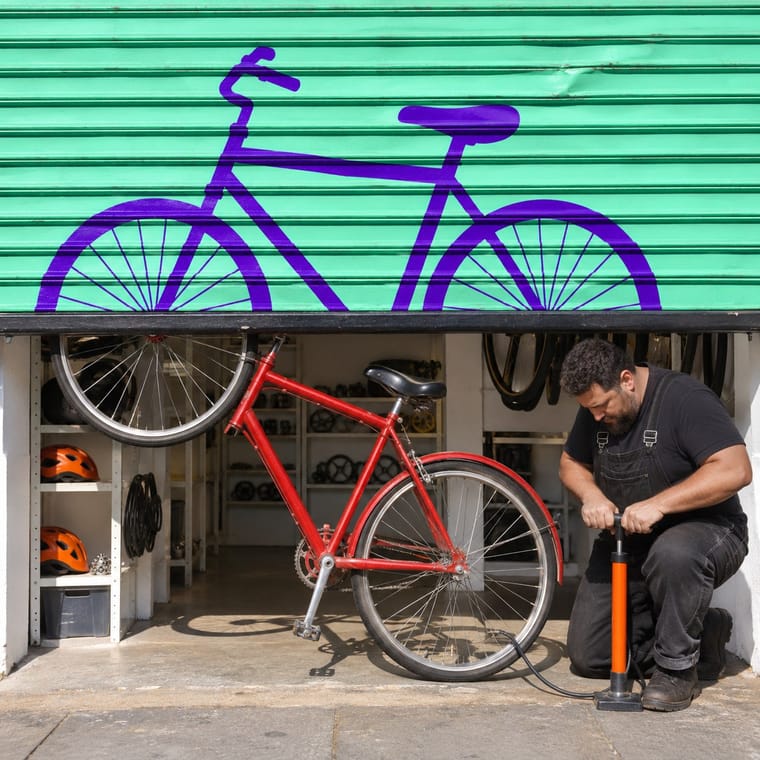
With fusion Shutter Down One bike is real round steel up to the bar and flat violet paint above it, its frame running on unbroken across the bar.
-
As it is 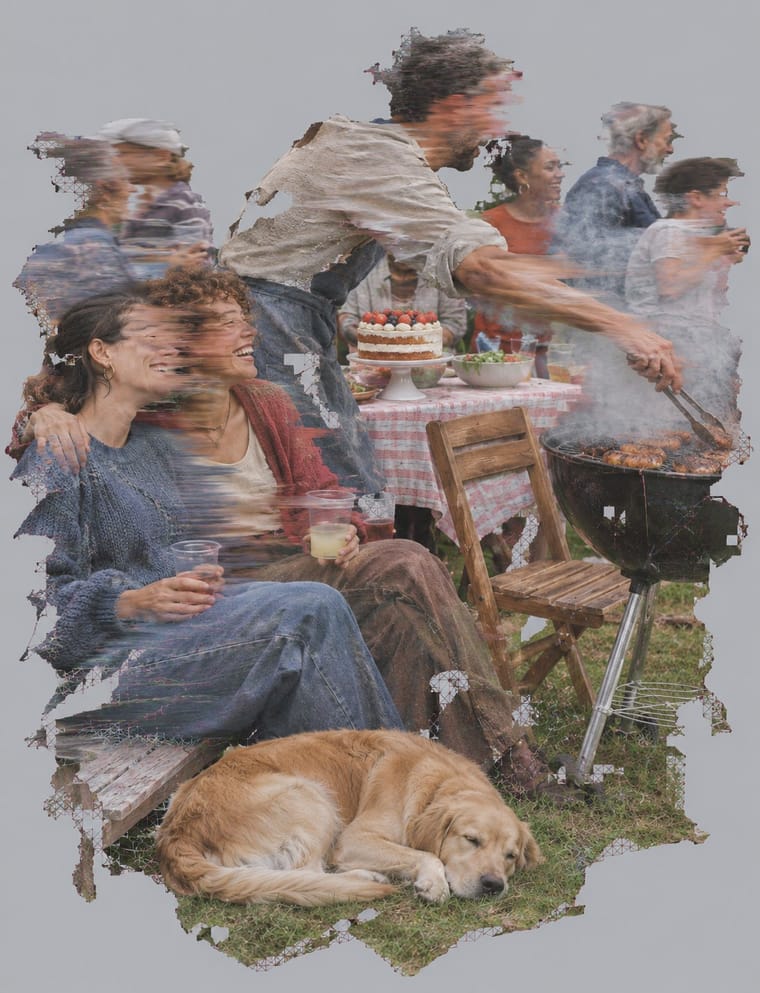
With fusion Bad Scan Two friends who sat close all afternoon have been scanned as one, joined at the shoulder.
Try it on any style
Pick a style, any style, and tell the image model:
Join parts of two different things into one single object, seamlessly, so both remain recognisable.
Then write the idea in one sentence, saying what the picture shows and what that gets across. If the idea leans on the words, check it against them. A tap for the O in a headline that has no O breaks the word.
Mix styles writes the rest of the prompt for any style in the atlas, or a blend of a few. Add the line above and your sentence to it.
Where it has been used
Real works that use it, named so you can look them up. Stylogeny shows no pictures of them.
- Man Ray’s Le Violon d’Ingres (1924): a woman’s back with the f-holes of a violin
What it helps to say
It can argue
Styles known for it 11
These styles use it often. For those marked signature, it is part of what they are. Any other style can take it too.
- Cuban Revolutionary Poster (OSPAAAL & ICAIC) signature Two things are joined into one emblem: Rostgaard's Hanoi, Martes 13 (1967) gives two falling missiles the face of Lyndon B. Johnson, and Asela Pérez (1973) turns South America's northern coast into a fist with a gun.
- Finnish Symbol Poster (the 'Finnish School', 1954–1995) signature Two things share one economical sign: Bruun's Salmon Flight (1958) draws the Finnair plane as a salmon for the Lapland route, and Piippo's Lahti Poster Museum poster (1990) gives a razor blade a filmstrip edge.
- Polish Poster School signature Condenses a whole film or play into one painted hybrid: a face merged with a landscape, a body with an animal, object or skull, both parts kept legible so the plot reads as a single metaphor.
- Surrealist Graphics signature Joins parts of unrelated things seamlessly into one uncanny creature or object: the bird- and lion-headed men of Max Ernst's collage novel Une semaine de bonté (1934), Meret Oppenheim's fur-covered cup Object (1936).
- West German Conceptual Film & Culture Poster (Hillmann and Rambow) signature One plain object merges with the film's subject: Hillmann's Sein oder Nichtsein (1964) gives a white egg Hitler's black forelock and moustache, its cracking shell spilling red and blue running legs.
- Afrobeat Sleeve Art Grafts horns and fangs onto recognisable political leaders, as on Beasts of No Nation, keeping the human likeness and monstrous additions legible together as an accusation.
- AIZ Political Photomontage (Heartfield) Joins man and beast in one figure: in Zum Krisen-Parteitag der SPD (AIZ, 1931) a figure with a tiger's face and a swastika stands for the capitalism the SPD promised to nurse back to health.
- Czechoslovak Film Poster Collage joins two objects into one metaphor: in Dlouhý's Happiness in a Briefcase (1963) a briefcase is fitted with a machine's crank, which one arm turns while a hand oils it from a red can.
- Dada Photomontage grafts heads onto machine parts and bodies onto other bodies, as in Hannah Höch's Das schöne Mädchen (1920), which fuses the ideal modern woman with car parts to mock the mechanised new age.
- Generative-AI Image Aesthetic Joins recognisable human, animal or object parts into one smoothly rendered hybrid, as in the shrimp-bodied Christ circulated as Shrimp Jesus, so the seamless mismatch invites a second look.
- Stenberg Brothers Constructivist Film Poster In Man with a Movie Camera (1929) a movie camera takes the place of half a woman's face, its lens one of her eyes; Symphony of a Great City (1928) copies Umbo's reporter with a camera for an eye.