Style combination · Contrasts
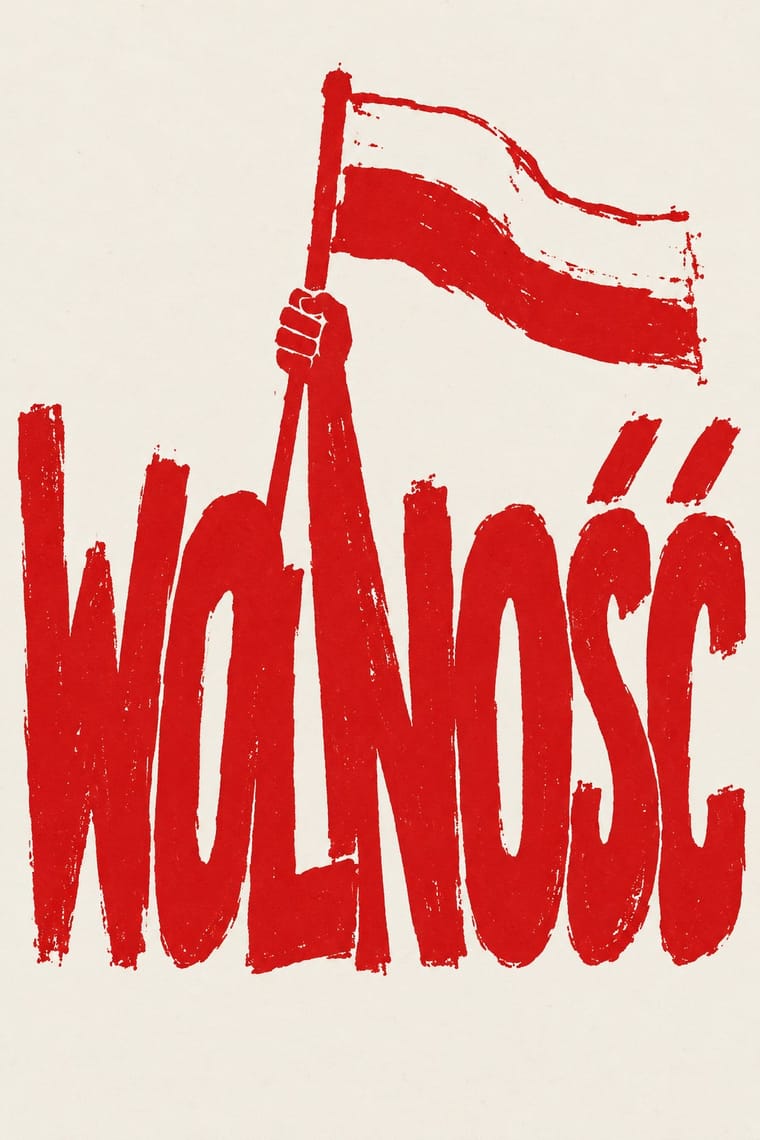
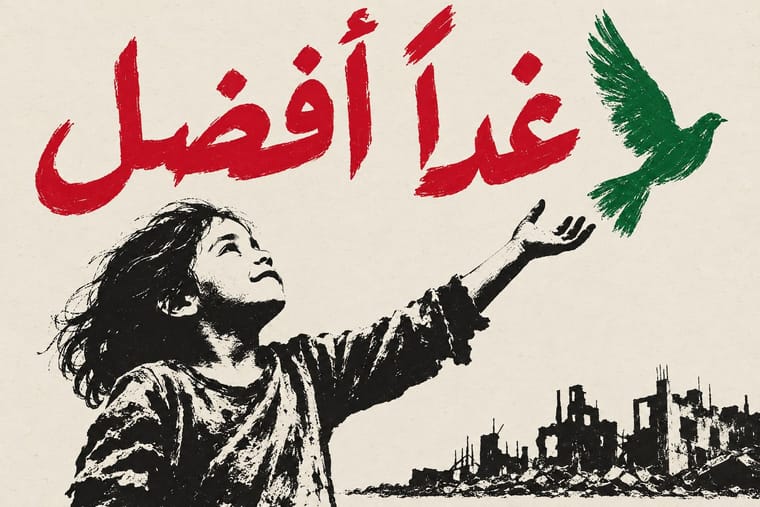
Solidarność × Syrian Revolution Graphics
Both made hand-lettered protest banners and cheap copies and answered force with irony, but Solidarność gathered under one logotype and a union, where these sheets were signed only by a town or a collective, bilingual and made for the feed; set them side by side to weigh one shared mark against many local, dated voices.
Mix them and make something Solidarność Syrian Revolution Graphics
01
What each style brings
Each part of the design comes from the style with the stronger say in it, and each style gives at least two.
Solidarność & Polish Underground Graphics Syrian Revolution Graphics (Kafranbel Banners & Poster Collectives)
- Type from Solidarność
- Colour from Solidarność
- Form from Solidarność
- Composition from Syrian Revolution Graphics
- Surface from Syrian Revolution Graphics
02
The type
Open fonts standing in for each style’s own type, which is often hand-drawn or commercial.
Display · Solidarność
Rise
Londrina Solid, standing in for Red hand-drawn capitals on amateur posters of the 1989 election campaign, such as Chylak's 'Głosuj na Solidarność'
Text · Syrian Revolution Graphics
Protest graphics of the Syrian uprising from 2011, made to be photographed and shared online rather than to last on a wall. In Kafranbel, a town in Idlib, calligraphers lettered Raed Fares's weekly slogans on white cloth in Arabic and often in English for audiences abroad, beside Ahmad Jalal's dark cartoons that parodied Western films and album covers. The anonymous collective The Syrian People Know Their Way posted posters for activists to print: one figure in halftone, silhouette or loose outline under a brushed Arabic slogan, answering the Assad cult's monolithic iconography.
Newsreader; Syrian Revolution Graphics used Freely brushed Arabic calligraphy for one- or two-word slogans, composed for each poster rather than typed in a stock font and Banner hand-lettering in marker and paint on white cloth or board
03
The colours
The ground and leading colours come from Solidarność, with a counter-accent from Syrian Revolution Graphics. The ink reads on the ground at 4.5:1 or more.
Solidarność & Polish Underground Graphics Syrian Revolution Graphics (Kafranbel Banners & Poster Collectives)
-
#f3efe6ground · 36% -
#161616ink · 14% -
#d4161faccent · 18% -
#a5835caccent · 14% -
#e0912faccent · 10% -
#3f7a3caccent · 8%
As CSS
:root {
  --ground: #f3efe6;
  --ink: #161616;
  --accent-1: #d4161f;
  --accent-2: #a5835c;
  --accent-3: #e0912f;
  --accent-4: #3f7a3c;
  --font-display: "Londrina Solid", cursive;
  --font-text: "Newsreader", serif;
}
Use it with care
Solidarność & Polish Underground Graphics: This is still a living, contested sign: the NSZZ Solidarność union claims the logo, and a Gdańsk court awarded it the copyright and barred Janiszewski from licensing it, a ruling the Warsaw Court of Appeal upheld (reported in November 2025), while Fydrych won a copyright case over his Orange Alternative dwarf against the city of Wrocław in 2014; do not reuse the logo, or a pastiche of it, for a brand or campaign as if it were public domain. The iconography also carries Catholic symbols and the memory of people killed under martial law and after it (the nine Wujek miners shot in December 1981; Father Jerzy Popiełuszko, murdered by security-service officers in October 1984). Solidaryca is still used for logos and slogans about Poland, freedom and democracy, its designer has criticised its exploitation by right-wing groups, and the union itself has grown increasingly aligned with Law and Justice, so do not use the cross, the candles or the lettering as decoration or to suggest an endorsement nobody gave.
Syrian Revolution Graphics (Kafranbel Banners & Poster Collectives): These graphics come from an uprising met with massacres, sieges, detention and disappearance, and their makers worked under pseudonyms at real risk: Raed Fares and Hamoud Junaid were shot dead in Kafranbel on 23 November 2018 (local activists blamed Hayat Tahrir al-Sham, which did not claim it), and the collective signed only with its own name, so never attribute a poster to an individual member or expose anyone who made this work. The martyr, siege, bread and Hama motifs refer to real massacres and real dead, not to an edgy 'war poster' look. The collective's posters were released under Creative Commons BY-NC, so do not use them or close pastiches commercially, and credit the collective, Kafranbel and the Creative Memory archive. The three-star flag has been the state flag since the HTS-dominated caretaker government took it up after Assad's fall, so using it, or Kafranbel's banners, as generic 'Syria' branding can imply an alignment their makers never gave. Have every Arabic line read by a fluent reader, never fill a design with pseudo-Arabic, do not mock the broken English of some banners, which was written to be understood abroad, and never present a generated image as a work of the uprising.
04
The two styles
05
More combinations
With Solidarność
- Extinction Rebellion Graphics Pairs well · A later movement that also lives on one simple mark anyone can copy by hand; pair a single shared emblem with locally made, cheaply printed posters to keep a campaign recognisable without central design.
- Punk & DIY Zine Contrasts · Same years and the same cheap reproduction, opposite temper: punk defaces the flag and the monarch with ransom-note collage, while Solidarity graphics carry the flag and the cross with reverence and keep to one disciplined hand-drawn word.
- NSK Retro-Avant-Garde Contrasts · Both answered a socialist state in the 1980s, but NSK impersonates power in solemn, centred heraldry, while the Polish underground mocked it with jokes, and the Orange Alternative with dwarfs, and Solidarity kept its reverence for church and nation; choose between over-identifying and laughing.
- Socialist Realist Propaganda Poster Contrasts · As the V&A notes, Janiszewski replaced the socialist motif of a leader conducting the crowd with the national flag; set a crowd of equal letters against one heroic leader to make that point.
- Atelier Populaire (May '68 Screenprint Poster) Pairs well · Both made anonymous protest prints on whatever press was to hand in one or two inks; borrow the Atelier's single brushed silhouette to give a crowded Solidarity-style word a figure to stand beside.
- Grapus (French Militant Graphic Collective) Pairs well · Opposite sides of the communist divide but the same Polish poster lineage: Janiszewski's crowded red letters and Grapus's loose handwriting both make a movement's voice look written by people, not set by an office.
- Latin American Feminist Protest Graphics (Ni Una Menos and the Green Wave) Contrasts · Both are movement identities copied by hand in the street, but Solidarność gathered behind one logo of crowded red letters and printed posters, bulletins and stamps, while the green wave gathers behind a wearable cloth and a colour; letters as the sign against an object as the sign.
- Belarusian Protest Illustration (2020 Uprising) Contrasts · Both activate red-white national references, but the Belarusian sample places figures and visual metaphors ahead of the tightly joined lettering that defines Solidarność. Compare the role of a shared flag with that of a shared wordmark; do not infer a direct lineage.
With Syrian Revolution Graphics
- Lebanese Civil War Party Poster Contrasts · Party-branded martyr obituaries with emblems and leaders against irreverent sheets, signed only by a town or a collective, that answer one leader's cult; the contrast shows what a poster without a party looks like.
- Arabic Calligraffiti Pairs well · Scale a brushed slogan from the poster up to a wall with calligraffiti's architectural sweep, keeping the words short and checked by a fluent reader.
- Egyptian Revolutionary Street Art (Mohamed Mahmoud Murals) Pairs well · Its 2011 neighbour: Cairo painted martyrs and friezes onto walls, Syria made portable sheets for the camera; put a Syrian-style printable slogan beside a mural photograph to join wall and feed.
- Atelier Populaire (May '68 Screenprint Poster) Pairs well · Both are anonymous collectives that argue out one figure and one punning slogan together; borrow May '68's single flat ink for a Syrian poster that must print cheaply.
- Ukrainian Wartime Graphics (Saint Javelin, War Stamps and Be Brave Like Ukraine) Contrasts · Both were made for the feed in wartime and answer violence with irony, but the Syrian posters came from an unsponsored, pseudonymous collective facing its own regime, while Ukraine's national post and president's office commission and sign theirs; the comparison shows what state backing does to protest graphics.