Style combination · Pairs well
Lianhuanhua Picture-Story Books × Republican-Era Manhua
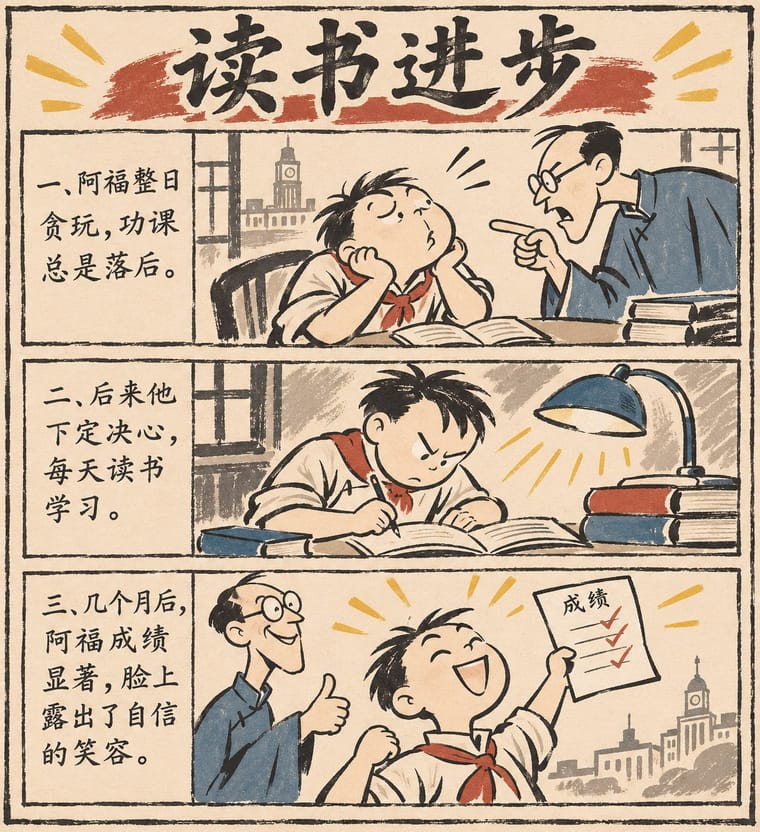
Run a manhua cartoon as a sequence of panels for a story rather than a single gag.
Mix them and make something Lianhuanhua Picture-Story Books Republican-Era Manhua
01
What each style brings
Each part of the design comes from the style with the stronger say in it, and each style gives at least two.
Lianhuanhua Picture-Story Books Republican-Era Manhua (Shanghai Cartoon Magazines)
- Type from Republican-Era Manhua
- Colour from Lianhuanhua Picture-Story Books
- Form from Republican-Era Manhua
- Composition from Lianhuanhua Picture-Story Books
- Surface from Republican-Era Manhua
02
The type
Open fonts standing in for each style’s own type, which is often hand-drawn or commercial.
Display · Republican-Era Manhua
Hello
Shippori Mincho, standing in for Regular-script (kaishu) handwriting
Text · Republican-Era Manhua
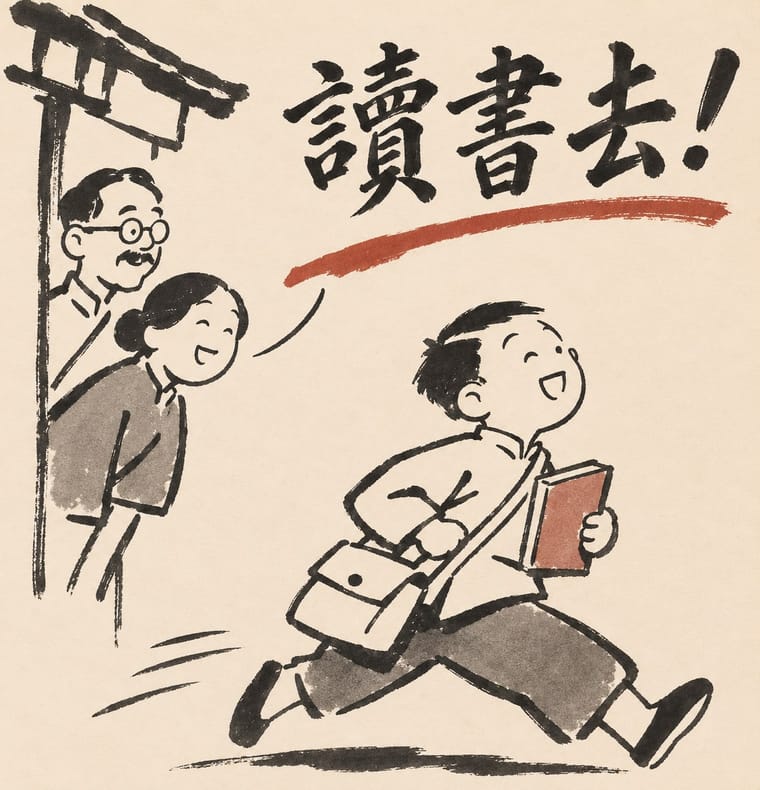
Single-panel cartoons and short strips in black brush or pen line, usually with a short Chinese caption (Sanmao ran wordless), printed in Shanghai's cartoon magazines (about 17 between 1934 and 1937). The defining core is the gentle, warm daily-life sketch of Feng Zikai, not political cartoon; the same line served urban satire, Ye Qianyu's Mr. Wang and, from 1937, wartime propaganda. Feng's wartime cartoons did not demonise the Japanese; do not reuse racialised caricature.
Shippori Mincho; Republican-Era Manhua used Hand-drawn Chinese brush captions and Regular-script (kaishu) handwriting
03
The colours
The ground and leading colours come from Lianhuanhua Picture-Story Books, with a counter-accent from Republican-Era Manhua. The ink reads on the ground at 4.5:1 or more.
Lianhuanhua Picture-Story Books Republican-Era Manhua (Shanghai Cartoon Magazines)
-
#f0ead8ground · 36% -
#1b1b1bink · 14% -
#e2b84aaccent · 18% -
#a3352baccent · 14% -
#b8ae98accent · 10% -
#3d6e8faccent · 8%
As CSS
:root {
  --ground: #f0ead8;
  --ink: #1b1b1b;
  --accent-1: #e2b84a;
  --accent-2: #a3352b;
  --accent-3: #b8ae98;
  --accent-4: #3d6e8f;
  --font-display: "Shippori Mincho", serif;
  --font-text: "Shippori Mincho", serif;
}
04
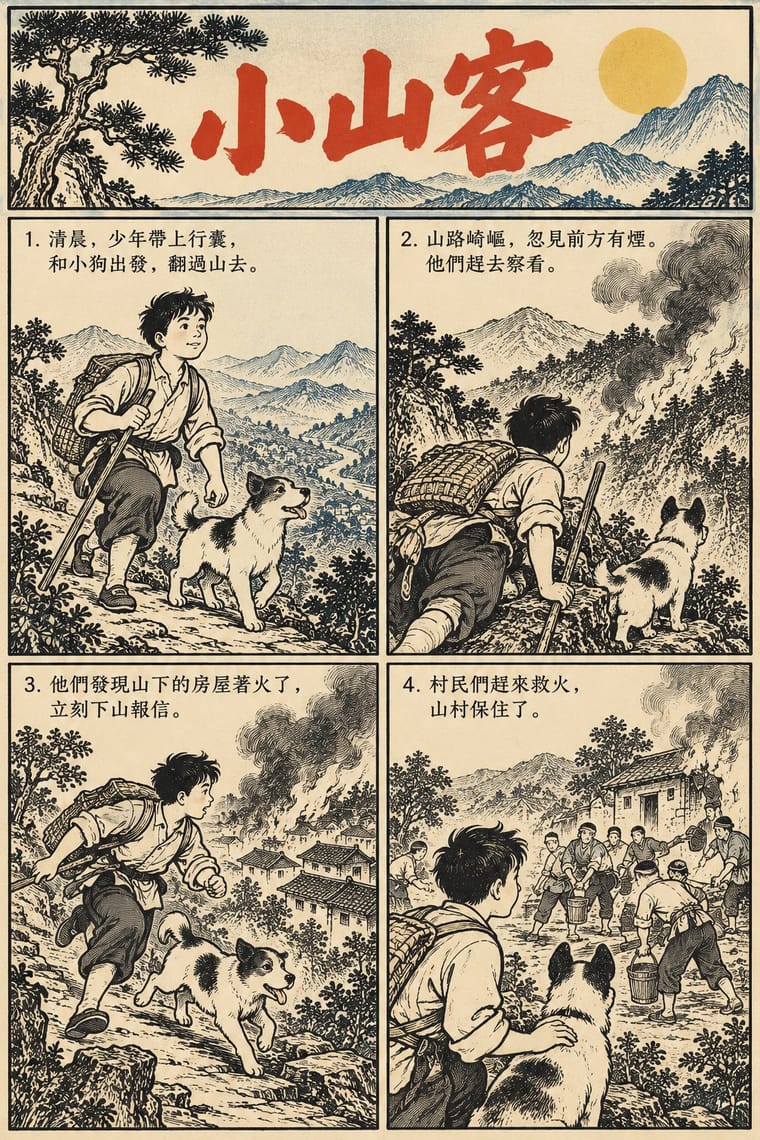
The two styles
05
More combinations
With Lianhuanhua Picture-Story Books
- Shanghai Modern & Yuefenpai Pairs well · Its parent print culture: pair a lianhuanhua line sequence with a yuefenpai-style painted cover for a period Shanghai feel.
- Chinese Modern Woodcut Movement Pairs well · Woodcut picture-stories and lianhuanhua share the one-image-per-page sequence; mix carved frames with drawn ones for documentary storytelling.
- Pop Art Graphics Contrasts · Pop blew one comic panel up to gallery scale; lianhuanhua keeps hundreds of quiet frames small, a useful test of scale and pace.
- Nianhua & Chinese Folk Print Pairs well · Both retell opera and folk stories for a popular audience; borrow nianhua colour for the cover and keep the inside in line.
- Ligne Claire (Franco-Belgian Clear Line) Contrasts · Both tell stories in outlined drawings; lianhuanhua gives each pocket-sized page one framed black-ink picture with a caption and keeps colour for the cover, ligne claire fills tiered multi-panel pages with balloons and flat, bright colour, caricatural figures in realistic settings.
- Amar Chitra Katha Comics Contrasts · Both are didactic picture-story series of classical and historical tales; lianhuanhua gives each page one black-ink picture over a printed caption, Amar Chitra Katha puts several coloured panels with balloons on every page.
- Chinese National-Style Animation (Shanghai Animation Film Studio) Contrasts · Its printed contemporary: both told myths and fables, the Monkey King among them, to a mass audience under the same state, but the palm-sized picture-story books drew in black ink line, one framed picture to a page with a caption, while the studio moved painted and cut-paper figures over empty grounds with few or no words.
- Story Manga (Postwar Japanese Comics) Contrasts · Both are cheap, widely rented East Asian picture-story books; lianhuanhua gives each palm-sized page one framed drawing with a caption beneath and no balloons, while story manga packs a page with panels of changing size, balloons, speed lines and drawn sound effects.
With Republican-Era Manhua
- Shanghai Modern & Yuefenpai Contrasts · The glossy, painted calendar-poster glamour of the same city, against bare ink line.
- Simplicissimus Satirical Style (Munich) Pairs well · Another black-line satirical magazine tradition; borrow its sharper caricature.
- Hong Kong Martial-Arts Manhua Contrasts · Its newspaper satire in spare line is the opposite of this long-form, painted action spectacle.