Style combination · Contrasts
Hong Kong Martial-Arts Manhua × Republican-Era Manhua
Its newspaper satire in spare line is the opposite of this long-form, painted action spectacle.
Mix them and make something Hong Kong Martial-Arts Manhua Republican-Era Manhua
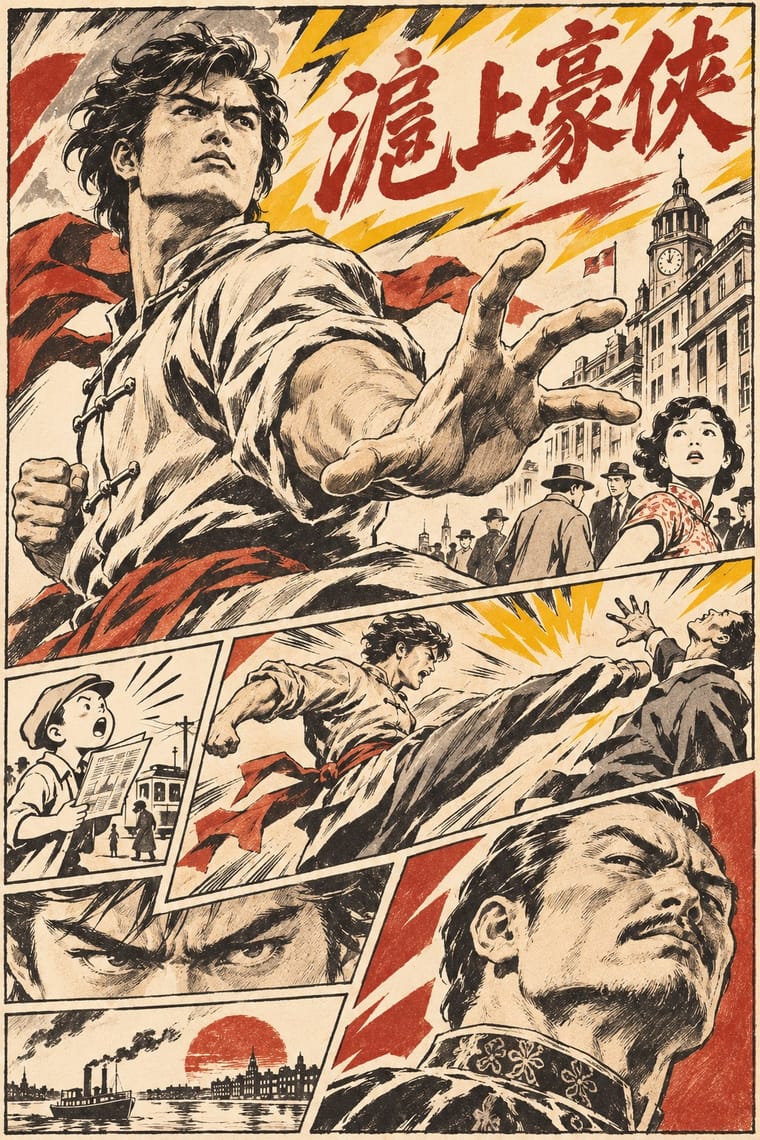
01
What each style brings
Each part of the design comes from the style with the stronger say in it, and each style gives at least two.
Hong Kong Martial-Arts Manhua Republican-Era Manhua (Shanghai Cartoon Magazines)
- Type from Republican-Era Manhua
- Colour from Republican-Era Manhua
- Form from Hong Kong Martial-Arts Manhua
- Composition from Hong Kong Martial-Arts Manhua
- Surface from Republican-Era Manhua
02
The type
Open fonts standing in for each style’s own type, which is often hand-drawn or commercial.
Display · Republican-Era Manhua
Hello
Shippori Mincho, standing in for Regular-script (kaishu) handwriting
Text · Republican-Era Manhua
Single-panel cartoons and short strips in black brush or pen line, usually with a short Chinese caption (Sanmao ran wordless), printed in Shanghai's cartoon magazines (about 17 between 1934 and 1937). The defining core is the gentle, warm daily-life sketch of Feng Zikai, not political cartoon; the same line served urban satire, Ye Qianyu's Mr. Wang and, from 1937, wartime propaganda. Feng's wartime cartoons did not demonise the Japanese; do not reuse racialised caricature.
Shippori Mincho; Republican-Era Manhua used Hand-drawn Chinese brush captions and Regular-script (kaishu) handwriting
03
The colours
The ground and leading colours come from Republican-Era Manhua, with a counter-accent from Hong Kong Martial-Arts Manhua. The ink reads on the ground at 4.5:1 or more.
Hong Kong Martial-Arts Manhua Republican-Era Manhua (Shanghai Cartoon Magazines)
-
#f1ead8ground · 36% -
#1b1b1bink · 14% -
#a3352baccent · 18% -
#f2b705accent · 14% -
#b8ae98accent · 10% -
#c8102eaccent · 8%
As CSS
:root {
  --ground: #f1ead8;
  --ink: #1b1b1b;
  --accent-1: #a3352b;
  --accent-2: #f2b705;
  --accent-3: #b8ae98;
  --accent-4: #c8102e;
  --font-display: "Shippori Mincho", serif;
  --font-text: "Shippori Mincho", serif;
}
04
The two styles
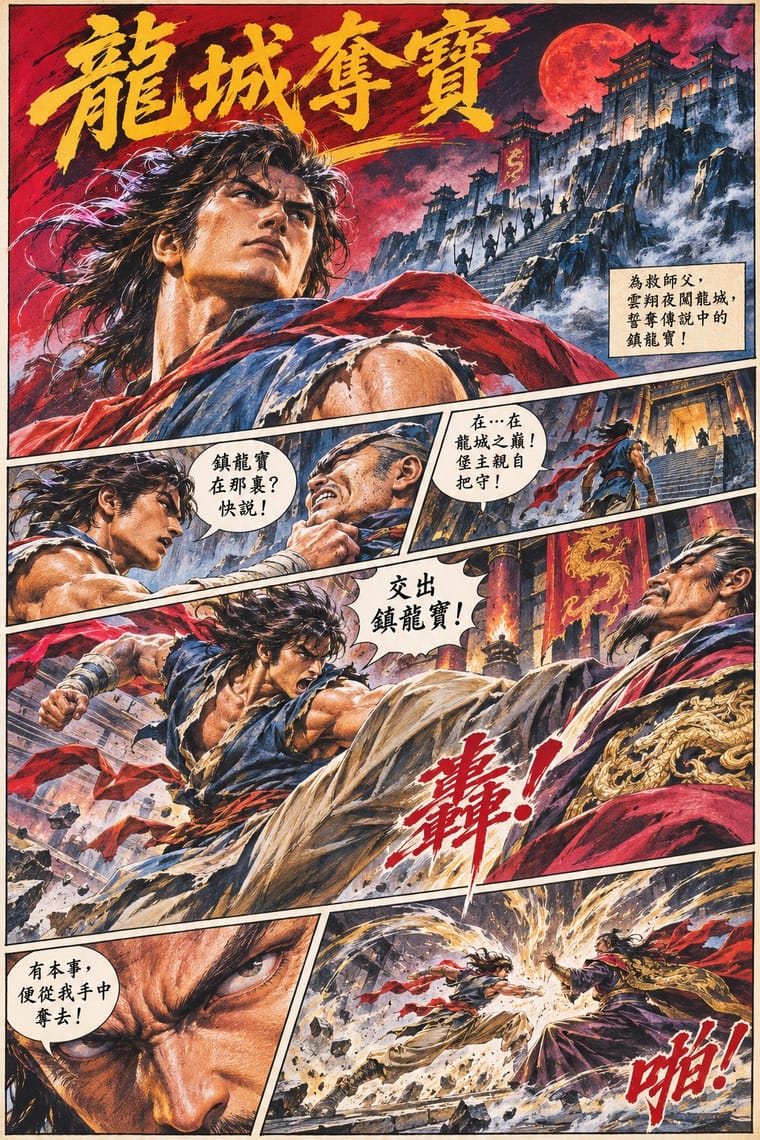
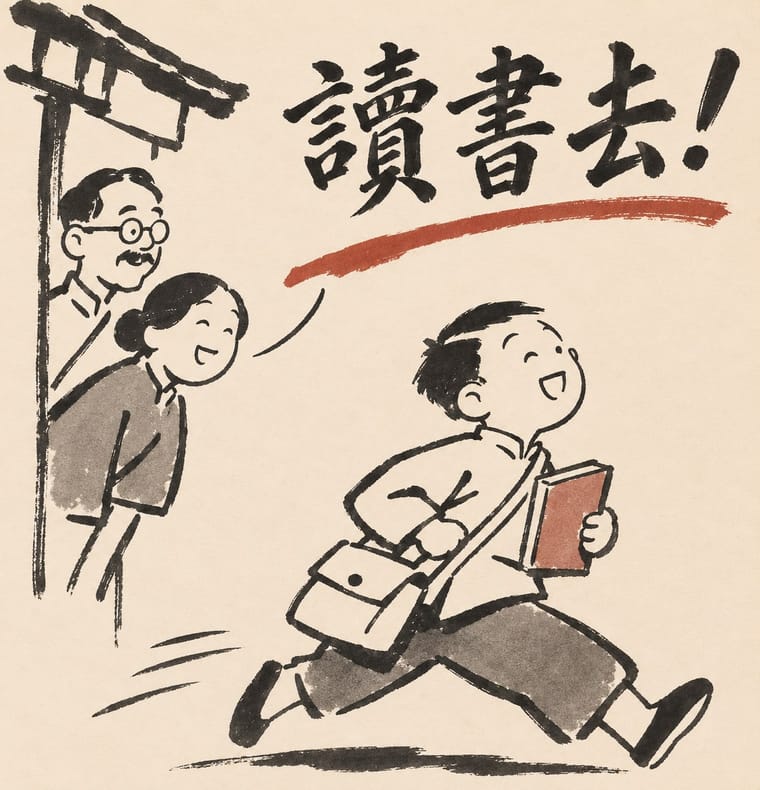
05
More combinations
With Hong Kong Martial-Arts Manhua
- Story Manga (Postwar Japanese Comics) Contrasts · Set its screentoned, stylised line beside this painted realism to see how one comics tradition can use two grammars of action.
- American Four-Colour Comic Book (Golden to Bronze Age) Pairs well · Both serialise muscular heroes in colour; use the American grid for pace and this style's rendering for weight.
- Hong Kong Cinema Poster (Shaw Brothers and Golden Harvest era) Pairs well · Borrow the painted star poses and saturated colour for covers that sell the same kung fu fantasy.
With Republican-Era Manhua
- Shanghai Modern & Yuefenpai Contrasts · The glossy, painted calendar-poster glamour of the same city, against bare ink line.
- Simplicissimus Satirical Style (Munich) Pairs well · Another black-line satirical magazine tradition; borrow its sharper caricature.
- Lianhuanhua Picture-Story Books Pairs well · Run a manhua cartoon as a sequence of panels for a story rather than a single gag.