Style combination · Pairs well
Lianhuanhua Picture-Story Books × Nianhua
Both retell opera and folk stories for a popular audience; borrow nianhua colour for the cover and keep the inside in line.
Mix them and make something Lianhuanhua Picture-Story Books Nianhua
01
What each style brings
Each part of the design comes from the style with the stronger say in it, and each style gives at least two.
Lianhuanhua Picture-Story Books Nianhua & Chinese Folk Print
- Type from Lianhuanhua Picture-Story Books
- Colour from Nianhua
- Form from Nianhua
- Composition from Lianhuanhua Picture-Story Books
- Surface from Nianhua
02
The type
Open fonts standing in for each style’s own type, which is often hand-drawn or commercial.
Display · Lianhuanhua Picture-Story Books
Square
Shippori Mincho, standing in for Songti (Ming) and Kaiti printing types for captions
Text · Lianhuanhua Picture-Story Books
Palm-sized Chinese picture books, about three by five inches, that tell a novel, opera, film or revolutionary story in hundreds of single framed drawings, one to a page, each with a short caption. Interiors are black ink line drawings, from fine classical-costume outline to realist sketching, with colour kept for the cover. Rented and read at street stalls, they were the most popular reading of 20th-century China until television and manga displaced them from the late 1980s.
Shippori Mincho; Lianhuanhua Picture-Story Books used Songti (Ming) and Kaiti printing types for captions and Hand-drawn meishuzi ('art lettering') cover titles
03
The colours
The ground and leading colours come from Nianhua, with a counter-accent from Lianhuanhua Picture-Story Books. The ink reads on the ground at 4.5:1 or more.
Lianhuanhua Picture-Story Books Nianhua & Chinese Folk Print
-
#f1e6cfground · 36% -
#1a1a1aink · 14% -
#f2c230accent · 18% -
#c8252caccent · 14% -
#e5739aaccent · 10% -
#2f8a4eaccent · 8%
As CSS
:root {
  --ground: #f1e6cf;
  --ink: #1a1a1a;
  --accent-1: #f2c230;
  --accent-2: #c8252c;
  --accent-3: #e5739a;
  --accent-4: #2f8a4e;
  --font-display: "Shippori Mincho", serif;
  --font-text: "Shippori Mincho", serif;
}
04
The two styles
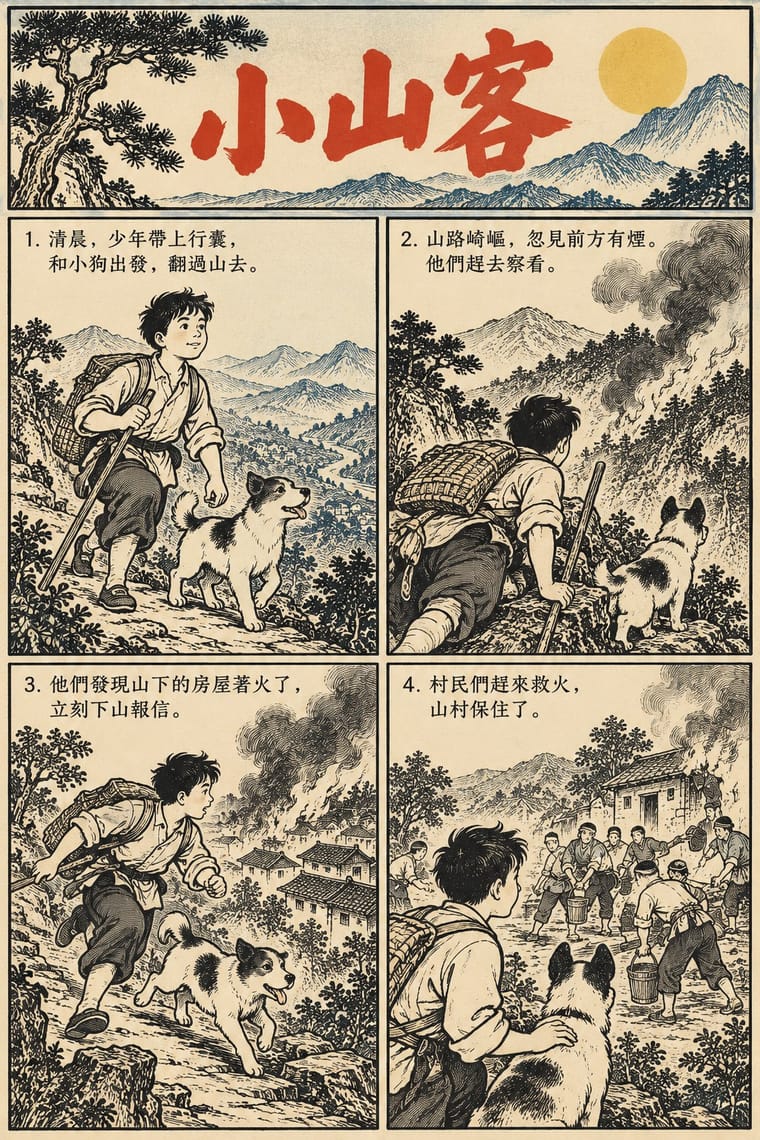
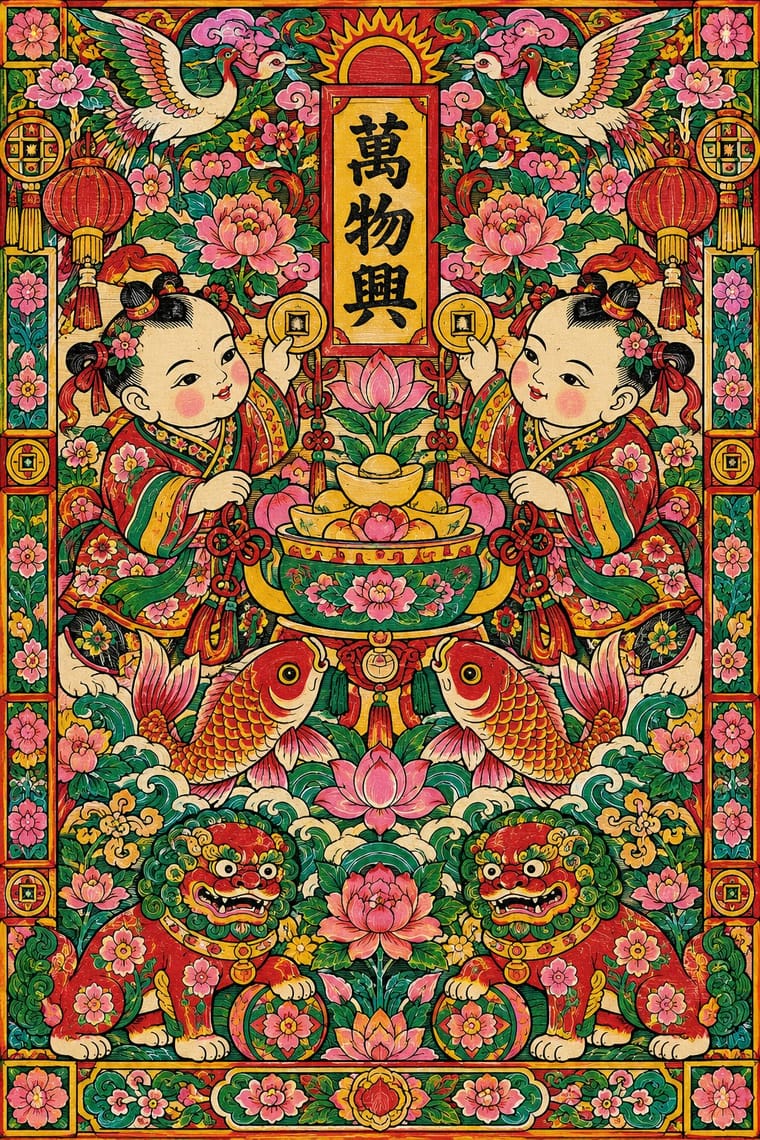
05
More combinations
With Lianhuanhua Picture-Story Books
- Shanghai Modern & Yuefenpai Pairs well · Its parent print culture: pair a lianhuanhua line sequence with a yuefenpai-style painted cover for a period Shanghai feel.
- Chinese Modern Woodcut Movement Pairs well · Woodcut picture-stories and lianhuanhua share the one-image-per-page sequence; mix carved frames with drawn ones for documentary storytelling.
- Pop Art Graphics Contrasts · Pop blew one comic panel up to gallery scale; lianhuanhua keeps hundreds of quiet frames small, a useful test of scale and pace.
- Ligne Claire (Franco-Belgian Clear Line) Contrasts · Both tell stories in outlined drawings; lianhuanhua gives each pocket-sized page one framed black-ink picture with a caption and keeps colour for the cover, ligne claire fills tiered multi-panel pages with balloons and flat, bright colour, caricatural figures in realistic settings.
- Amar Chitra Katha Comics Contrasts · Both are didactic picture-story series of classical and historical tales; lianhuanhua gives each page one black-ink picture over a printed caption, Amar Chitra Katha puts several coloured panels with balloons on every page.
- Chinese National-Style Animation (Shanghai Animation Film Studio) Contrasts · Its printed contemporary: both told myths and fables, the Monkey King among them, to a mass audience under the same state, but the palm-sized picture-story books drew in black ink line, one framed picture to a page with a caption, while the studio moved painted and cut-paper figures over empty grounds with few or no words.
- Story Manga (Postwar Japanese Comics) Contrasts · Both are cheap, widely rented East Asian picture-story books; lianhuanhua gives each palm-sized page one framed drawing with a caption beneath and no balloons, while story manga packs a page with panels of changing size, balloons, speed lines and drawn sound effects.
- Korean Webtoon Graphics Contrasts · Both are picture stories for a mass readership, but lianhuanhua frames one monochrome line drawing per pocket-book page with a caption below; switch to the webtoon when the story should run as one full-colour column with the gutter, not the page turn, setting the pace.
With Nianhua
- Shanghai Modern & Yuefenpai Pairs well · Yuefenpai calendar posters grew from nianhua; mix its auspicious symbols with Shanghai's airbrushed modern figures.
- Indian Calendar & Bazaar Art Pairs well · Both are devotional bazaar prints; share frontal deities, saturated colour and decorative frames across a festive campaign.
- Socialist Realist Propaganda Poster Pairs well · The 1950s 'new New Year pictures' show how nianhua symmetry and colour can carry a contemporary message without losing folk warmth.
- Lubok Popular Print Pairs well · Russia's lubok is nianhua's closest counterpart, a hand-coloured market woodblock with captions and satire; share flat folk figures and rhymed text across a festive print series.
- Minimalist Graphic Design Contrasts · Isolate a single nianhua motif, such as a carp, on a blank minimalist ground to turn abundance into an emblem.
- Guochao (China-Chic National Trend) Pairs well · Redraw door gods, carp and auspicious babies as clean vector characters for limited-edition packaging, keeping each rebus's meaning intact.
- Tibetan Woodblock Print Culture (Pecha & Prayer Flags) Contrasts · Both are popular devotional woodblock prints pasted or hung for good fortune. Nianhua floods the paper with saturated figure scenes, whereas the Tibetan print keeps to one ink and lets the dyed cloth or the lines of script carry the effect.
- Taiwan Floral Cloth (Huabu) Pairs well · Both use saturated red, pink and green and the same auspicious peony, phoenix and treasure vocabulary; set a nianhua-style figure or couplet on a plain panel over a floral-cloth ground for festive New Year packaging.