Style combination · Pairs well
European Heraldry × Tarot de Marseille Woodcut Cards
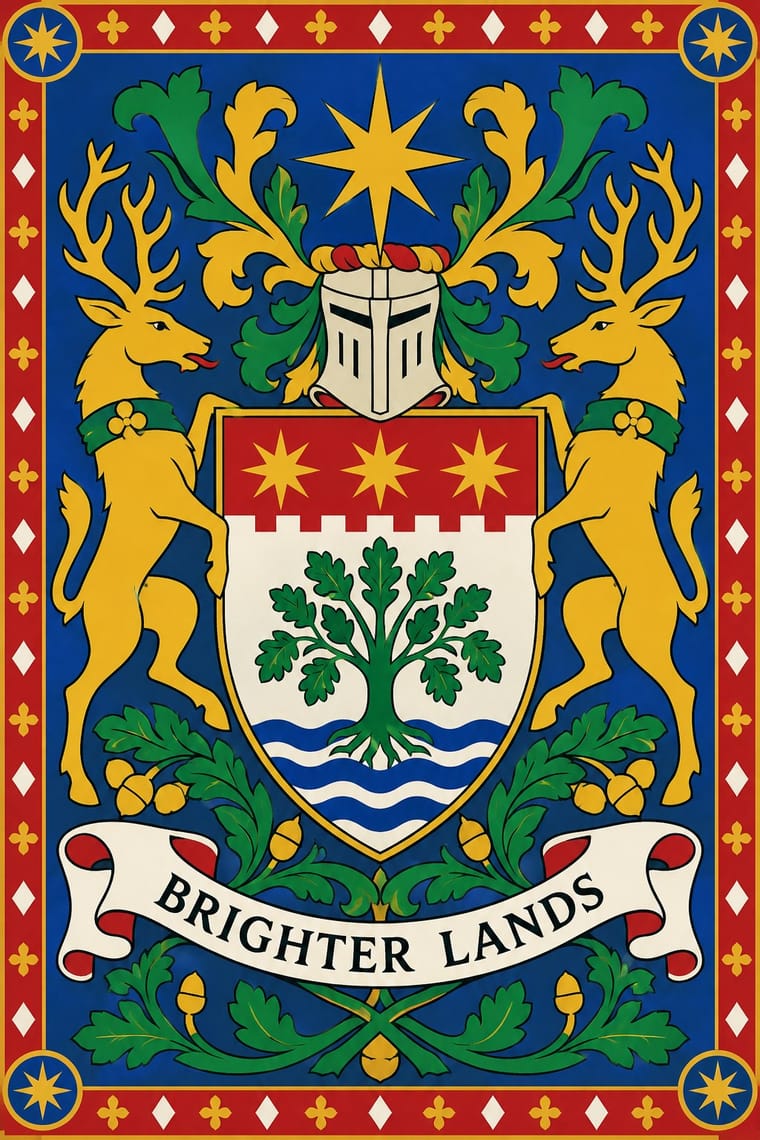
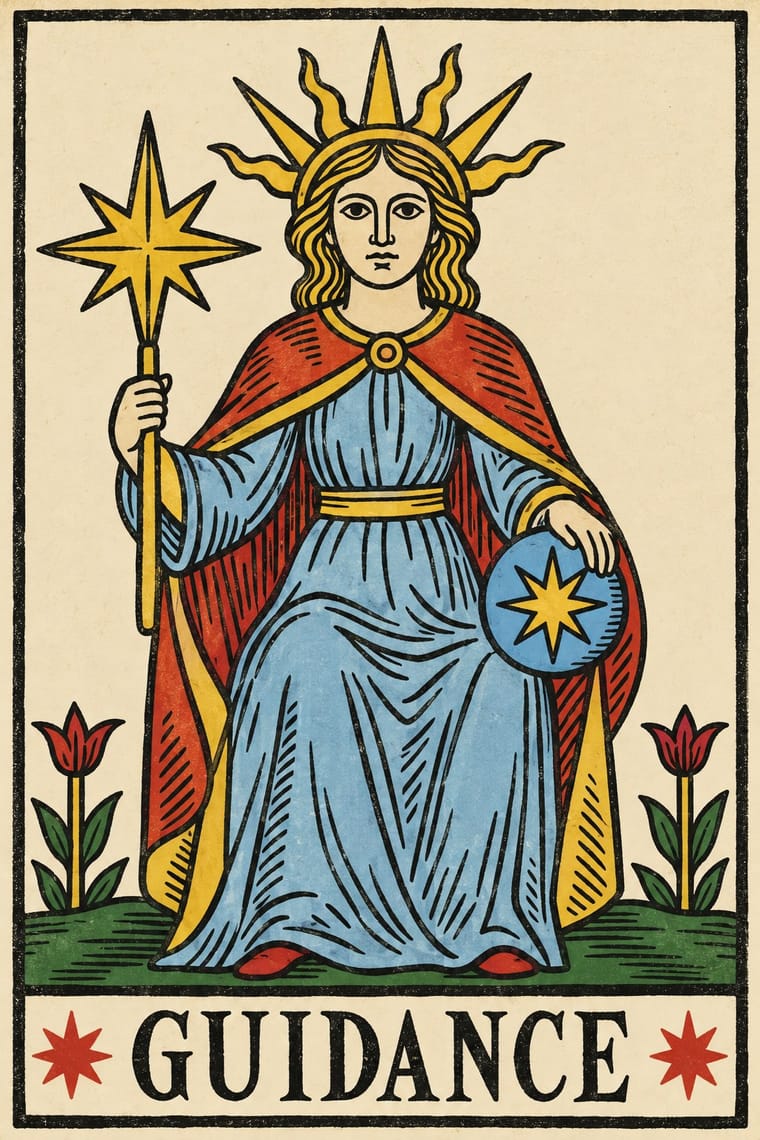
The Emperor's and Empress's eagle shields and the maker's escutcheon on the 2 of Coupes come from armory; pair heraldic tinctures and charges with a tarot figure for a crest-like card or label.
Mix them and make something European Heraldry Tarot de Marseille Woodcut Cards
01
What each style brings
Each part of the design comes from the style with the stronger say in it, and each style gives at least two.
European Heraldry Tarot de Marseille Woodcut Cards
- Type from Tarot de Marseille Woodcut Cards
- Colour from European Heraldry
- Form from European Heraldry
- Composition from Tarot de Marseille Woodcut Cards
- Surface from Tarot de Marseille Woodcut Cards
02
The type
Open fonts standing in for each style’s own type, which is often hand-drawn or commercial.
Display · Tarot de Marseille Woodcut Cards
Square
Cinzel, standing in for Roman capitals cut into the woodblock with the picture, in a band at the foot of each trump and court card, often with interpuncts and the copyists' spellings ('LE CHARIOR' and 'LA PANCES' on Dodal's cards, 'LE BATELEVR' with V for U)
Text · European Heraldry
The hereditary identifying devices of medieval Europe's knights and seals, codified into a rule-bound grammar still used by states, cities, churches, universities and families. A coat of arms is defined by its written blazon, not by a drawing: a few flat tinctures (two metals, five colours and the furs) that keep metal off metal and colour off colour, a shield divided by bold ordinaries, and stylised charges in fixed poses, redrawn by every age in its own idiom and combined by impalement and quartering.
Libre Caslon Text; European Heraldry used Gothic book and cursive hands naming the bearer above or beside each shield in medieval rolls of arms and armorials, as 'die coninc van denmarke' beside the Danish flag in the Gelre Armorial and Mottoes lettered on a scroll beneath the shield
03
The colours
The ground and leading colours come from European Heraldry, with a counter-accent from Tarot de Marseille Woodcut Cards. The ink reads on the ground at 4.5:1 or more.
European Heraldry Tarot de Marseille Woodcut Cards
-
#f4f1e8ground · 36% -
#141414ink · 14% -
#e8b923accent · 18% -
#b5121baccent · 14% -
#1c3f94accent · 10% -
#1d7a3aaccent · 8%
As CSS
:root {
  --ground: #f4f1e8;
  --ink: #141414;
  --accent-1: #e8b923;
  --accent-2: #b5121b;
  --accent-3: #1c3f94;
  --accent-4: #1d7a3a;
  --font-display: "Cinzel", serif;
  --font-text: "Libre Caslon Text", serif;
}
Use it with care
European Heraldry: A coat of arms belongs to a particular bearer, lineage or (in Polish heraldry) clan, not to everyone with a surname: in Scotland it can belong to only one person at a time and the Court of the Lord Lyon can fine those who usurp arms and have the offending items removed or destroyed, state arms are protected against unauthorised registration and use as trademarks under Article 6ter of the Paris Convention, and many European cities and universities protect their arms as trademarks. Design new arms by the rules of the tradition rather than copying a real family's, city's or state's arms for decoration or branding, and do not present invented arms as a family's historic coat of arms. Crusader and Templar shields and knights with crosses on their chests or shields have also become far-right insignia (Charlottesville 2017, the US Capitol 2021), and neo-Nazis use an eagle loosely based on German coats of arms, though not every eagle derives from it; check how a cross, an eagle or a crusading knight will read before using it, and avoid pairing them with militant or ethnic-nationalist themes.
Tarot de Marseille Woodcut Cards: Trace decks cut before 1800 (Noblet, Dodal and Conver in the BnF; Dodal cards and early 19th-century Conver printings at the Met) rather than recent redrawings such as Grimaud's 1930 'Ancien Tarot de Marseille' or the 1998 Camoin–Jodorowsky restoration, which are modern works; and do not present the occultists' story of an Egyptian origin, launched by Court de Gébelin in 1781, as history: the pattern descends from Milanese tarot and was made for the card game of tarot, which French and Swiss players used it for until the early 20th century.
04
The two styles
05
More combinations
With European Heraldry
- Hipster Artisanal Revival Contrasts · The craft badge borrows heraldry's air of lineage with an 'Est.' date and crossed arrows on kraft paper, while a real coat of arms is a granted or inherited, blazoned identity in strong tinctures; set the two side by side to show the difference between quoting heritage and holding it.
- Corporate Identity Modernism Pairs well · A coat of arms already is an identity defined by a specification rather than one drawing, applied to seals, banners, buildings and documents; Finnish municipal arms of the 1950s show how its flat two-tincture discipline reads as a modern mark, so use blazon-like rules to write a logo that can be redrawn without losing itself.
- Gothic Blackletter & Fraktur Tradition Pairs well · Medieval armorials name their shields in Gothic hands and German heraldic artists such as Otto Hupp also drew Fraktur; pair a flat Gothic shield with a blackletter name or motto for a certificate, diploma or civic document, checking how the broken script will read politically.
- Kamon (Japanese Family Crests) Contrasts · Both are hereditary emblem systems that began in the twelfth century and mark kinship by small codified variations, but a mon is a single-colour silhouette drawn round a centre while a coat of arms is a shield of contrasting tinctures read by the rule of tincture; compare them to choose between a one-ink crest and a coloured, partitioned one.
- Ultras Graphics (Curva Banners and Tifo) Contrasts · Both raise colours and emblems over a fighting company, but heraldry codifies one bearer's arms by rule, while a curva borrows the city's arms, a skull or a film villain for one afternoon and paints it the size of a stand; choose between a fixed blazon and a crowd-made, temporary emblem.
- Natural Wine Label Art Contrasts · The crest is the device of the classic château label that natural wine replaced with a face or an animal; put one heraldic charge beside a doodle to show which side of the wine world a bottle stands on.
- Emblem Book (Motto, Picture & Epigram) Contrasts · Alciato's book opens with the arms of the Duchy of Milan, but a coat of arms identifies a bearer by the rules of blazon, while an emblem is a freely invented moral riddle that needs its motto and verse; use arms to identify and an emblem to argue.
- Ottoman Tughra & Dîvânî Chancery Calligraphy Contrasts · Both mark a sovereign's identity and authority, but heraldry does it with charges and tinctures on a shield and the tughra with the ruler's name alone; compare them to decide whether an identity should be pictured or written.
With Tarot de Marseille Woodcut Cards
- Literatura de Cordel Woodcut Contrasts · Both cut stiff figures in wood with no perspective or modelling, but the cordel cover is printed in black only, with solid blacks and gouged white lines, above a plain letterpress title, while the tarot card colours an outline key through stencils and cuts its numeral and title into the same block; choose cordel for a stark one-colour cover, tarot for a coloured emblem in a numbered set.
- Nianhua & Chinese Folk Print Pairs well · Door gods and many tarot trumps are single frontal figures cut in wood and brightly coloured by hand; set them side by side for a cross-cultural series of guardian or allegorical figures.
- Lotería Card Imagery (Mexican Lotería) Contrasts · Lotería also gives each card one figure with its name at the foot, but in letterspaced sans capitals and soft offset colour; borrow the tarot's carved roman title band, ruled frame and stencil drift to make a lotería-type card set look older and graver.
- Imagerie d'Épinal & European Bilderbogen Contrasts · Both stencil-colour a black woodcut key in a few drifting colours, but the Épinal sheet tells a story in grids of captioned cases and marches rows of soldiers, while the tarot card isolates one emblematic subject under a numeral and a title; choose tarot for a single symbol, Épinal for a sequence.
- Risograph & Indie Print Culture Pairs well · Riso's few flat inks and loose registration reproduce the stencil drift of an old tarot; print a black woodcut-style key with red, yellow and pale blue for a contemporary deck or poster.
- Emblem Book (Motto, Picture & Epigram) Contrasts · The emblem book explains its picture with a printed motto and epigram on the page, while the tarot gives only a carved title and a numeral and leaves the meaning to play or reading; choose the emblem book when the text must carry the argument.