Style combination · Pairs well
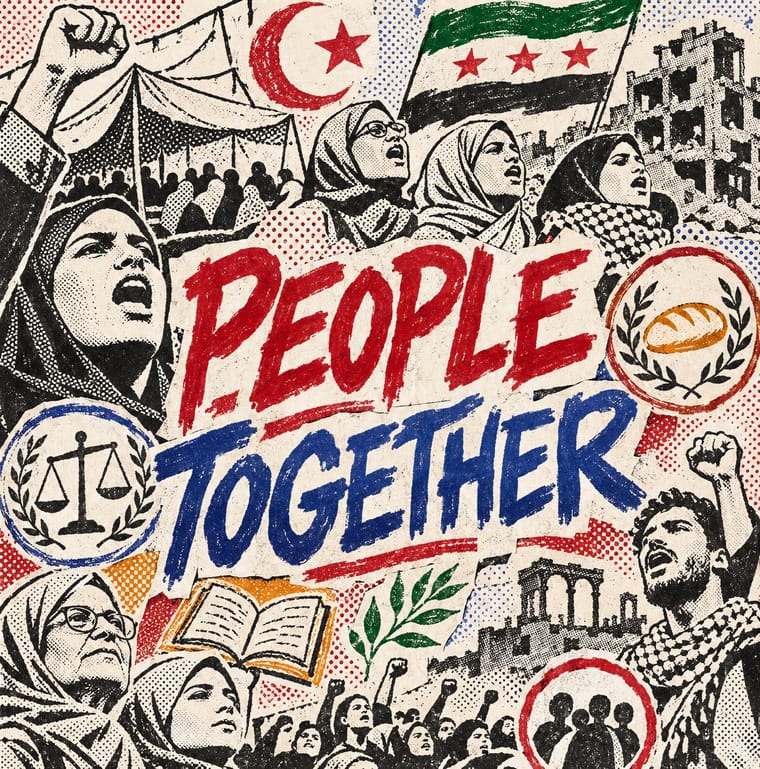
Shaheen Bagh and Anti-CAA Protest Graphics × Syrian Revolution Graphics
Another handmade, witty protest voice made on the street by the community itself.
Mix them and make something Shaheen Bagh and Anti-CAA Protest Graphics Syrian Revolution Graphics
01
What each style brings
Each part of the design comes from the style with the stronger say in it, and each style gives at least two.
Shaheen Bagh and Anti-CAA Protest Graphics (India) Syrian Revolution Graphics (Kafranbel Banners & Poster Collectives)
- Type from Shaheen Bagh and Anti-CAA Protest Graphics
- Colour from Syrian Revolution Graphics
- Form from Shaheen Bagh and Anti-CAA Protest Graphics
- Composition from Shaheen Bagh and Anti-CAA Protest Graphics
- Surface from Syrian Revolution Graphics
02
The type
Open fonts standing in for each style’s own type, which is often hand-drawn or commercial.
Display · Shaheen Bagh and Anti-CAA Protest Graphics
Rise
Yatra One; Shaheen Bagh and Anti-CAA Protest Graphics used Hand-painted slogan lettering in Hindi and Urdu and Hand-painted slogan lettering in English
Text · Syrian Revolution Graphics
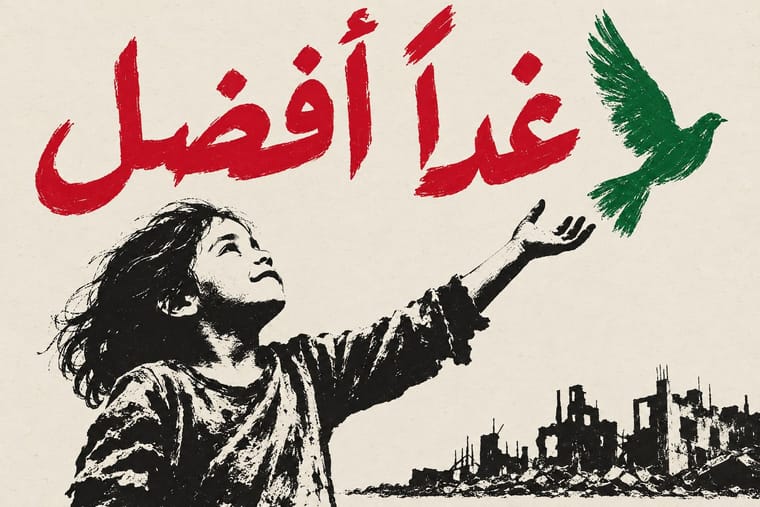
Protest graphics of the Syrian uprising from 2011, made to be photographed and shared online rather than to last on a wall. In Kafranbel, a town in Idlib, calligraphers lettered Raed Fares's weekly slogans on white cloth in Arabic and often in English for audiences abroad, beside Ahmad Jalal's dark cartoons that parodied Western films and album covers. The anonymous collective The Syrian People Know Their Way posted posters for activists to print: one figure in halftone, silhouette or loose outline under a brushed Arabic slogan, answering the Assad cult's monolithic iconography.
Newsreader; Syrian Revolution Graphics used Freely brushed Arabic calligraphy for one- or two-word slogans, composed for each poster rather than typed in a stock font and Banner hand-lettering in marker and paint on white cloth or board
03
The colours
The ground and leading colours come from Syrian Revolution Graphics, with a counter-accent from Shaheen Bagh and Anti-CAA Protest Graphics. The ink reads on the ground at 4.5:1 or more.
Shaheen Bagh and Anti-CAA Protest Graphics (India) Syrian Revolution Graphics (Kafranbel Banners & Poster Collectives)
-
#f1ece0ground · 36% -
#151515ink · 14% -
#c8102eaccent · 18% -
#ff9933accent · 14% -
#007a3daccent · 10% -
#2b4c9baccent · 8%
As CSS
:root {
  --ground: #f1ece0;
  --ink: #151515;
  --accent-1: #c8102e;
  --accent-2: #ff9933;
  --accent-3: #007a3d;
  --accent-4: #2b4c9b;
  --font-display: "Yatra One", cursive;
  --font-text: "Newsreader", serif;
}
Use it with care
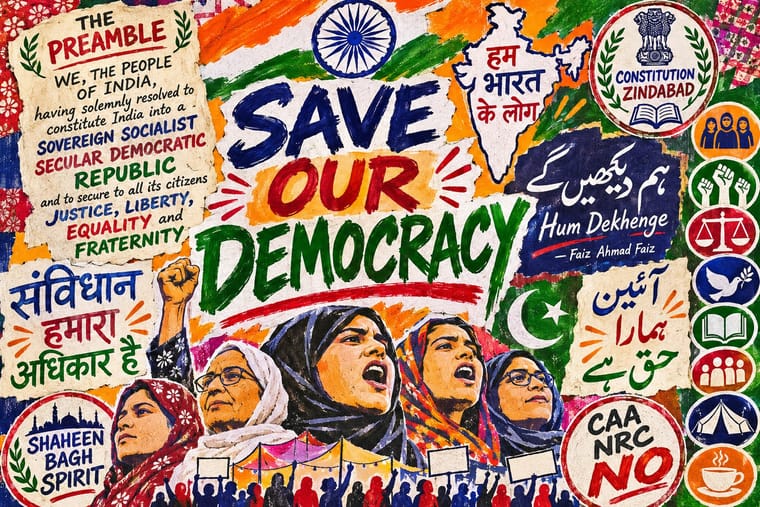
Shaheen Bagh and Anti-CAA Protest Graphics (India): This is the visual language of a living community's protest, women-led, with many Muslim women among its participants; the faith symbols (crescent) and poetry are theirs, and designers should not borrow them as decoration or strip them of their meaning and attribution. Hum Dekhenge is an Urdu poem by Faiz Ahmad Faiz (1979); it and the protest's symbols were contested, for instance in the 2019 'anti-Hindu' complaint at IIT Kanpur.
Syrian Revolution Graphics (Kafranbel Banners & Poster Collectives): These graphics come from an uprising met with massacres, sieges, detention and disappearance, and their makers worked under pseudonyms at real risk: Raed Fares and Hamoud Junaid were shot dead in Kafranbel on 23 November 2018 (local activists blamed Hayat Tahrir al-Sham, which did not claim it), and the collective signed only with its own name, so never attribute a poster to an individual member or expose anyone who made this work. The martyr, siege, bread and Hama motifs refer to real massacres and real dead, not to an edgy 'war poster' look. The collective's posters were released under Creative Commons BY-NC, so do not use them or close pastiches commercially, and credit the collective, Kafranbel and the Creative Memory archive. The three-star flag has been the state flag since the HTS-dominated caretaker government took it up after Assad's fall, so using it, or Kafranbel's banners, as generic 'Syria' branding can imply an alignment their makers never gave. Have every Arabic line read by a fluent reader, never fill a design with pseudo-Arabic, do not mock the broken English of some banners, which was written to be understood abroad, and never present a generated image as a work of the uprising.
04
The two styles
05
More combinations
With Shaheen Bagh and Anti-CAA Protest Graphics
With Syrian Revolution Graphics
- Lebanese Civil War Party Poster Contrasts · Party-branded martyr obituaries with emblems and leaders against irreverent sheets, signed only by a town or a collective, that answer one leader's cult; the contrast shows what a poster without a party looks like.
- Arabic Calligraffiti Pairs well · Scale a brushed slogan from the poster up to a wall with calligraffiti's architectural sweep, keeping the words short and checked by a fluent reader.
- Solidarność & Polish Underground Graphics Contrasts · Both made hand-lettered protest banners and cheap copies and answered force with irony, but Solidarność gathered under one logotype and a union, where these sheets were signed only by a town or a collective, bilingual and made for the feed; set them side by side to weigh one shared mark against many local, dated voices.
- Egyptian Revolutionary Street Art (Mohamed Mahmoud Murals) Pairs well · Its 2011 neighbour: Cairo painted martyrs and friezes onto walls, Syria made portable sheets for the camera; put a Syrian-style printable slogan beside a mural photograph to join wall and feed.
- Atelier Populaire (May '68 Screenprint Poster) Pairs well · Both are anonymous collectives that argue out one figure and one punning slogan together; borrow May '68's single flat ink for a Syrian poster that must print cheaply.
- Ukrainian Wartime Graphics (Saint Javelin, War Stamps and Be Brave Like Ukraine) Contrasts · Both were made for the feed in wartime and answer violence with irony, but the Syrian posters came from an unsponsored, pseudonymous collective facing its own regime, while Ukraine's national post and president's office commission and sign theirs; the comparison shows what state backing does to protest graphics.