Style combination · Pairs well
Adinkra × Uruguayan Constructive Symbol Graphics
Both organise reduced symbols in a grid; use it as a model for a coded sign vocabulary, with respect for its source culture.
Mix them and make something Adinkra Uruguayan Constructive Symbol Graphics
01
What each style brings
Each part of the design comes from the style with the stronger say in it, and each style gives at least two.
Adinkra & Kente Symbol Systems Uruguayan Constructive Symbol Graphics (Círculo y Cuadrado)
- Type from Uruguayan Constructive Symbol Graphics
- Colour from Adinkra
- Form from Uruguayan Constructive Symbol Graphics
- Composition from Adinkra
- Surface from Adinkra
02
The type
Open fonts standing in for each style’s own type, which is often hand-drawn or commercial.
Display · Uruguayan Constructive Symbol Graphics
Halo
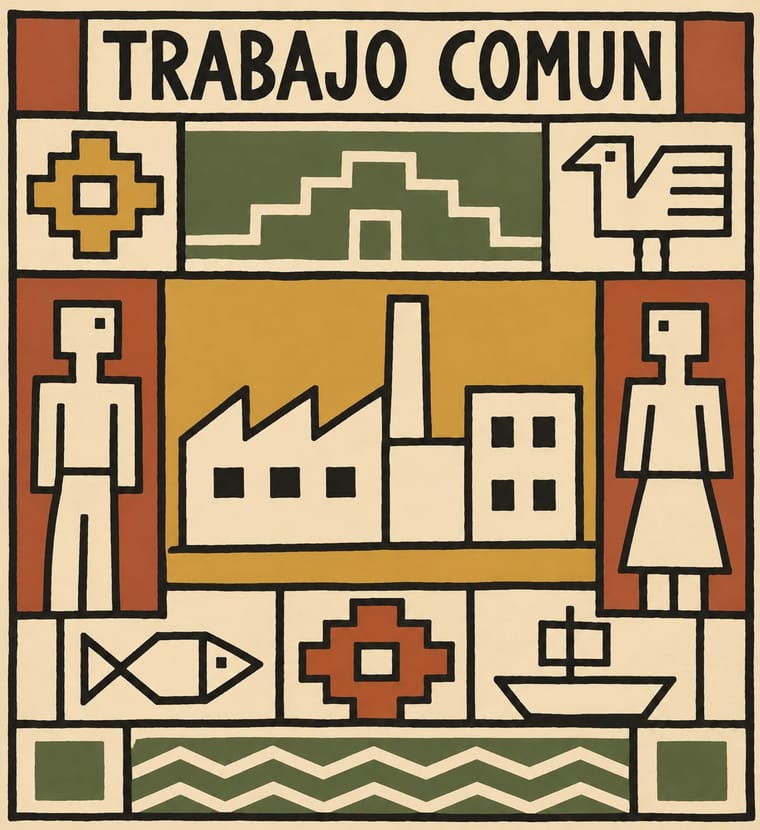
Londrina Solid, standing in for Torres-García's hand lettering
Text · Adinkra
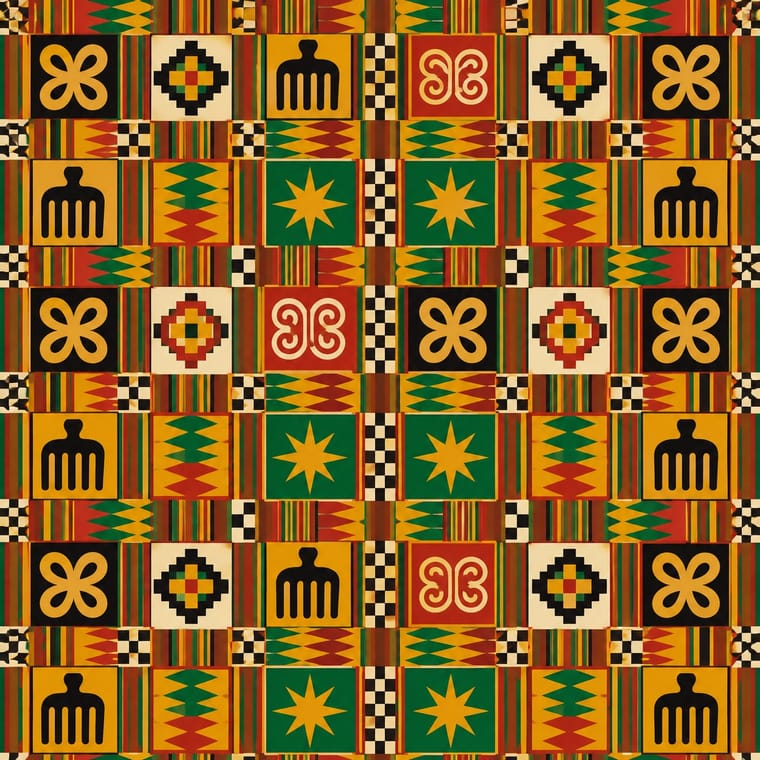
The Akan textile languages of Ghana. In adinkra, named symbols carrying proverbs (Gye Nyame, Sankofa, Dwennimmen) are stamped in black with carved calabash stamps on cloth ruled into squares; kente is narrow-strip cloth woven in named warp-faced blocks of gold, green, red and blue and sewn into checkerboards. Pattern is a vocabulary: each motif and colour is chosen for its meaning.
Archivo; Adinkra used Adinkra stamped glyphs as a pictographic set and Ghanaian hand-painted sign lettering for accompanying text
03
The colours
The ground and leading colours come from Adinkra, with a counter-accent from Uruguayan Constructive Symbol Graphics. The ink reads on the ground at 4.5:1 or more.
Adinkra & Kente Symbol Systems Uruguayan Constructive Symbol Graphics (Círculo y Cuadrado)
-
#efe2c4ground · 36% -
#151412ink · 14% -
#e3a51caccent · 18% -
#c8a24aaccent · 14% -
#b52a1faccent · 10% -
#7d3a1faccent · 8%
As CSS
:root {
  --ground: #efe2c4;
  --ink: #151412;
  --accent-1: #e3a51c;
  --accent-2: #c8a24a;
  --accent-3: #b52a1f;
  --accent-4: #7d3a1f;
  --font-display: "Londrina Solid", cursive;
  --font-text: "Archivo", sans-serif;
}
Use it with care
Adinkra & Kente Symbol Systems: Adinkra symbols and kente patterns are named, proverb-bearing Akan heritage, and some kente designs were historically reserved for the Asantehene and royal lineages. Learn each symbol's meaning before use, keep sacred signs such as Gye Nyame out of trivial or demeaning contexts, and commission or credit Ghanaian stampers and weavers (for example in Ntonso and Bonwire) rather than printing faux kente.
Uruguayan Constructive Symbol Graphics (Círculo y Cuadrado): Torres-García and his circle drew on pre-Columbian and Andean imagery (he wrote on Andean tradition and pre-Columbian art in 1936 and 1939) as modernist appropriation; this is not Indigenous authorship, and the school does not own those traditions. Do not mistake the 1936–1943 Montevideo journal for the separate 1929–31 Paris group of the same name. The palette is approximate, not sampled from scans, and page-design traits must be verified against original issues.
04
The two styles
05
More combinations
With Adinkra
- International Typographic Style Pairs well · A modular grid holds adinkra squares naturally; pair them with a neutral grotesque for contemporary Ghanaian institutional work.
- Bògòlanfini Mud Cloth Pairs well · Adinkra stamps dark signs on light cloth while bògòlan leaves light signs in a dark mud-dyed ground; use the reversal for a light and dark pattern pair, with each motif's meaning and makers credited.
- Ma & Wabi-sabi Aesthetics Contrasts · Saturated, meaning-dense repetition versus quiet emptiness: decide whether your message needs abundance or a single sign.
- Isotype Pictorial Statistics Pairs well · Treat adinkra as a consistent icon family on a strict grid, as Isotype did with pictograms, for wayfinding or data with local voice.
- Afrofuturist Design Pairs well · Afrofuturist identities draw on adinkra; render named symbols as glowing or metallic glyphs while keeping their meanings intact.
- Amazigh Sign System & Tifinagh Contrasts · Both are sign systems that carry meaning, but adinkra stamps named symbols into a ruled grid of squares. Amazigh weavers and tattooists vary the size and spacing of their signs by hand within bands and lattices, and share them with a script.
- Andean Woven Graphic Systems Contrasts · Adinkra stamps named symbols into ruled squares and kente joins woven strips, whereas Andean cells are woven into one garment and distorted toward its edges; keep the two languages distinct.
- Pacific Barkcloth (Tapa) Design Pairs well · Both are gridded ceremonial cloths of named motifs; borrow their shared square-by-square logic for a layout, while keeping each motif tied to its own culture and meaning.
With Uruguayan Constructive Symbol Graphics
- Hand-Painted Signage & Vernacular Lettering Pairs well · Shares the drawn, slightly irregular lettering that makes words part of the picture.
- De Stijl Contrasts · Keep the orthogonal scaffold but fill its compartments with handmade signs instead of pure colour planes.
- Brazilian Concrete Design Contrasts · Swap rule-generated abstraction for symbolic depiction to move from system to sign-language.