Style combination · Pairs well
Adinkra × Bògòlanfini Mud Cloth
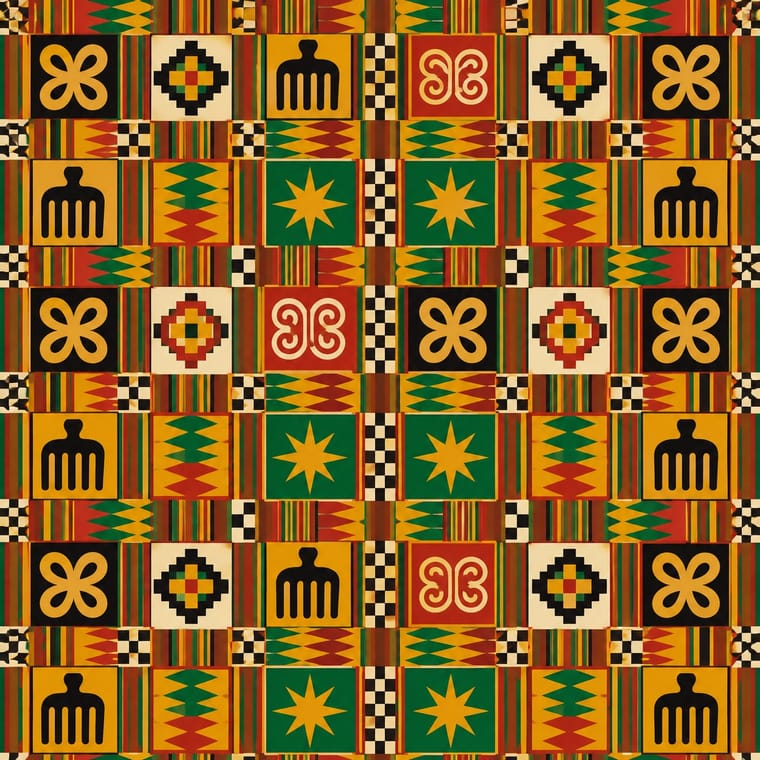
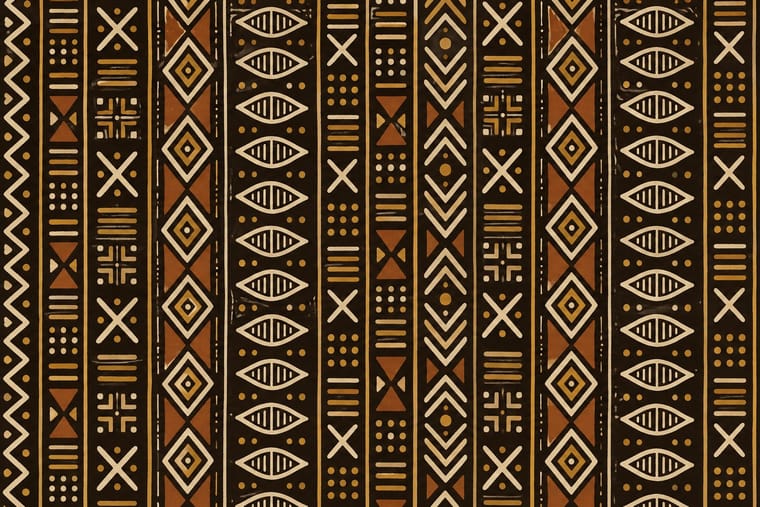
Adinkra stamps dark signs on light cloth while bògòlan leaves light signs in a dark mud-dyed ground; use the reversal for a light and dark pattern pair, with each motif's meaning and makers credited.
Both are West African sign cloths in a grid of compartments; flip adinkra's dark-on-light stamping into bògòlan's pale-on-dark negative for a two-part system.
01
What each style brings
Each part of the design comes from the style with the stronger say in it, and each style gives at least two.
Adinkra & Kente Symbol Systems Bògòlanfini Mud Cloth
- Type from Bògòlanfini Mud Cloth
-
- Colour from Bògòlanfini Mud Cloth
- Form from Adinkra
- Composition from Adinkra
- Surface from Adinkra
02
The type
Open fonts standing in for each style’s own type, which is often hand-drawn or commercial.
Display · Bògòlanfini Mud Cloth
Square
Agbalumo; Bògòlanfini Mud Cloth used Bògòlan sign repertoire used as a glyph set and Irregular hand-painted sans capitals when text must accompany bògòlan-derived graphics
Text · Adinkra
The Akan textile languages of Ghana. In adinkra, named symbols carrying proverbs (Gye Nyame, Sankofa, Dwennimmen) are stamped in black with carved calabash stamps on cloth ruled into squares; kente is narrow-strip cloth woven in named warp-faced blocks of gold, green, red and blue and sewn into checkerboards. Pattern is a vocabulary: each motif and colour is chosen for its meaning.
Archivo; Adinkra used Adinkra stamped glyphs as a pictographic set and Ghanaian hand-painted sign lettering for accompanying text
03
The colours
The ground and leading colours come from Bògòlanfini Mud Cloth, with a counter-accent from Adinkra. The ink reads on the ground at 4.5:1 or more.
Adinkra & Kente Symbol Systems Bògòlanfini Mud Cloth
-
#2b1d14ground · 36% -
#e9dcc0ink · 14% -
#c99a3baccent · 18% -
#8c4a2aaccent · 14% -
#b52a1faccent · 10% -
#1d7a3caccent · 8%
As CSS
:root {
  --ground: #2b1d14;
  --ink: #e9dcc0;
  --accent-1: #c99a3b;
  --accent-2: #8c4a2a;
  --accent-3: #b52a1f;
  --accent-4: #1d7a3c;
  --font-display: "Agbalumo", cursive;
  --font-text: "Archivo", sans-serif;
}
Use it with care
Adinkra & Kente Symbol Systems: Adinkra symbols and kente patterns are named, proverb-bearing Akan heritage, and some kente designs were historically reserved for the Asantehene and royal lineages. Learn each symbol's meaning before use, keep sacred signs such as Gye Nyame out of trivial or demeaning contexts, and commission or credit Ghanaian stampers and weavers (for example in Ntonso and Bonwire) rather than printing faux kente.
Bògòlanfini Mud Cloth: Bògòlan motifs carry named references to Bamana history, proverbs, myths and animals such as the crocodile, and cloths worn by hunters and by women after initiation or childbirth were believed to protect and to absorb dangerous forces. Learn what a pattern refers to before using it, do not sell printed 'mudcloth' pattern as hand-made bògòlan, and commission, credit or collaborate with Malian makers (for example in Kolokani and Bamako workshops) rather than copying their cloths.
04
The two styles
05
More combinations
With Adinkra
- International Typographic Style Pairs well · A modular grid holds adinkra squares naturally; pair them with a neutral grotesque for contemporary Ghanaian institutional work.
- Ma & Wabi-sabi Aesthetics Contrasts · Saturated, meaning-dense repetition versus quiet emptiness: decide whether your message needs abundance or a single sign.
- Isotype Pictorial Statistics Pairs well · Treat adinkra as a consistent icon family on a strict grid, as Isotype did with pictograms, for wayfinding or data with local voice.
- Afrofuturist Design Pairs well · Afrofuturist identities draw on adinkra; render named symbols as glowing or metallic glyphs while keeping their meanings intact.
- Amazigh Sign System & Tifinagh Contrasts · Both are sign systems that carry meaning, but adinkra stamps named symbols into a ruled grid of squares. Amazigh weavers and tattooists vary the size and spacing of their signs by hand within bands and lattices, and share them with a script.
- Andean Woven Graphic Systems Contrasts · Adinkra stamps named symbols into ruled squares and kente joins woven strips, whereas Andean cells are woven into one garment and distorted toward its edges; keep the two languages distinct.
- Pacific Barkcloth (Tapa) Design Pairs well · Both are gridded ceremonial cloths of named motifs; borrow their shared square-by-square logic for a layout, while keeping each motif tied to its own culture and meaning.
- Fante Asafo Flags (Frankaa) Contrasts · Both put Akan proverbs on cloth, but adinkra stamps abstract named signs in a ruled grid and kente weaves blocks of pattern, while an asafo flag spells the proverb out as one pictorial scene of appliquéd figures on an open ground.
With Bògòlanfini Mud Cloth
- Ma & Wabi-sabi Aesthetics Pairs well · Share an earth palette and a respect for irregular, hand-made repeats; use them together for calm, tactile brand surfaces.
- Batik Pattern Tradition Pairs well · Both reserve the motif against a dyed ground (wax resist versus painted mud); combine the two for earthy negative-pattern surfaces.
- Amazigh Sign System & Tifinagh Contrasts · Bògòlan leaves pale signs in a dark mud-painted ground, while Beni Ouarain rugs and Kabyle pots draw dark signs on cream wool or white slip. Black-ground Amazigh weavings, such as Middle Atlas tent bands and the akhnif cape, are the exception; there, tell the two apart by the stepped, woven construction rather than by the ground.
- Uli & Nsibidi Line and Sign Tradition Pairs well · Both leave pale signs in a dark-dyed ground, bògòlan by painting mud around them and ukara by stitching raffia to resist indigo; ukara itself is restricted to Ekpe, so borrow the light-on-dark idea with public signs placed freely, credit each source and keep each motif's meaning.
- Warli Painting Pairs well · Both set pale marks on an earth-dark ground in a hand-made, slightly irregular repeat; bògòlan reserves mostly abstract signs in strip compartments, while Warli's signs depict people, animals, trees, the sun and the moon. Borrow the shared light-on-earth principle, but do not mix bògòlan signs and Warli figures into one generic 'tribal' surface; keep each set of motifs, its meaning and its makers apart.