Style combination · Pairs well
Adinkra × Afrofuturist Design
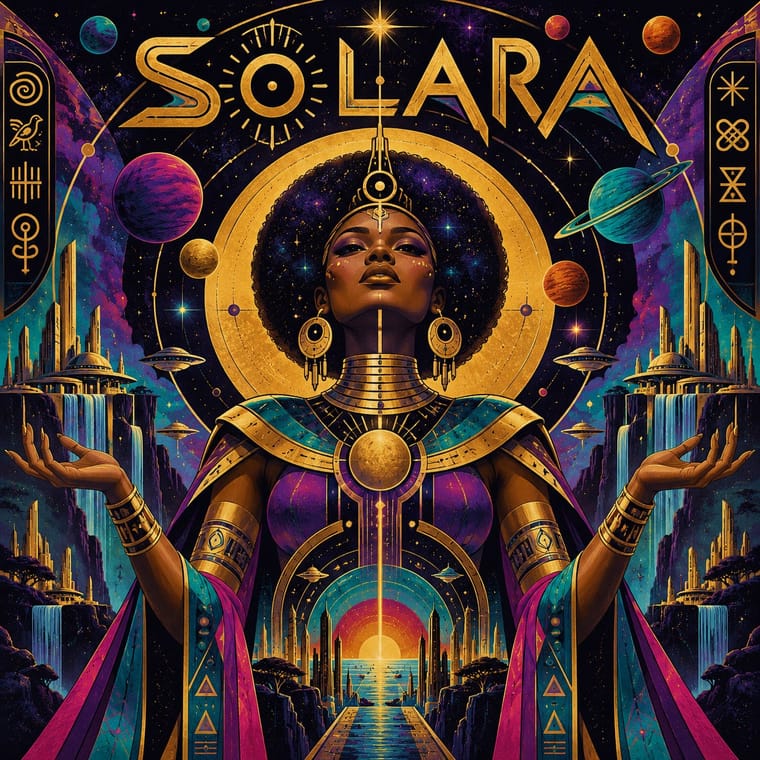
Afrofuturist identities draw on adinkra; render named symbols as glowing or metallic glyphs while keeping their meanings intact.
Draw pattern and glyphs from Adinkra and Kente with their meanings intact to ground cosmic imagery in a specific heritage.
01
What each style brings
Each part of the design comes from the style with the stronger say in it, and each style gives at least two.
Adinkra & Kente Symbol Systems Afrofuturist Design
- Type from Afrofuturist Design
- Colour from Afrofuturist Design
- Form from Adinkra
- Composition from Adinkra
-
Afrofuturist Design avoids modular grid: this is where the two pull against each other.
- Surface from Afrofuturist Design
02
The type
Open fonts standing in for each style’s own type, which is often hand-drawn or commercial.
Display · Afrofuturist Design
Grace
Ojuju, standing in for Wakandan script (Nsibidi-derived, Black Panther, 2018)
Text · Adinkra
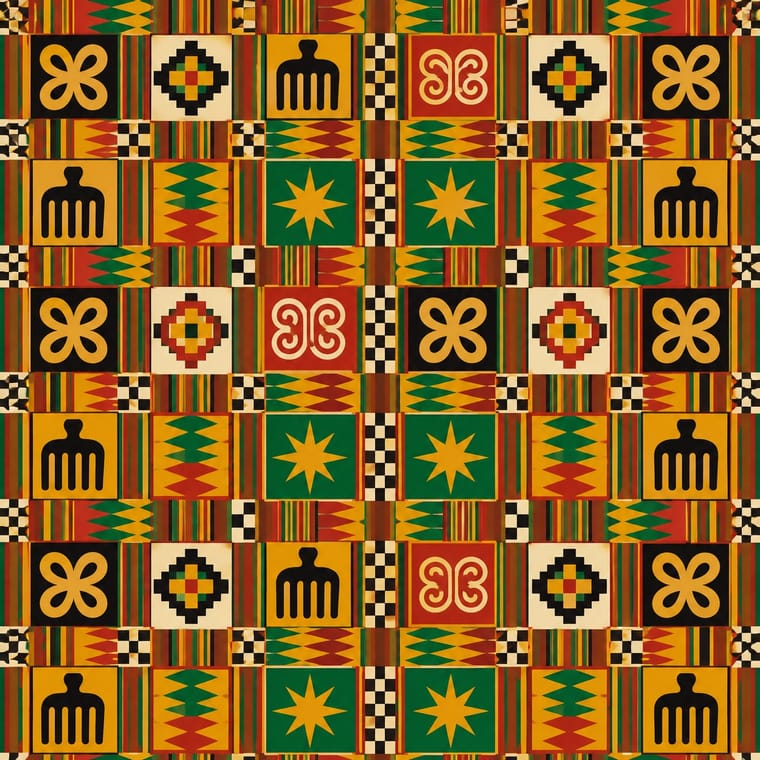
The Akan textile languages of Ghana. In adinkra, named symbols carrying proverbs (Gye Nyame, Sankofa, Dwennimmen) are stamped in black with carved calabash stamps on cloth ruled into squares; kente is narrow-strip cloth woven in named warp-faced blocks of gold, green, red and blue and sewn into checkerboards. Pattern is a vocabulary: each motif and colour is chosen for its meaning.
Archivo; Adinkra used Adinkra stamped glyphs as a pictographic set and Ghanaian hand-painted sign lettering for accompanying text
03
The colours
The ground and leading colours come from Afrofuturist Design, with a counter-accent from Adinkra. The ink reads on the ground at 4.5:1 or more.
Adinkra & Kente Symbol Systems Afrofuturist Design
-
#0b0a1aground · 36% -
#d4a017ink · 14% -
#c2185baccent · 18% -
#b52a1faccent · 14% -
#00a6a6accent · 10% -
#7d3a1faccent · 8%
As CSS
:root {
  --ground: #0b0a1a;
  --ink: #d4a017;
  --accent-1: #c2185b;
  --accent-2: #b52a1f;
  --accent-3: #00a6a6;
  --accent-4: #7d3a1f;
  --font-display: "Ojuju", sans-serif;
  --font-text: "Archivo", sans-serif;
}
Use it with care
Adinkra & Kente Symbol Systems: Adinkra symbols and kente patterns are named, proverb-bearing Akan heritage, and some kente designs were historically reserved for the Asantehene and royal lineages. Learn each symbol's meaning before use, keep sacred signs such as Gye Nyame out of trivial or demeaning contexts, and commission or credit Ghanaian stampers and weavers (for example in Ntonso and Bonwire) rather than printing faux kente.
Afrofuturist Design: Afrofuturism is a self-authored vision of Black futures that draws on meaning-bearing symbols (Adinkra, Nsibidi, Kemetic and textile motifs) tied to specific peoples. Use glyphs for what they mean rather than as generic 'tribal' texture, and commission, credit or collaborate with Black and African designers.
04
The two styles
05
More combinations
With Adinkra
- International Typographic Style Pairs well · A modular grid holds adinkra squares naturally; pair them with a neutral grotesque for contemporary Ghanaian institutional work.
- Bògòlanfini Mud Cloth Pairs well · Adinkra stamps dark signs on light cloth while bògòlan leaves light signs in a dark mud-dyed ground; use the reversal for a light and dark pattern pair, with each motif's meaning and makers credited.
- Ma & Wabi-sabi Aesthetics Contrasts · Saturated, meaning-dense repetition versus quiet emptiness: decide whether your message needs abundance or a single sign.
- Isotype Pictorial Statistics Pairs well · Treat adinkra as a consistent icon family on a strict grid, as Isotype did with pictograms, for wayfinding or data with local voice.
- Amazigh Sign System & Tifinagh Contrasts · Both are sign systems that carry meaning, but adinkra stamps named symbols into a ruled grid of squares. Amazigh weavers and tattooists vary the size and spacing of their signs by hand within bands and lattices, and share them with a script.
- Andean Woven Graphic Systems Contrasts · Adinkra stamps named symbols into ruled squares and kente joins woven strips, whereas Andean cells are woven into one garment and distorted toward its edges; keep the two languages distinct.
- Pacific Barkcloth (Tapa) Design Pairs well · Both are gridded ceremonial cloths of named motifs; borrow their shared square-by-square logic for a layout, while keeping each motif tied to its own culture and meaning.
- Fante Asafo Flags (Frankaa) Contrasts · Both put Akan proverbs on cloth, but adinkra stamps abstract named signs in a ruled grid and kente weaves blocks of pattern, while an asafo flag spells the proverb out as one pictorial scene of appliquéd figures on an open ground.
With Afrofuturist Design
- Corporate Memphis Contrasts · Corporate Memphis flattens people into anonymous blobs; Afrofuturism insists on specific, dignified, heroic Black figures.
- Techno-Futurist Graphics Pairs well · Combine interface graphics and chrome with ancestral pattern so technology feels owned rather than imported.
- Harlem Renaissance Graphic Art Pairs well · Aaron Douglas's Egyptian profiles and radiating bands of light are an early Black modernist vision; borrow his stepped light for cosmic scenes that acknowledge their lineage.
- Uli & Nsibidi Line and Sign Tradition Pairs well · Afrofuturism already borrows nsibidi, as in Black Panther's Ancient Wakandan script; keep uli's sparse dark line and real, public signs rather than glowing pseudo-glyphs on deep-space grounds.
- Solarpunk Pairs well · Wakanda is claimed by both: Afrofuturism brings ancestral glyphs, regal figures and cosmic dark grounds, solarpunk daylight, gardens and ordinary communities; join them with the symbols' meanings intact and Black artists credited.
- AfriCOBRA Contrasts · Both picture Black people with pride in saturated colour, but Afrofuturism goes to cosmic futures in jewel tones on black space; AfriCOBRA stays in the present-day neighbourhood, in daylight Cool-ade colour, with the slogan written into the figure.
- Afrobeat Sleeve Art Pairs well · Afrobeat supplies the grounded Pan-African politics and Afrofuturism the cosmic horizon; combine them for music packaging that is both angry and visionary.