Style combination · Contrasts
Republican Chinese Book Cover Design × Shanghai Modern
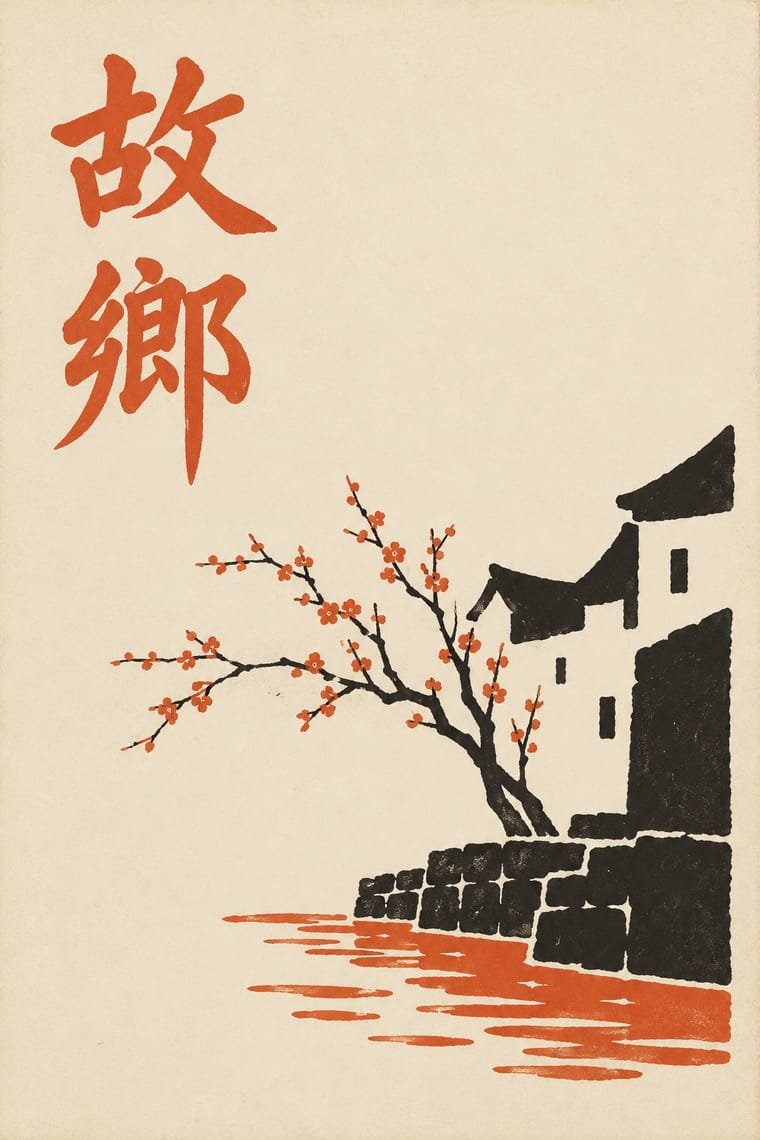
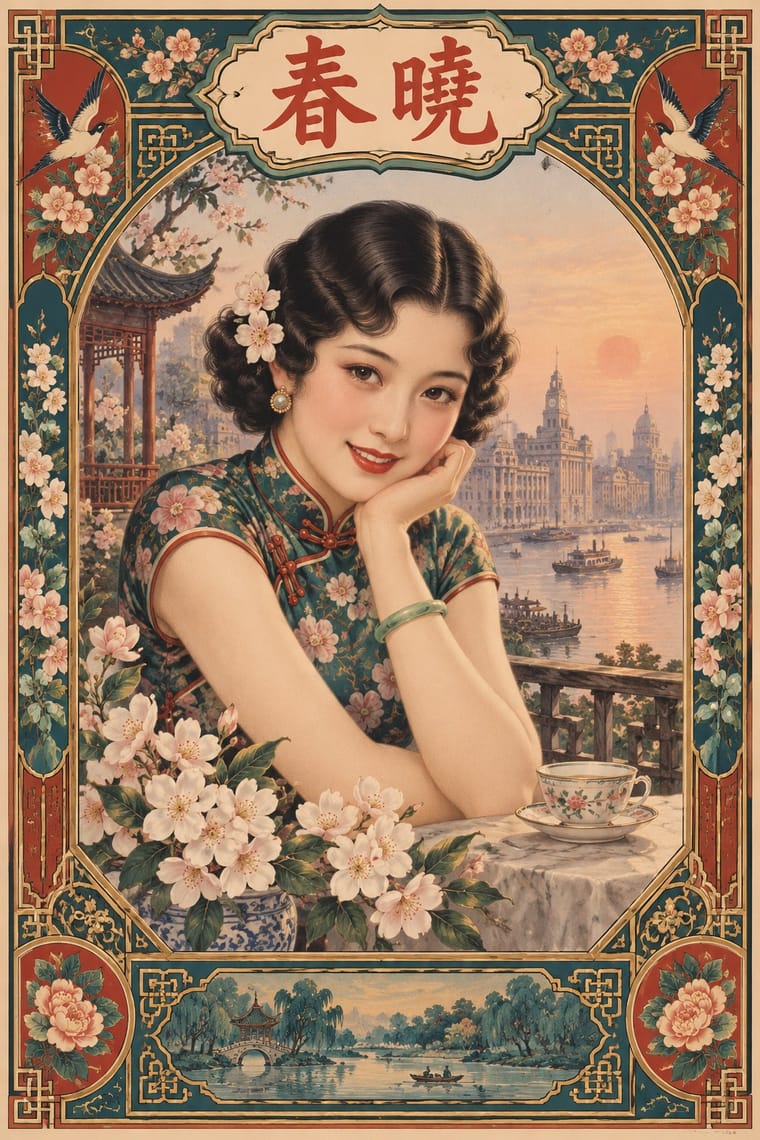
Same city and decades, opposite intent: calendar posters model glamorous women in soft polychrome with ornamental borders, while New Literature covers leave a plain field to one flat, symbolic motif and a drawn title.
Mix them and make something Republican Chinese Book Cover Design Shanghai Modern
01
What each style brings
Each part of the design comes from the style with the stronger say in it, and each style gives at least two.
Republican Chinese Book Cover Design (Lu Xun & Tao Yuanqing) Shanghai Modern & Yuefenpai
- Type from Shanghai Modern
- Colour from Republican Chinese Book Cover Design
- Form from Shanghai Modern
-
Republican Chinese Book Cover Design avoids naturalistic depiction: this is where the two pull against each other, which is the point of the contrast.
- Composition from Republican Chinese Book Cover Design
- Surface from Republican Chinese Book Cover Design
02
The type
Open fonts standing in for each style’s own type, which is often hand-drawn or commercial.
Text · Republican Chinese Book Cover Design
The covers of China's New Literature. From 1923 the writer Lu Xun took up cover design in earnest, and from 1924 he commissioned the painter Tao Yuanqing; he called covers with titles inscribed by famous people or set in lead type 'old hat' (老套). A hand-drawn title, two or three flat colours and one symbolic motif sit on a wide, plain field with generous margins. The motif is often taken from Han and Six Dynasties stone carvings, cut into angular silhouettes or, more rarely, painted in free brush. Qian Juntao and Feng Zikai carried the manner on at Shanghai's Kaiming Bookstore.
Shippori Mincho; Republican Chinese Book Cover Design used Lu Xun's hand-drawn and brush-written title characters and Meishuzi (美术字, 'art lettering')
03
The colours
The ground and leading colours come from Republican Chinese Book Cover Design, with a counter-accent from Shanghai Modern. The ink reads on the ground at 4.5:1 or more.
Republican Chinese Book Cover Design (Lu Xun & Tao Yuanqing) Shanghai Modern & Yuefenpai
-
#efe8d8ground · 39% -
#1e1b16ink · 15% -
#e39a2daccent · 20% -
#b8322faccent · 15% -
#1f5f5baccent · 11%
As CSS
:root {
  --ground: #efe8d8;
  --ink: #1e1b16;
  --accent-1: #e39a2d;
  --accent-2: #b8322f;
  --accent-3: #1f5f5b;
  --font-display: "Limelight", sans-serif;
  --font-text: "Shippori Mincho", serif;
}
Use it with care
Republican Chinese Book Cover Design (Lu Xun & Tao Yuanqing): Hand-drawn titles must be real, correctly formed Chinese characters checked by a fluent reader: pseudo-characters, mirrored strokes or random hanzi used as texture read as nonsense, a common failure of image models imitating this style. Tao Yuanqing's and Lu Xun's designs are in the public domain, but Qian Juntao's (he died in 1998) and Feng Zikai's (he died in 1975, so still protected in life-plus-70 countries) are not; draw new motifs, and do not copy an artist's personal seal or monogram as decoration.
04
The two styles
05
More combinations
With Republican Chinese Book Cover Design
- Song–Ming Woodblock Book Typography (Songti / Mincho) Contrasts · The ruled woodblock page and Songti type that the new covers left behind; set a Song-type text block against a drawn, off-centre cover title to show old book and new.
- Bengali Modernist Book Cover (Prachchhad) Pairs well · A parallel literary cover culture two decades later: hand-drawn titles, two or three flat inks and pale stock, with Bengali letters and folk contours in place of Chinese characters and Han reliefs.
- Chinese Modern Woodcut Movement Pairs well · Lu Xun launched the woodcut movement in 1931 and edited woodcut books such as Yinyu ji; a black carved print on a pale cover with a drawn title joins the two.
- Taishō Roman & Lyrical Illustration Pairs well · Feng Zikai found Takehisa Yumeji's lyrical drawings in Tokyo; Yumeji's soft line suits the quiet, literary register of these covers.
- Contemporary Chinese Book Design ('Most Beautiful Books of China') Contrasts · Lu Xun and Tao Yuanqing made the cover the work: a hand-drawn title and one motif on a plain field, with the untrimmed (毛边) edges that Bu Cai takes up again. In 1996 Lü Jingren and three colleagues called for moving from zhuangzhen (装帧), which by the 1990s had narrowed to dressing the cover, to shuji sheji (书籍设计), designing the whole object: paper, sewing, edges, sequence. Choose between dressing a book and building one.
With Shanghai Modern
- Socialist Realist Propaganda Poster Contrasts · After 1949 the same painters and rubbed-watercolour technique served propaganda; compare how one rendering style sells glamour versus ideology.
- Nianhua & Chinese Folk Print Pairs well · Fold nianhua's auspicious symbols and bright folk colour into a calendar-poster layout for festive packaging.
- International Typographic Style Contrasts · Its framed, ornamented, figurative poster is the opposite of Swiss reduction; strip elements one by one to find what carries the mood.
- Art Deco Pairs well · Wrap a softly painted yuefenpai figure in Deco borders and geometric lettering for East–West period glamour.
- Mexican Calendar Chromo (Cromos calendáricos) Contrasts · Both are tobacco-sponsored calendar pictures of beauties, but yuefenpai set softly rubbed watercolour women inside decorative borders with the products alongside, while the Mexican chromo is an oil painting of a whole scene that fills the sheet, with the pad pasted at its foot.
- Cuban Tobacco Lithography (Habilitaciones & Marquillas) Pairs well · Shanghai's calendar posters were also given away by tobacco firms; pair their softly modelled women and ornamental borders with the Havana label's medals and arms for a cross-continental tobacco or spirits heritage line.
- Showa Modern Commercial Art and Zuan-moji Pairs well · Both put a modern-girl figure in East Asian commercial posters; combine the Japanese geometric lettering with Shanghai's painterly figure for a pan-Asian Deco look.
- Lianhuanhua Picture-Story Books Pairs well · Its parent print culture: pair a lianhuanhua line sequence with a yuefenpai-style painted cover for a period Shanghai feel.