Style combination · Pairs well
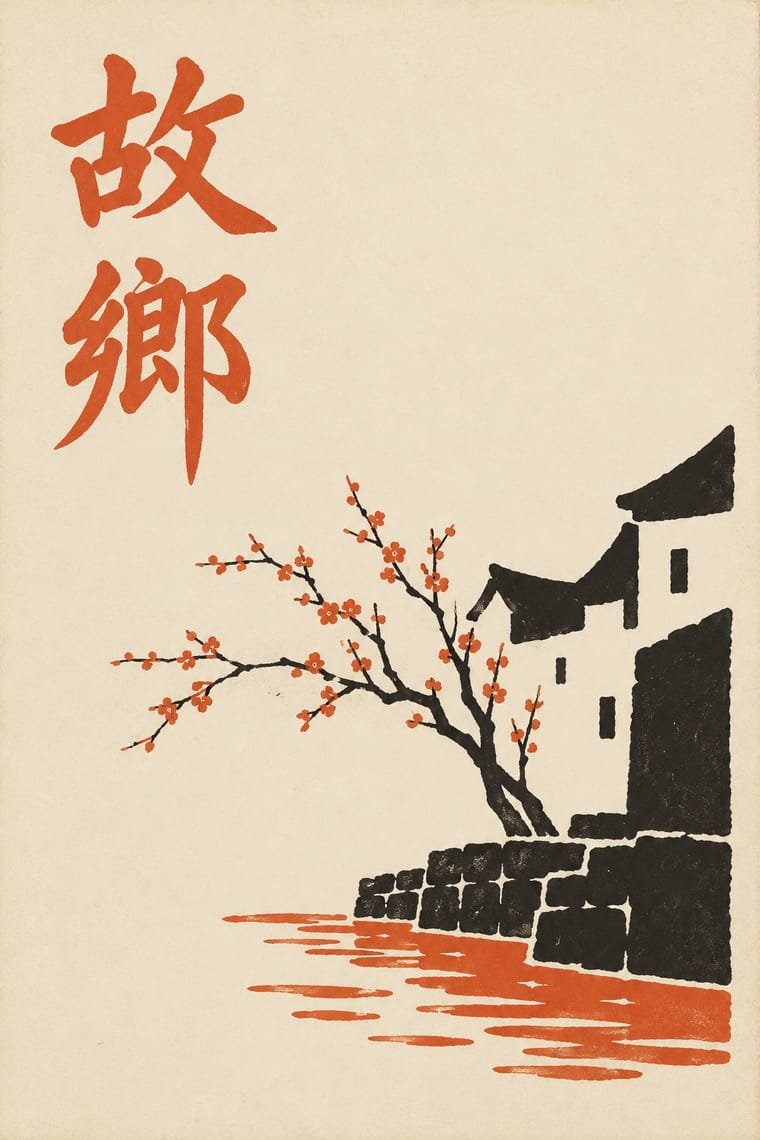
Republican Chinese Book Cover Design × Taishō Roman
Feng Zikai found Takehisa Yumeji's lyrical drawings in Tokyo; Yumeji's soft line suits the quiet, literary register of these covers.
Mix them and make something Republican Chinese Book Cover Design Taishō Roman
01
What each style brings
Each part of the design comes from the style with the stronger say in it, and each style gives at least two.
Republican Chinese Book Cover Design (Lu Xun & Tao Yuanqing) Taishō Roman & Lyrical Illustration
- Type from Taishō Roman
- Colour from Republican Chinese Book Cover Design
- Form from Taishō Roman
- Composition from Republican Chinese Book Cover Design
- Surface from Republican Chinese Book Cover Design
02
The type
Open fonts standing in for each style’s own type, which is often hand-drawn or commercial.
Text · Republican Chinese Book Cover Design
The covers of China's New Literature. From 1923 the writer Lu Xun took up cover design in earnest, and from 1924 he commissioned the painter Tao Yuanqing; he called covers with titles inscribed by famous people or set in lead type 'old hat' (老套). A hand-drawn title, two or three flat colours and one symbolic motif sit on a wide, plain field with generous margins. The motif is often taken from Han and Six Dynasties stone carvings, cut into angular silhouettes or, more rarely, painted in free brush. Qian Juntao and Feng Zikai carried the manner on at Shanghai's Kaiming Bookstore.
Shippori Mincho; Republican Chinese Book Cover Design used Lu Xun's hand-drawn and brush-written title characters and Meishuzi (美术字, 'art lettering')
03
The colours
The ground and leading colours come from Republican Chinese Book Cover Design, with a counter-accent from Taishō Roman. The ink reads on the ground at 4.5:1 or more.
Republican Chinese Book Cover Design (Lu Xun & Tao Yuanqing) Taishō Roman & Lyrical Illustration
-
#efe8d8ground · 36% -
#1e1b16ink · 14% -
#e39a2daccent · 18% -
#b8333aaccent · 14% -
#8b2b22accent · 10% -
#d98b8faccent · 8%
As CSS
:root {
  --ground: #efe8d8;
  --ink: #1e1b16;
  --accent-1: #e39a2d;
  --accent-2: #b8333a;
  --accent-3: #8b2b22;
  --accent-4: #d98b8f;
  --font-display: "Federant", sans-serif;
  --font-text: "Shippori Mincho", serif;
}
Use it with care
Republican Chinese Book Cover Design (Lu Xun & Tao Yuanqing): Hand-drawn titles must be real, correctly formed Chinese characters checked by a fluent reader: pseudo-characters, mirrored strokes or random hanzi used as texture read as nonsense, a common failure of image models imitating this style. Tao Yuanqing's and Lu Xun's designs are in the public domain, but Qian Juntao's (he died in 1998) and Feng Zikai's (he died in 1975, so still protected in life-plus-70 countries) are not; draw new motifs, and do not copy an artist's personal seal or monogram as decoration.
04
The two styles
05
More combinations
With Republican Chinese Book Cover Design
- Shanghai Modern & Yuefenpai Contrasts · Same city and decades, opposite intent: calendar posters model glamorous women in soft polychrome with ornamental borders, while New Literature covers leave a plain field to one flat, symbolic motif and a drawn title.
- Song–Ming Woodblock Book Typography (Songti / Mincho) Contrasts · The ruled woodblock page and Songti type that the new covers left behind; set a Song-type text block against a drawn, off-centre cover title to show old book and new.
- Bengali Modernist Book Cover (Prachchhad) Pairs well · A parallel literary cover culture two decades later: hand-drawn titles, two or three flat inks and pale stock, with Bengali letters and folk contours in place of Chinese characters and Han reliefs.
- Chinese Modern Woodcut Movement Pairs well · Lu Xun launched the woodcut movement in 1931 and edited woodcut books such as Yinyu ji; a black carved print on a pale cover with a drawn title joins the two.
- Contemporary Chinese Book Design ('Most Beautiful Books of China') Contrasts · Lu Xun and Tao Yuanqing made the cover the work: a hand-drawn title and one motif on a plain field, with the untrimmed (毛边) edges that Bu Cai takes up again. In 1996 Lü Jingren and three colleagues called for moving from zhuangzhen (装帧), which by the 1990s had narrowed to dressing the cover, to shuji sheji (书籍设计), designing the whole object: paper, sewing, edges, sequence. Choose between dressing a book and building one.
With Taishō Roman
- Ukiyo-e Woodblock Prints Pairs well · Yumeji's beauties continue the bijin-ga print; pair a woodblock-printed pattern ground with a lyrical modern figure.
- Japanese Postwar Modernism Contrasts · Postwar modernism replaced this sentimental figure with emblems and empty fields; set one against the other to calibrate warmth against austerity.
- Kawaii Design Pairs well · Nakahara Jun'ichi's large-eyed girls link the two; give kawaii characters Taishō's muted palette and wistful mood for an older, nostalgic audience.
- Art Nouveau Pairs well · Its source of line: keep Art Nouveau's contour but drop the ornamental excess, leaving one figure and a few flowers for an intimate Taishō register.
- Shōjo Manga (Japanese Girls' Comics) Pairs well · Its root: Takahashi Macoto took Nakahara Jun'ichi's large, doll-like eyes with highlights and long lashes and added dots, stars and colour to the iris. Borrow jojōga's single wistful figure, muted cream paper and hand lettering for a cover or title page with a period mood.
- Mavo Contrasts · The same Taishō Tokyo in two moods: pastel lyrical illustration of modern girls against Mavo's black linocuts, newsprint and price tags.
- Story Manga (Postwar Japanese Comics) Pairs well · Jojōga's large, highlighted, long-lashed eyes passed from Nakahara Jun'ichi to Takahashi Macoto, who added stars and dots to the iris, and so into shōjo manga; add Taishō lyrical faces, kimono patterns and soft lines to a manga page for a period romance.
- Angura Theatre Poster Pairs well · Angura recycled Meiji and Taishō imagery as found material; cut a Taishō beauty into an angura collage for ironic retro nostalgia.