Style combination · Contrasts
Jeepney Art × Matatu
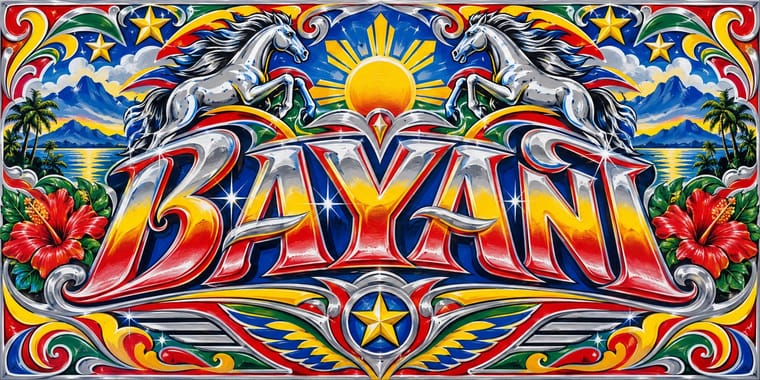
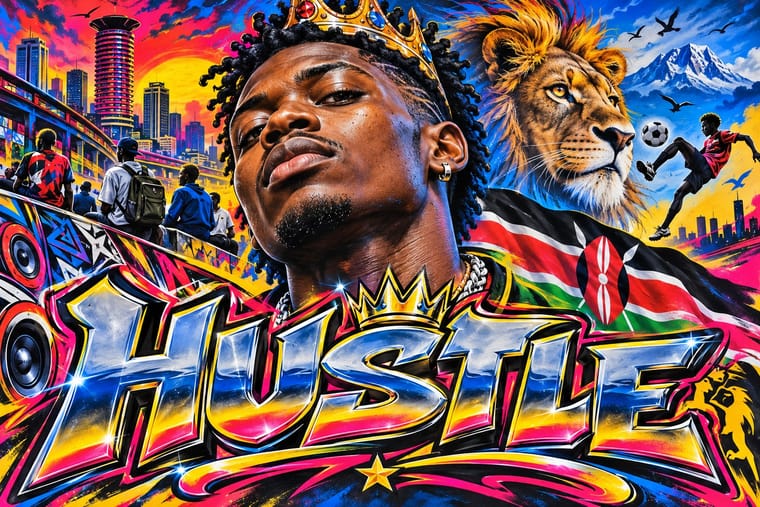
The nearest vehicle tradition: both are privately owned shared taxis decorated to win passengers, but the jeepney leans on chrome horses, pinstripes, saints and family names, while the nganya is a canvas for near-photographic portraits of global pop, sports and political stars, hip-hop catchphrases, screens and LEDs.
01
What each style brings
Each part of the design comes from the style with the stronger say in it, and each style gives at least two.
Jeepney Art Matatu & Nganya Art
- Type from Jeepney Art
- Colour from Matatu
- Form from Jeepney Art
- Composition from Matatu
- Surface from Matatu
02
The type
Open fonts standing in for each style’s own type, which is often hand-drawn or commercial.
Text · Matatu
The commissioned livery of Kenya's privately owned minibus taxis, at its most elaborate the Nairobi nganya. Garage painters spray and airbrush near-photographic portraits of rappers, footballers, politicians and film heroes across the sides and rear window. They add a vehicle name and hip-hop catchphrases in shaded display capitals, brand logos and club crests in paint or computer-cut stickers. LEDs, video screens and a loud sound system complete it, so the bus wins young passengers. Banned under the 2004 Michuki rules, it returned openly in the mid-2010s.
Oswald; Matatu used Airbrushed 3D graffiti capitals and Chrome-shaded outlined block capitals
03
The colours
The ground and leading colours come from Matatu, with a counter-accent from Jeepney Art. The ink reads on the ground at 4.5:1 or more.
Jeepney Art Matatu & Nganya Art
-
#0e0e12ground · 36% -
#ffd21fink · 14% -
#1f6bffaccent · 18% -
#ce1126accent · 14% -
#ff2a8aaccent · 10% -
#0038a8accent · 8%
As CSS
:root {
  --ground: #0e0e12;
  --ink: #ffd21f;
  --accent-1: #1f6bff;
  --accent-2: #ce1126;
  --accent-3: #ff2a8a;
  --accent-4: #0038a8;
  --font-display: "Yellowtail", cursive;
  --font-text: "Oswald", sans-serif;
}
Use it with care
Matatu & Nganya Art: Matatu art is the living trade of named Kenyan garage painters and the culture of the young crews and passengers who ride the routes, so commission and credit Kenyan painters rather than lifting a particular vehicle's design, name or a painter's signature. Its portraits show real people (musicians, athletes, politicians), so do not reproduce a real person's likeness or a brand's logo in commercial work without rights, and never present a generated image as a real nganya. Kenya's police chief has said he loves art "but not one that celebrates gangsters or violence", and the Matatu Owners Association bars insulting, inciting, pornographic, alcohol and violence content: do not use it as shorthand for lawlessness or as a generic "chaotic African bus" backdrop.
04
The two styles
05
More combinations
With Jeepney Art
- Total Design & Dutch Functionalism Contrasts · Systematic transit signage is the rational opposite of owner-by-owner jeepney lettering; contrast the two when designing public-transport identities.
- Googie & Atomic Age Pairs well · Share chrome, fins and roadside showmanship; pair Googie starbursts with jeepney lettering for retro transport or food-truck branding.
- Pop Art Graphics Pairs well · Jeepneys already mix comic heroes with devotional images; Pop's flat Ben-Day treatment can systematise that mash-up for print.
- Baybayin Revival Graphics Contrasts · Both speak for Filipino identity, but jeepney art crowds chrome, airbrush and polychrome lettering, while baybayin revival sets a single one-ink character in open space; use the contrast to decide between festive abundance and a quiet mark of origin.
- Filipino Komiks Pairs well · Both are Manila's popular street graphics from the same postwar decades. Put a komiks hero, drawn in black brush line, on a jeepney's polychrome panel, chrome trim and shaded sign-painter lettering for a piece that reads as Manila.
- Itasha (Anime Character Car Graphics) Contrasts · Both cover a vehicle in saturated colour, figures and emblems, but a jeepney is a passenger vehicle painted by hired sign painters with chrome, scripts and folk symbols, while an itasha is a private car wearing one fan's printed characters; borrow the jeepney's chrome and lettering only to show what itasha leaves out.
- Dhaka Rickshaw Painting Pairs well · Another street-vehicle painting tradition; rickshaw art is picture-panel and portrait-led rather than metal-trimmed and lettering-heavy.
With Matatu
- Hand-Painted Bollywood Poster Contrasts · The atlas's nearest genome: both are built on painted, glossy star portraits at a huge scale, but the Bollywood poster is a printed and hoarding-painted montage that sells one film, while the nganya is one commissioned vehicle that mixes global pop, sport and politics with hip-hop slang, lights and sound.
- Jamaican Dancehall Signs & Sleeve Art Pairs well · Matatus quote dancehall crews and singers (the 'Portmore Empire', Tarrus Riley); dancehall's hand-painted lettering suits the nganya's sound-system culture.
- Graffiti & Hip-Hop Graphics Pairs well · The source of its names, catchphrases and heroes: take graffiti's wildstyle and bubble lettering for the vehicle name and keep the matatu's photoreal portrait as the focal point.
- West African Barbershop & Hair Salon Signs Pairs well · Another African street commission built on painted heads; pair the barbershop board's frontal, stylised faces with the matatu's airbrushed, foreshortened star portraits for a Nairobi street layout.
- Ghanaian Movie Poster Contrasts · Both are commissioned African street art built on looming painted heads, but Ghana's posters are gestural sign-painter enamel on flour sacks that invent gore and muscle for a film, while the nganya's stars are smooth, airbrushed likenesses fitted to a glossy vehicle body.
- International Typographic Style Contrasts · Neutral grids and white space against a vehicle with no empty panel, airbrushed faces and a name in chrome-shaded capitals.
- Itasha (Anime Character Car Graphics) Contrasts · Both run pop-culture pictures full bleed over a vehicle, but a matatu is airbrushed by painters with celebrities and graffiti capitals to win passengers, while an itasha is printed vinyl of flat-coloured anime characters for other fans; contrast the matatu's painterly realism with itasha's cel-coloured outlines.