Style combination · Pairs well
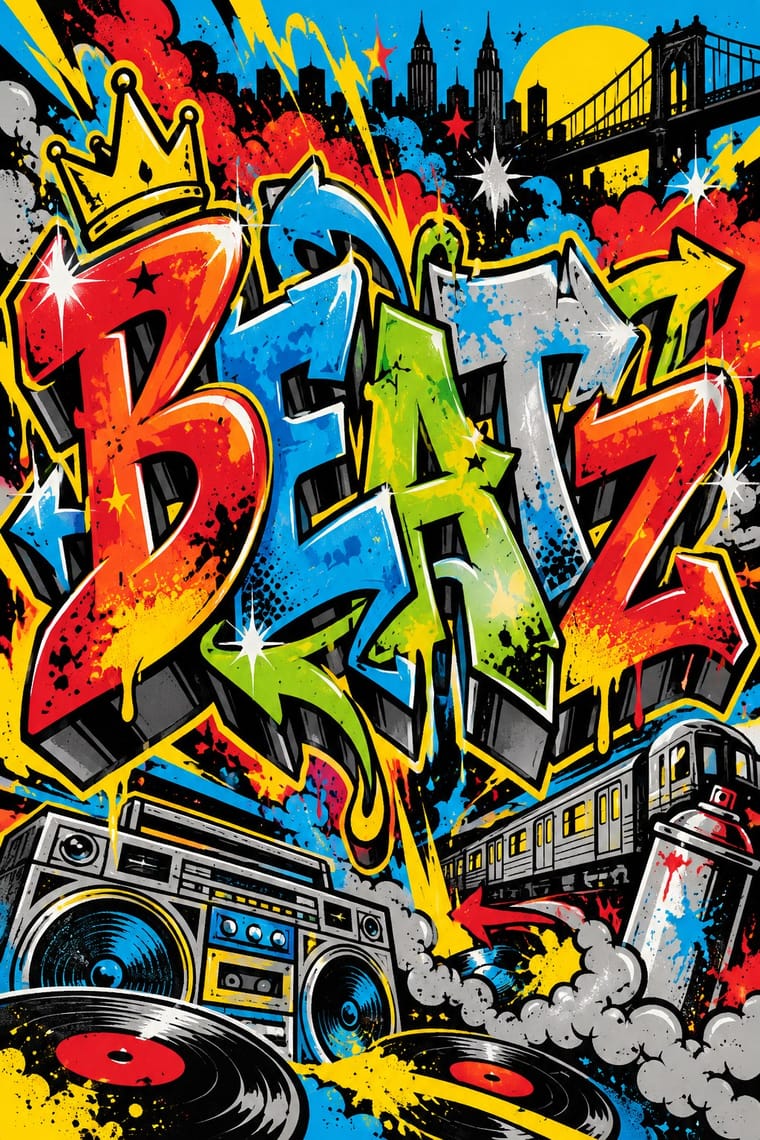
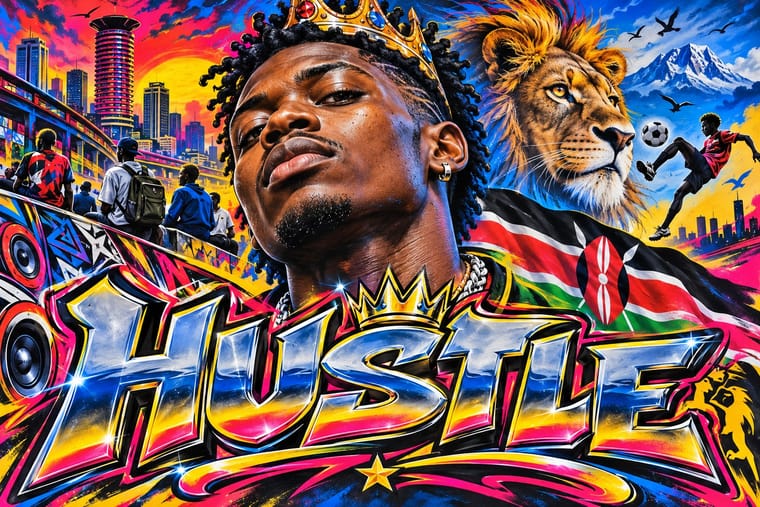
Graffiti × Matatu
The source of its names, catchphrases and heroes: take graffiti's wildstyle and bubble lettering for the vehicle name and keep the matatu's photoreal portrait as the focal point.
01
What each style brings
Each part of the design comes from the style with the stronger say in it, and each style gives at least two.
Graffiti & Hip-Hop Graphics Matatu & Nganya Art
- Type from Graffiti
- Colour from Matatu
- Form from Matatu
- Composition from Matatu
- Surface from Graffiti
02
The type
Open fonts standing in for each style’s own type, which is often hand-drawn or commercial.
Text · Matatu
The commissioned livery of Kenya's privately owned minibus taxis, at its most elaborate the Nairobi nganya. Garage painters spray and airbrush near-photographic portraits of rappers, footballers, politicians and film heroes across the sides and rear window. They add a vehicle name and hip-hop catchphrases in shaded display capitals, brand logos and club crests in paint or computer-cut stickers. LEDs, video screens and a loud sound system complete it, so the bus wins young passengers. Banned under the 2004 Michuki rules, it returned openly in the mid-2010s.
Oswald; Matatu used Airbrushed 3D graffiti capitals and Chrome-shaded outlined block capitals
03
The colours
The ground and leading colours come from Matatu, with a counter-accent from Graffiti. The ink reads on the ground at 4.5:1 or more.
Graffiti & Hip-Hop Graphics Matatu & Nganya Art
-
#0e0e12ground · 36% -
#ffd21fink · 14% -
#1f6bffaccent · 18% -
#e4002baccent · 14% -
#ff2a8aaccent · 10% -
#00a3e0accent · 8%
As CSS
:root {
  --ground: #0e0e12;
  --ink: #ffd21f;
  --accent-1: #1f6bff;
  --accent-2: #e4002b;
  --accent-3: #ff2a8a;
  --accent-4: #00a3e0;
  --font-display: "Sedgwick Ave Display", cursive;
  --font-text: "Oswald", sans-serif;
}
Use it with care
Matatu & Nganya Art: Matatu art is the living trade of named Kenyan garage painters and the culture of the young crews and passengers who ride the routes, so commission and credit Kenyan painters rather than lifting a particular vehicle's design, name or a painter's signature. Its portraits show real people (musicians, athletes, politicians), so do not reproduce a real person's likeness or a brand's logo in commercial work without rights, and never present a generated image as a real nganya. Kenya's police chief has said he loves art "but not one that celebrates gangsters or violence", and the Matatu Owners Association bars insulting, inciting, pornographic, alcohol and violence content: do not use it as shorthand for lawlessness or as a generic "chaotic African bus" backdrop.
04
The two styles
05
More combinations
With Graffiti
- International Typographic Style Contrasts · Put a single tag or throw-up over a strict Swiss grid to stage the clash between institutional order and a street voice.
- Corporate Identity Modernism Contrasts · Use graffiti as the foil to corporate identity: a painted name over a logo makes the ownership of public space visible.
- Pop Art Graphics Pairs well · Pair letter-pieces with Ben-Day comic panels and bold outlines, as 1980s gallery graffiti often did, for a street-meets-gallery look.
- Hype Streetwear Graphics (Box Logo to Quotation Marks) Pairs well · Streetwear grew out of New York hip-hop dress; pair a set geometric wordmark with a hand-drawn graffiti piece for a back print, but keep the logo flat and centred so the tag reads as the decoration and the box as the brand.
- Pixação (São Paulo Tag Reto) Contrasts · Both write names on walls, and Pesquisa FAPESP lists hip-hop among the 1980s influences on pixação, but graffiti builds the letter into a coloured, outlined, three-dimensional piece with characters, while pixação keeps a flat black straight letter in level rows and goes for height. Brazilian law since 2011 tolerates graffiti made with the owner's consent and keeps pichação a crime, so decide which one the brief needs.
- Stencil Street Art Contrasts · Both use spray paint in the street, but graffiti makes the writer's name a freehand, many-coloured letter-sculpture with 3D blocks and fades; stencil art sprays a reproducible photographic picture in black. Decide which one the brief needs before mixing them.
- Guochao (China-Chic National Trend) Pairs well · Guochao's streetwear wing already borrows hip-hop lockups; treat a brush character as the tag and keep the heritage palette.
- Black Lives Matter Street Murals Contrasts · Graffiti writers paint their own names on walls and trains, uninvited and in letters few outsiders can read; these murals lay one shared, legible slogan on the road, usually with the city's permission. Let a writer fill one letter, as Sam Sneke did in Seattle, without turning the slogan into a piece.
With Matatu
- Hand-Painted Bollywood Poster Contrasts · The atlas's nearest genome: both are built on painted, glossy star portraits at a huge scale, but the Bollywood poster is a printed and hoarding-painted montage that sells one film, while the nganya is one commissioned vehicle that mixes global pop, sport and politics with hip-hop slang, lights and sound.
- Jamaican Dancehall Signs & Sleeve Art Pairs well · Matatus quote dancehall crews and singers (the 'Portmore Empire', Tarrus Riley); dancehall's hand-painted lettering suits the nganya's sound-system culture.
- West African Barbershop & Hair Salon Signs Pairs well · Another African street commission built on painted heads; pair the barbershop board's frontal, stylised faces with the matatu's airbrushed, foreshortened star portraits for a Nairobi street layout.
- Ghanaian Movie Poster Contrasts · Both are commissioned African street art built on looming painted heads, but Ghana's posters are gestural sign-painter enamel on flour sacks that invent gore and muscle for a film, while the nganya's stars are smooth, airbrushed likenesses fitted to a glossy vehicle body.
- International Typographic Style Contrasts · Neutral grids and white space against a vehicle with no empty panel, airbrushed faces and a name in chrome-shaded capitals.
- Jeepney Art Contrasts · The nearest vehicle tradition: both are privately owned shared taxis decorated to win passengers, but the jeepney leans on chrome horses, pinstripes, saints and family names, while the nganya is a canvas for near-photographic portraits of global pop, sports and political stars, hip-hop catchphrases, screens and LEDs.
- Itasha (Anime Character Car Graphics) Contrasts · Both run pop-culture pictures full bleed over a vehicle, but a matatu is airbrushed by painters with celebrities and graffiti capitals to win passengers, while an itasha is printed vinyl of flat-coloured anime characters for other fans; contrast the matatu's painterly realism with itasha's cel-coloured outlines.