Style combination · Pairs well
Graffiti × Ultras Graphics
Ginhoux compares ultras' tag and sticker wars to graffiti crews; add a writer's tags, throw-ups and wall murals to carry a group's name from the banner into the street.
01
What each style brings
Each part of the design comes from the style with the stronger say in it, and each style gives at least two.
Graffiti & Hip-Hop Graphics Ultras Graphics (Curva Banners and Tifo)
- Type from Graffiti
- Colour from Ultras Graphics
- Form from Ultras Graphics
- Composition from Graffiti
- Surface from Graffiti
02
The type
Open fonts standing in for each style’s own type, which is often hand-drawn or commercial.
Text · Ultras Graphics
The graphic language of Italy's organised football supporters, the ultras, from the late 1960s, and of the groups that copied them across Europe, North Africa and beyond. Each group paints its name in huge, squared, tightly packed capitals on a long cloth hung along the railing of the curva, in the club's colours alone. For big matches the whole stand becomes one picture of cards, flags, smoke and giant painted sheets, and one-colour stickers and murals carry the same names, skulls and borrowed pop icons into the city.
Jost; Ultras Graphics used The 'Ultras Liberi' genre and Set display faces enlarged and painted by hand
03
The colours
The ground and leading colours come from Ultras Graphics, with a counter-accent from Graffiti. The ink reads on the ground at 4.5:1 or more.
Graffiti & Hip-Hop Graphics Ultras Graphics (Curva Banners and Tifo)
-
#f4f1eaground · 36% -
#141414ink · 14% -
#f2b705accent · 18% -
#e4002baccent · 14% -
#00a3e0accent · 10% -
#1d3c8faccent · 8%
As CSS
:root {
  --ground: #f4f1ea;
  --ink: #141414;
  --accent-1: #f2b705;
  --accent-2: #e4002b;
  --accent-3: #00a3e0;
  --accent-4: #1d3c8f;
  --font-display: "Sedgwick Ave Display", cursive;
  --font-text: "Jost", sans-serif;
}
Use it with care
Ultras Graphics (Curva Banners and Tifo): Ultras graphics belong to living, often closed supporters' groups whose banner, name and emblem stand for the group itself, so do not lift a real group's name, logo or lettering for a brand, campaign or fashion line as if it were anonymous street style. The language carries the political baggage of both extremes of 1970s street politics: Vice and Scalcione trace the 'Ultras Liberi' lettering to French and Italian far-right lettering, and some curve, such as S.S. Lazio's Ultras (1974), are known for fascist slogans, but group names such as Commando, Brigate and Fedayn were borrowed from political marches, and many 1970s ultras came from the extra-parliamentary left, Lotta Continua above all, so the same sign can mean opposite things in two curve; check what a borrowed symbol or slogan has meant in that curva before using it. Fare's guide to discriminatory practices in European football lists the SS Totenkopf skull, Sig and Odal runes, the Wolfsangel, the Celtic cross (often in place of an 'O') and the code '88' among the far-right symbols seen in stadiums on banners, stickers and shirts: never use them, and keep a borrowed skull clearly apart from the Totenkopf, as the guide does. Nazi symbols are banned by law in Germany, Austria, Poland and other countries, and UEFA fined Germany's football association after its fans showed a neo-Nazi flag at Euro 2012. Memorial displays and murals, for the 74 dead of Port Said in 2012, 72 of them Al Ahly supporters, or the Superga air crash of 1949, are acts of mourning, not decoration. In Egypt a Cairo court banned all ultras groups in May 2015 and members have been arrested since; do not attribute new work to Egyptian ultras groups or their members. Flares and smoke are dangerous and banned in many stadiums; do not present pyrotechnics as a device to imitate.
04
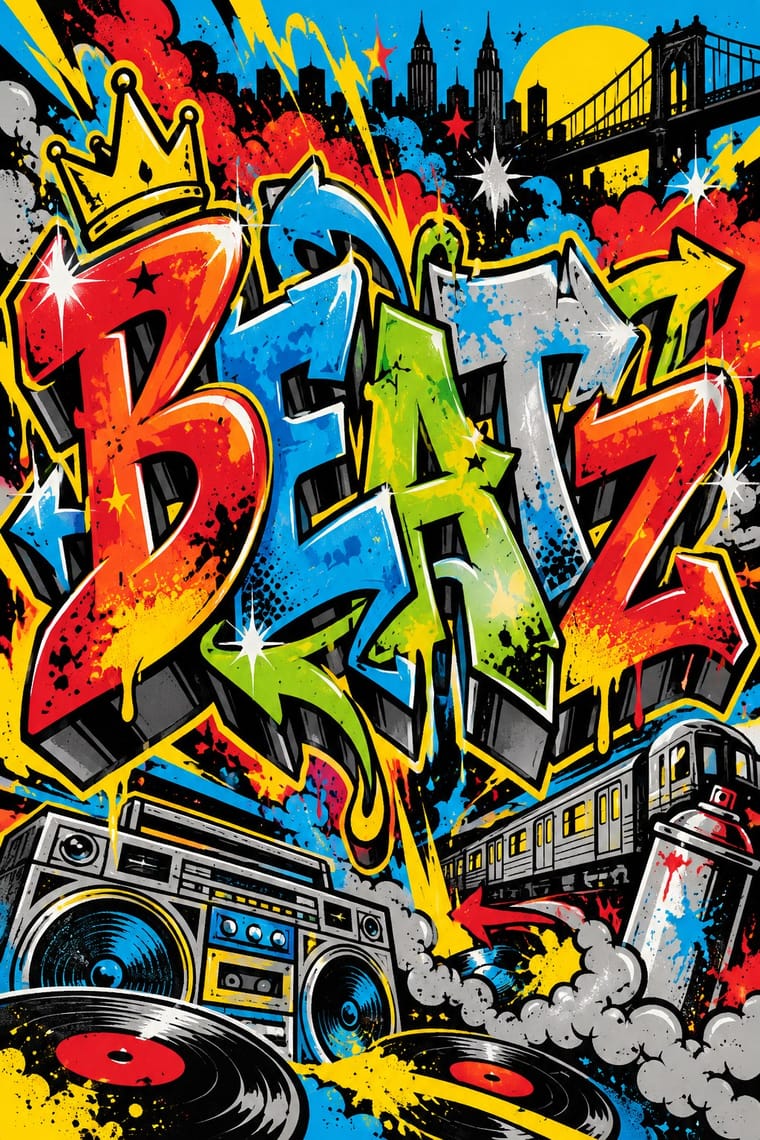
The two styles
05
More combinations
With Graffiti
- International Typographic Style Contrasts · Put a single tag or throw-up over a strict Swiss grid to stage the clash between institutional order and a street voice.
- Corporate Identity Modernism Contrasts · Use graffiti as the foil to corporate identity: a painted name over a logo makes the ownership of public space visible.
- Pop Art Graphics Pairs well · Pair letter-pieces with Ben-Day comic panels and bold outlines, as 1980s gallery graffiti often did, for a street-meets-gallery look.
- Hype Streetwear Graphics (Box Logo to Quotation Marks) Pairs well · Streetwear grew out of New York hip-hop dress; pair a set geometric wordmark with a hand-drawn graffiti piece for a back print, but keep the logo flat and centred so the tag reads as the decoration and the box as the brand.
- Pixação (São Paulo Tag Reto) Contrasts · Both write names on walls, and Pesquisa FAPESP lists hip-hop among the 1980s influences on pixação, but graffiti builds the letter into a coloured, outlined, three-dimensional piece with characters, while pixação keeps a flat black straight letter in level rows and goes for height. Brazilian law since 2011 tolerates graffiti made with the owner's consent and keeps pichação a crime, so decide which one the brief needs.
- Stencil Street Art Contrasts · Both use spray paint in the street, but graffiti makes the writer's name a freehand, many-coloured letter-sculpture with 3D blocks and fades; stencil art sprays a reproducible photographic picture in black. Decide which one the brief needs before mixing them.
- Guochao (China-Chic National Trend) Pairs well · Guochao's streetwear wing already borrows hip-hop lockups; treat a brush character as the tag and keep the heritage palette.
- Black Lives Matter Street Murals Contrasts · Graffiti writers paint their own names on walls and trains, uninvited and in letters few outsiders can read; these murals lay one shared, legible slogan on the road, usually with the city's permission. Let a writer fill one letter, as Sam Sneke did in Seattle, without turning the slogan into a piece.
With Ultras Graphics
- Egyptian Revolutionary Street Art (Mohamed Mahmoud Murals) Pairs well · The Mohamed Mahmoud murals painted the faces of Port Said's dead, most of them Ultras Ahlawy fans; pair the curva's collective name and colours with memorial portraits when a group mourns its own.
- European Heraldry Contrasts · Both raise colours and emblems over a fighting company, but heraldry codifies one bearer's arms by rule, while a curva borrows the city's arms, a skull or a film villain for one afternoon and paints it the size of a stand; choose between a fixed blazon and a crowd-made, temporary emblem.
- Atelier Populaire (May '68 Screenprint Poster) Pairs well · The type designer Alessio D'Ellena, quoted by Vice, places ultras' vernacular letters 'more in the tradition of' the Atelier Populaire's anonymous May '68 posters; borrow their single brushed slogan and anonymous signature for a banner with something to say.
- Fante Asafo Flags (Frankaa) Contrasts · Another fighting group's cloth: the Fante company flag tells a proverb in appliquéd figures for one company, while the ultras banner states one name in painted capitals to a whole stadium.