Style combination · Pairs well
Literatura de Cordel Woodcut × Lira Popular
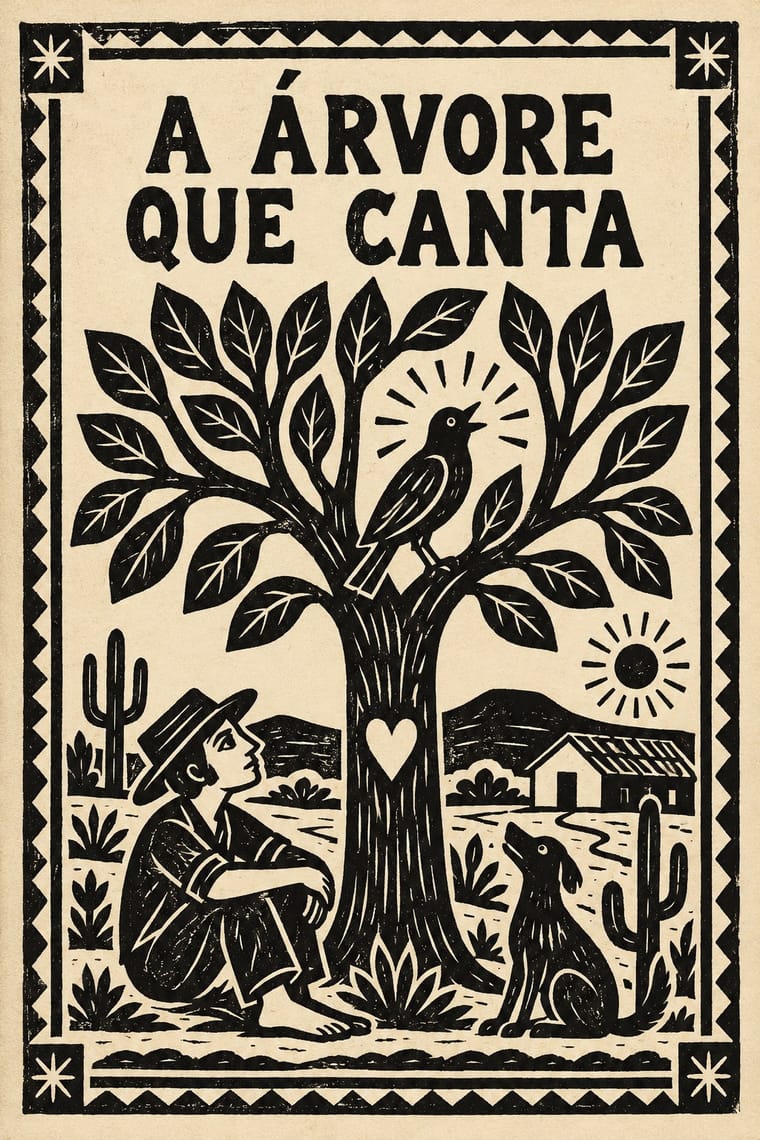
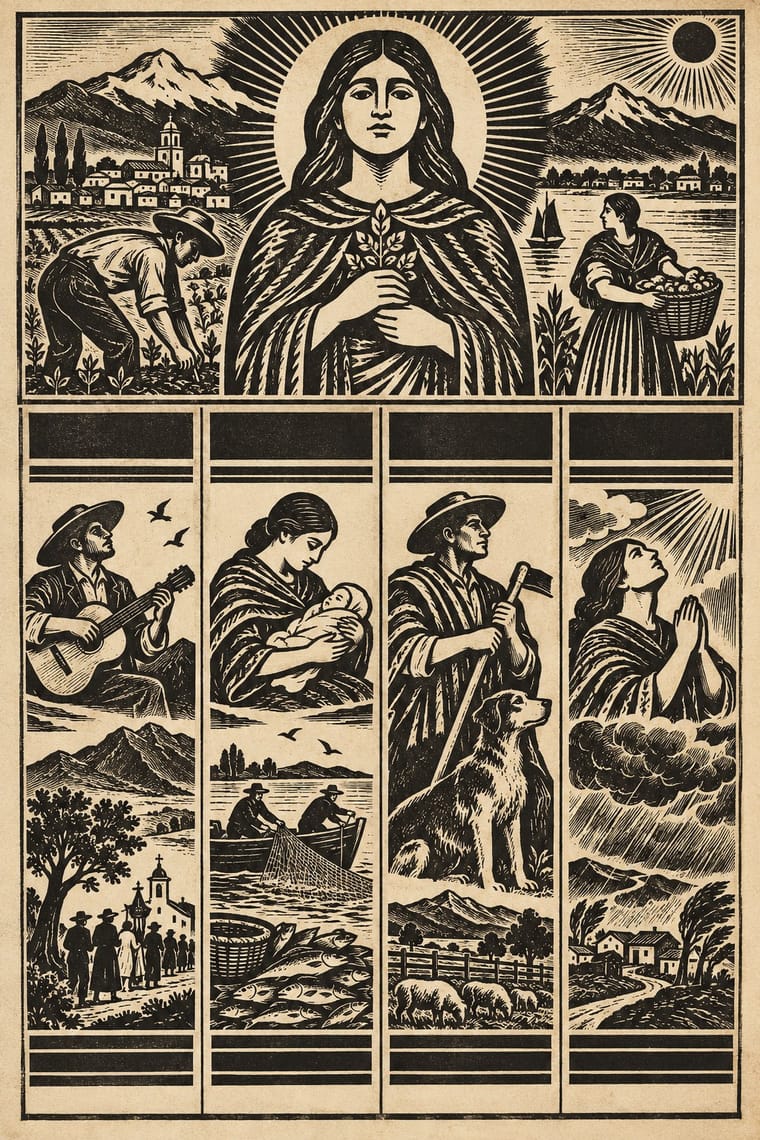
Brazil's cordel puts one woodcut on a folded booklet cover; combine it with the Chilean single sheet for a series of verse prints that share one set of cuts.
Mix them and make something Literatura de Cordel Woodcut Lira Popular
01
What each style brings
Each part of the design comes from the style with the stronger say in it, and each style gives at least two.
Literatura de Cordel Woodcut Lira Popular (Chilean Illustrated Verse Broadsheets)
- Type from Lira Popular
-
Literatura de Cordel Woodcut avoids eclectic mixing: this is where the two pull against each other.
- Colour from Literatura de Cordel Woodcut
- Form from Literatura de Cordel Woodcut
- Composition from Lira Popular
- Surface from Literatura de Cordel Woodcut
02
The type
Open fonts standing in for each style’s own type, which is often hand-drawn or commercial.
Display · Lira Popular
Together
Grenze Gotisch, standing in for Nineteenth-century condensed and extended wood and metal display types, stacked and centred for the headlines ('VIVA EL 18!', 'Gran incendio en Guayaquil')
Text · Literatura de Cordel Woodcut
The cover art of Brazil's literatura de cordel, pocket chapbooks of verse whose single picture is a small woodcut cut in soft umburana wood and printed in black above a plain letterpress title. Woodcuts displaced worn zinc clichés of film-star photographs from the 1940s, led by José Bernardo da Silva's Tipografia São Francisco in Juazeiro do Norte. From the 1960s collectors and galleries turned the blocks into standalone prints by masters such as J. Borges.
Libre Caslon Text; Literatura de Cordel Woodcut used Jobbing letterpress types from the print shop's case, for titles and verse and Lettering carved into the woodblock
03
The colours
The ground and leading colours come from Literatura de Cordel Woodcut, with a counter-accent from Lira Popular. The ink reads on the ground at 4.5:1 or more.
Literatura de Cordel Woodcut Lira Popular (Chilean Illustrated Verse Broadsheets)
-
#ece4cfground · 36% -
#141414ink · 14% -
#e8c95aaccent · 18% -
#7a7064accent · 14% -
#b33a2eaccent · 10% -
#3b342caccent · 8%
As CSS
:root {
  --ground: #ece4cf;
  --ink: #141414;
  --accent-1: #e8c95a;
  --accent-2: #7a7064;
  --accent-3: #b33a2e;
  --accent-4: #3b342c;
  --font-display: "Grenze Gotisch", serif;
  --font-text: "Libre Caslon Text", serif;
}
Use it with care
Lira Popular (Chilean Illustrated Verse Broadsheets): The sheets show the real executions, murders and disasters of named people, and some verse 'a lo divino' is devotional; do not recycle a scaffold or a mutilated body as period gore for effect. Prodigy and scandal sheets ("El niño con dos cabezas", "La niña vestida de hombre i que se casó con otra niña") made a spectacle of real, often poor or gender-nonconforming people; quote them as history, not as freak-show novelty. The images are mostly anonymous, so do not credit a cut to the poet named on the sheet. Popular poetry in décimas, sung a lo divino and a lo humano, is still practised by Chilean cantores and payadores, so work with them, and credit them, rather than imitating their verse.
04
The two styles
05
More combinations
With Literatura de Cordel Woodcut
- Risograph & Indie Print Culture Pairs well · Print a cordel-style woodcut on a riso in one ink on tinted stock to keep the pocket-chapbook economy for zines and poetry pamphlets.
- Brazilian Concrete Design Contrasts · Brazil's concrete designers worked in the same decades with grids and sans-serifs; set a cordel woodcut against concrete typography for a sharp sertão-versus-São Paulo tension.
- Taller de Gráfica Popular Pairs well · The TGP cut relief prints for protest, cordel for storytelling; combine their black-line language when a narrative needs political edge.
- Mexican Popular Graphics (Posada) Pairs well · Both put a single relief picture on cheap street print; borrow Posada's calavera satire but keep cordel's quiet, single-title cover.
- Tarot de Marseille Woodcut Cards Contrasts · Both cut stiff figures in wood with no perspective or modelling, but the cordel cover is printed in black only, with solid blacks and gouged white lines, above a plain letterpress title, while the tarot card colours an outline key through stencils and cuts its numeral and title into the same block; choose cordel for a stark one-colour cover, tarot for a coloured emblem in a numbered set.
- Tropicália Graphic Design Pairs well · The cangaceiro hero of the north-eastern chapbook stands behind Duarte's Corisco; a cordel woodcut figure in a Tropicalist field of saturated colour keeps the popular and the Pop in one frame.
- Lubok Popular Print Pairs well · Brazilian cordel is another chapbook woodcut tradition; set rhymed verse and a single crude block together, as both do, for narrative print with a vernacular voice.
- Onitsha Market Pamphlets Pairs well · A sister market-pamphlet tradition from north-east Brazil; combine cordel's woodcut covers with Onitsha's found photographs for a cheap-print series identity.
With Lira Popular
- Chilean Unidad Popular & Nueva Canción Graphics Pairs well · Set a flat-colour Unidad Popular poster beside a black woodcut frieze and ruled verse columns for a Chilean design that spans popular print and political modernism.
- International Typographic Style Contrasts · Both run on columns, but the Swiss sheet is airy and asymmetric; a lira layout shows how far crowding and centred shouting change the same grid.
- Mexican Popular Graphics (Posada) Pairs well · A sibling street broadside; borrow Posada's coloured paper and single big cut, or keep the Chilean frieze of cuts over many ruled verse columns.
- Victorian Letterpress & Wood Type Pairs well · Take the jobbing printer's mixed display types for the headline block while keeping the crude cuts and columns of verse.