Style combination · Contrasts
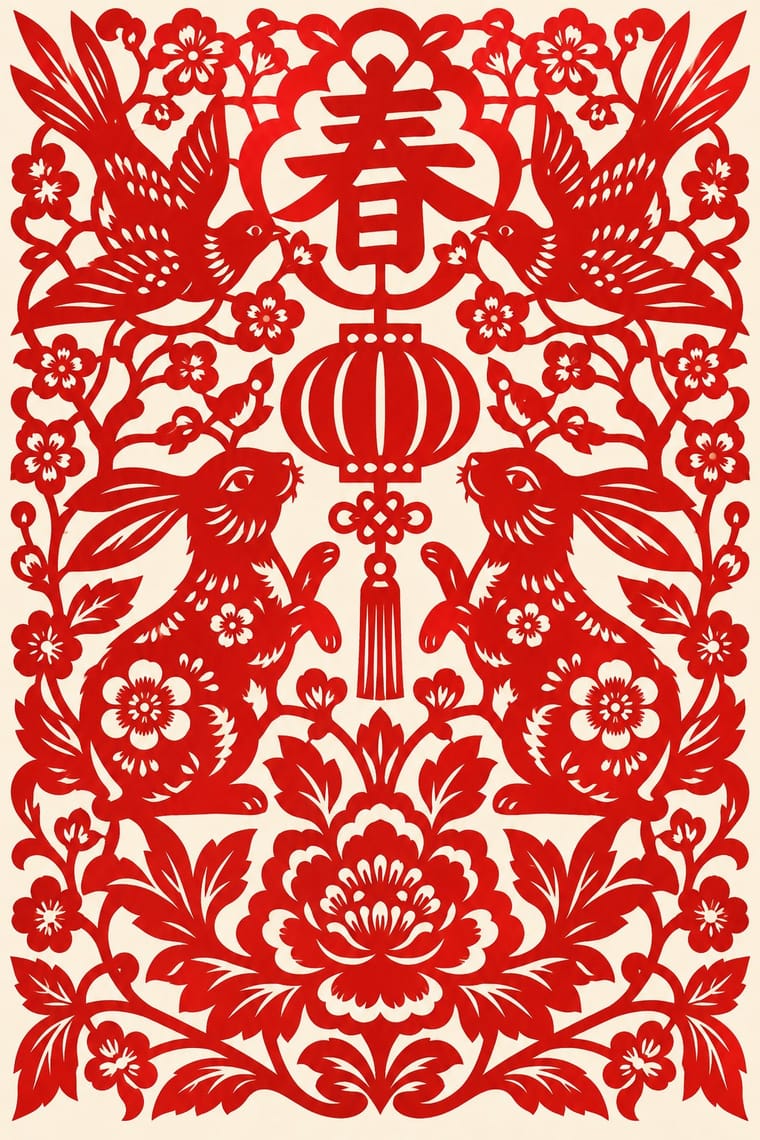
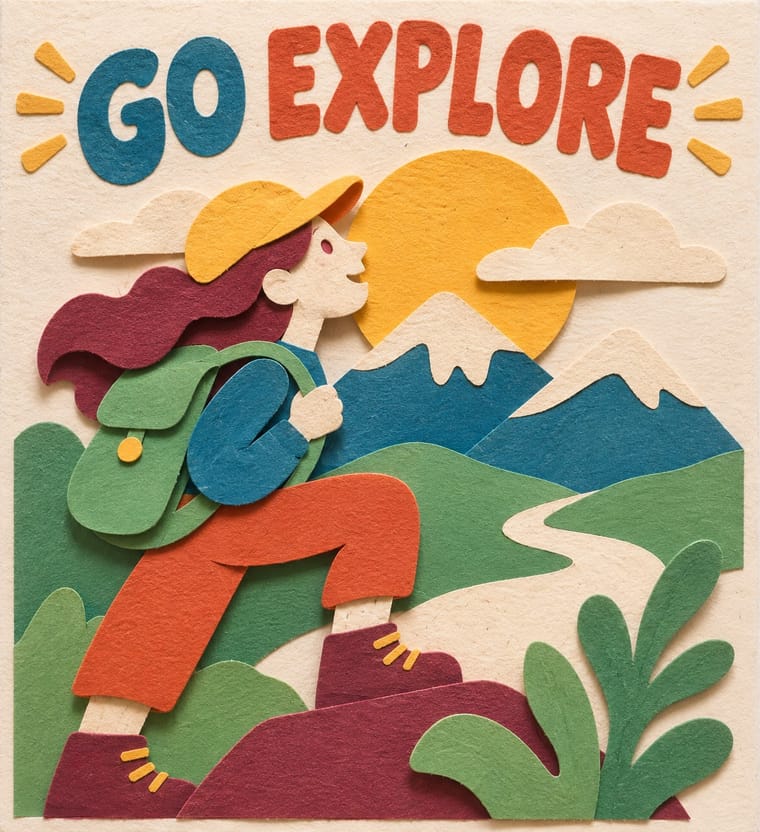
Chinese Paper-Cut × Contemporary Papercraft Illustration
A flat connected silhouette and folk-symbol system against sculptural depth; borrow its cut-edge precision.
Mix them and make something Chinese Paper-Cut Contemporary Papercraft Illustration
01
What each style brings
Each part of the design comes from the style with the stronger say in it, and each style gives at least two.
Chinese Paper-Cut (Jianzhi) Contemporary Papercraft Illustration (Layered Cut-Paper)
- Type from Chinese Paper-Cut
- Colour from Chinese Paper-Cut
- Form from Chinese Paper-Cut
- Composition from Contemporary Papercraft Illustration
-
Chinese Paper-Cut avoids illusion of depth: this is where the two pull against each other, which is the point of the contrast.
- Surface from Contemporary Papercraft Illustration
02
The type
Open fonts standing in for each style’s own type, which is often hand-drawn or commercial.
Display · Chinese Paper-Cut
Hello
Shippori Mincho; Chinese Paper-Cut used Double happiness (囍) cut from folded red paper for weddings, the doubled character mirrored across the fold and Fu (福) and other auspicious characters cut as solid, bridged glyphs for the New Year
Text · Contemporary Papercraft Illustration
Commercial illustration built as a small paper relief or miniature set: sheets are cut, stacked, folded and curled, then photographed so thin edges and cast shadows make the depth readable. Used for stamps, editorial maps and book covers, it treats the depicted subject itself as a physical paper construction.
Jost; Contemporary Papercraft Illustration used Hand-drawn display lettering and Rounded geometric sans
03
The colours
The ground and leading colours come from Chinese Paper-Cut, with a counter-accent from Contemporary Papercraft Illustration. The ink reads on the ground at 4.5:1 or more.
Chinese Paper-Cut (Jianzhi) Contemporary Papercraft Illustration (Layered Cut-Paper)
-
#f5f0e6ground · 36% -
#c8161dink · 14% -
#c9a227accent · 18% -
#f2c14eaccent · 14% -
#e0558aaccent · 10% -
#d95d39accent · 8%
As CSS
:root {
  --ground: #f5f0e6;
  --ink: #c8161d;
  --accent-1: #c9a227;
  --accent-2: #f2c14e;
  --accent-3: #e0558a;
  --accent-4: #d95d39;
  --font-display: "Shippori Mincho", serif;
  --font-text: "Jost", sans-serif;
}
Use it with care
Chinese Paper-Cut (Jianzhi): Paper-cutting is a living craft, practised mostly by rural women who learn it from their mothers, and some cuts serve ritual ends, from invoking rain and warding off evil to calling back the spirit of the dead at funerals. Commission, buy from or credit named cutters and regional workshops rather than tracing their designs, keep auspicious characters correct and legible, do not use funerary or ritual cuts as festive decoration, and treat Miao embroidery-pattern cuts as part of a minority community's dress rather than a free motif bank. Use 囍 (double happiness) only for weddings, not as a generic Chinese luck motif; a 福 hung upside down at New Year is deliberate (倒福, a pun on 'fortune arrives'), so do not correct it, and do not flip other characters.
04
The two styles
05
More combinations
With Chinese Paper-Cut
- Guna Mola Contrasts · Molas cut through stacked layers of cloth and stitch the edges, so colour builds in echo bands; paper-cut stays one flat layer of colour seen against light.
- Stencil Street Art Pairs well · Both depend on bridges that hold every island of the design to the sheet; give a spray stencil the paper-cut's folded symmetry and saw-tooth texture.
- Kamon (Japanese Family Crests) Contrasts · Kamon reduce an emblem to a spare roundel silhouette; paper-cut fills the same roundel with saw-tooth texture and pierced pattern, so set restraint against abundance.
- Nianhua & Chinese Folk Print Pairs well · Both dress the home for the New Year; hang a single red window cut beside a dense, keylined door-god print so flat void and crowded colour work together.
- Guochao (China-Chic National Trend) Pairs well · Guochao packaging borrows red cut-paper silhouettes; keep the real cut logic (joined lines, folded symmetry, correct auspicious characters) instead of a generic filigree texture.
- Swedish Painted Wall Hangings (Dalmålning, Bonadsmålning and Kurbits) Pairs well · A looser parallel: domestic wall decoration filled with symbolic flora, though cut paper rather than painted.
- Mithila (Madhubani) Painting Contrasts · Both are folk arts made mostly by rural women for weddings and other rites, with fish and lotus among their auspicious signs, but paper-cut is a silhouette, usually red, cut from one sheet and folded for mirror symmetry, while Mithila draws an outline and fills it with colour, hatching or rings until no ground is left. Use one of them, not a blend of the two.
- Javanese Wayang Kulit (Tatah Sungging) Contrasts · Both draw with holes cut through a flat sheet, but paper-cuts are usually folded, symmetrical and one-coloured, while a wayang figure is in profile, painted and gilded on both faces, and made to move.
With Contemporary Papercraft Illustration
- Cottagecore Pairs well · Tactile handmade warmth and gentle miniature scenes suit both.
- Claymorphism & Soft 3D Contrasts · Inflated rounded digital volumes against thin, crisp paper planes.
- Photographed Tactile Craft & Lettering Contrasts · Same photographed handmade-miniature family, but built from thin cut sheets with visible edges and stacked paper relief rather than modelled clay, felt or thread.