Style combination · Pairs well
Bògòlanfini Mud Cloth × Uli
Both leave pale signs in a dark-dyed ground, bògòlan by painting mud around them and ukara by stitching raffia to resist indigo; ukara itself is restricted to Ekpe, so borrow the light-on-dark idea with public signs placed freely, credit each source and keep each motif's meaning.
01
What each style brings
Each part of the design comes from the style with the stronger say in it, and each style gives at least two.
Bògòlanfini Mud Cloth Uli & Nsibidi Line and Sign Tradition
- Type from Uli
-
- Colour from Bògòlanfini Mud Cloth
- Form from Uli
- Composition from Bògòlanfini Mud Cloth
- Surface from Bògòlanfini Mud Cloth
02
The type
Open fonts standing in for each style’s own type, which is often hand-drawn or commercial.
Display · Uli
Together
Ojuju, standing in for Nsibidi signs as an ideographic set, drawn by hand (there is no standard font; check each sign's meaning and keep to public signs)
Text · Bògòlanfini Mud Cloth
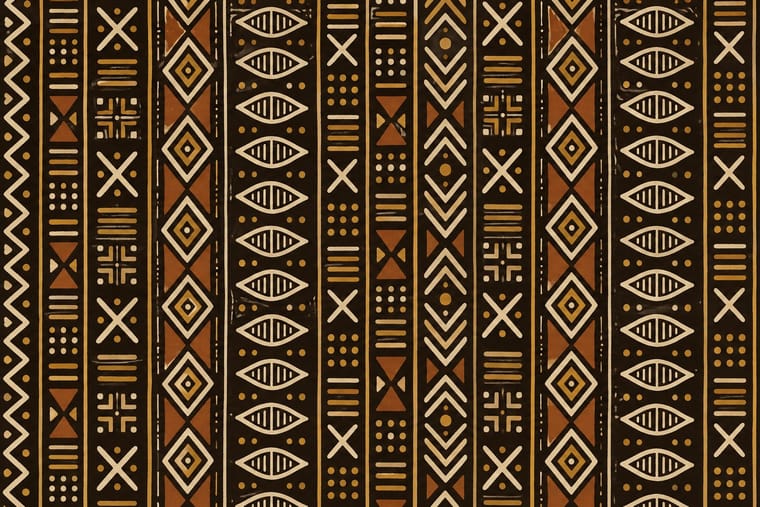
The mud-dyed cotton cloth of the Bamana and other Malian peoples, in which the ground rather than the motif is painted: cloth dyed yellow with n'gallama leaves is covered around each sign with fermented iron-rich mud, and the unpainted signs are then bleached pale. Worn by hunters and by women after initiation and childbirth, it became a national emblem of Mali from about 1980 and spread through Groupe Bogolan Kasobané, Chris Seydou's fashion and stencilled export cloth.
Archivo; Bògòlanfini Mud Cloth used Bògòlan sign repertoire used as a glyph set and Irregular hand-painted sans capitals when text must accompany bògòlan-derived graphics
03
The colours
The ground and leading colours come from Bògòlanfini Mud Cloth, with a counter-accent from Uli. The ink reads on the ground at 4.5:1 or more.
Bògòlanfini Mud Cloth Uli & Nsibidi Line and Sign Tradition
-
#2b1d14ground · 39% -
#e9dcc0ink · 15% -
#c99a3baccent · 20% -
#8c4a2aaccent · 15% -
#23305aaccent · 11%
As CSS
:root {
  --ground: #2b1d14;
  --ink: #e9dcc0;
  --accent-1: #c99a3b;
  --accent-2: #8c4a2a;
  --accent-3: #23305a;
  --font-display: "Ojuju", sans-serif;
  --font-text: "Archivo", sans-serif;
}
Use it with care
Bògòlanfini Mud Cloth: Bògòlan motifs carry named references to Bamana history, proverbs, myths and animals such as the crocodile, and cloths worn by hunters and by women after initiation or childbirth were believed to protect and to absorb dangerous forces. Learn what a pattern refers to before using it, do not sell printed 'mudcloth' pattern as hand-made bògòlan, and commission, credit or collaborate with Malian makers (for example in Kolokani and Bamako workshops) rather than copying their cloths.
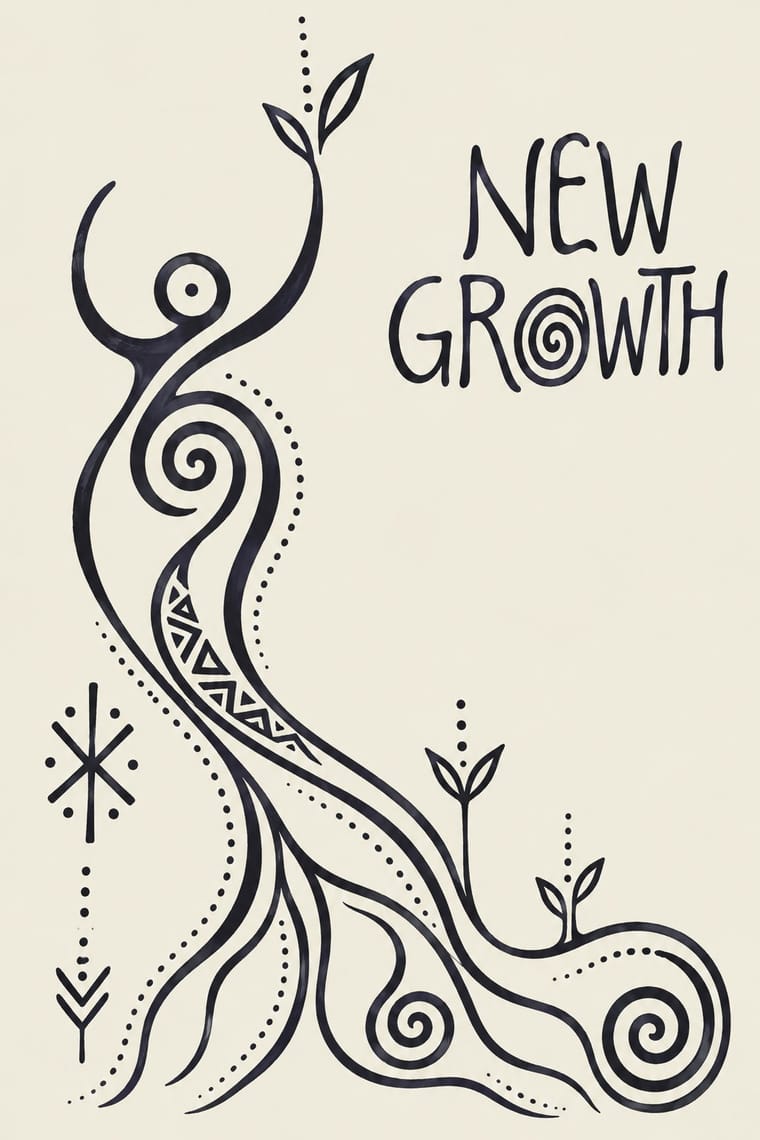
Uli & Nsibidi Line and Sign Tradition: These are living traditions with restricted parts. Nsibidi has a sacred side kept by the Ekpe and Mgbe leopard societies, and ukara cloth is used exclusively by Ekpe members, so never copy society signs or ukara layouts for decoration, merchandise or invented 'secret' meanings; use only signs whose public meaning has been checked with knowledgeable members of the community. Uli is Igbo women's art, which declined after Christian missionaries discouraged it, and the mostly male Nsukka artists were criticised for drawing on it; credit and commission Igbo and Cross River artists, including women painters such as those of the Upa Women Artists Collective, and do not present invented pseudo-nsibidi or generated 'uli' as historical work. Keep the two traditions apart in credit: uli is Igbo women's painting, nsibidi a sign system of Ejagham origin kept by Ekpe and Mgbe men's societies; never label one as the other.
04
The two styles
05
More combinations
With Bògòlanfini Mud Cloth
- Adinkra & Kente Symbol Systems Pairs well · Both are West African sign cloths in a grid of compartments; flip adinkra's dark-on-light stamping into bògòlan's pale-on-dark negative for a two-part system.
- Ma & Wabi-sabi Aesthetics Pairs well · Share an earth palette and a respect for irregular, hand-made repeats; use them together for calm, tactile brand surfaces.
- Batik Pattern Tradition Pairs well · Both reserve the motif against a dyed ground (wax resist versus painted mud); combine the two for earthy negative-pattern surfaces.
- Amazigh Sign System & Tifinagh Contrasts · Bògòlan leaves pale signs in a dark mud-painted ground, while Beni Ouarain rugs and Kabyle pots draw dark signs on cream wool or white slip. Black-ground Amazigh weavings, such as Middle Atlas tent bands and the akhnif cape, are the exception; there, tell the two apart by the stepped, woven construction rather than by the ground.
- Warli Painting Pairs well · Both set pale marks on an earth-dark ground in a hand-made, slightly irregular repeat; bògòlan reserves mostly abstract signs in strip compartments, while Warli's signs depict people, animals, trees, the sun and the moon. Borrow the shared light-on-earth principle, but do not mix bògòlan signs and Warli figures into one generic 'tribal' surface; keep each set of motifs, its meaning and its makers apart.
With Uli
- Ma & Wabi-sabi Aesthetics Pairs well · Both make the empty interval carry meaning and place a few elements off-centre in earth colours; uli supplies a living line and named signs where wabi-sabi supplies texture and a single mark.
- Kōwhaiwhai & Toi Māori Design Contrasts · Both build from curving line and balance positive against negative space, but kōwhaiwhai mirrors koru in continuous bands along a rafter, while uli scatters single motifs asymmetrically over open skin, wall or paper.
- Adinkra & Kente Symbol Systems Contrasts · Both put named signs on West African cloth, but adinkra stamps solid silhouettes into a filled grid in one dark dye, while uli draws open line on empty ground and ukara reserves nsibidi signs white in indigo; keep the two sign systems, their meanings and their makers apart.
- Afrofuturist Design Pairs well · Afrofuturism already borrows nsibidi, as in Black Panther's Ancient Wakandan script; keep uli's sparse dark line and real, public signs rather than glowing pseudo-glyphs on deep-space grounds.
- Warli Painting Contrasts · Both are women's wall painting built on line; uli usually draws one dark tone on a light ground, skin or paper and leaves wide empty ground around single motifs, the reverse of Warli's white on earth with rows of figures filling the field, so borrow uli's restraint to calm a crowded Warli-derived layout.
- Mithila (Madhubani) Painting Contrasts · Both are women's wall-painting traditions led by line, but uli sets a few swelling lines and named motifs asymmetrically on open ground, so the gaps count, while Mithila closes a symmetrical, bordered field and fills every gap. Set them side by side to show restraint against abundance.