Style combination · Contrasts
Ghanaian Movie Poster × Pulp Magazine Cover
A painted-sensational neighbour: the pulp painting is an original reproduced by offset under a printed masthead, while the Ghanaian poster is painted directly on the final surface.
Mix them and make something Ghanaian Movie Poster Pulp Magazine Cover
01
What each style brings
Each part of the design comes from the style with the stronger say in it, and each style gives at least two.
Ghanaian Movie Poster Pulp Magazine Cover
- Type from Pulp Magazine Cover
- Colour from Ghanaian Movie Poster
- Form from Ghanaian Movie Poster
- Composition from Pulp Magazine Cover
- Surface from Ghanaian Movie Poster
02
The type
Open fonts standing in for each style’s own type, which is often hand-drawn or commercial.
Text · Ghanaian Movie Poster
Hand-painted posters commissioned by Ghana's mobile video clubs from about 1985, painted by apprenticed sign painters on stitched flour sacks to advertise VHS screenings of Hollywood, Hong Kong, Nigerian and Indian films. Often without having seen the film, artists invented gory, supernatural and hyper-muscular scenes around looming heads and hand-lettered titles, producing one of the most uninhibited poster vernaculars anywhere.
Archivo; Ghanaian Movie Poster used Hand-painted outlined block capitals and Sign-painter shaded and drop-shadowed letters
03
The colours
The ground and leading colours come from Ghanaian Movie Poster, with a counter-accent from Pulp Magazine Cover. The ink reads on the ground at 4.5:1 or more.
Ghanaian Movie Poster Pulp Magazine Cover
-
#f6c90eground · 36% -
#111111ink · 14% -
#1e6fd9accent · 18% -
#c8281eaccent · 14% -
#1d4a8aaccent · 10% -
#2b9348accent · 8%
As CSS
:root {
  --ground: #f6c90e;
  --ink: #111111;
  --accent-1: #1e6fd9;
  --accent-2: #c8281e;
  --accent-3: #1d4a8a;
  --accent-4: #2b9348;
  --font-display: "Bungee Shade", sans-serif;
  --font-text: "Archivo", sans-serif;
}
Use it with care
Pulp Magazine Cover: Pulp covers sold peril through sexualised and violent imagery: the 'damsel in distress' was often half-dressed or bound, and Margaret Brundage's Weird Tales covers (1933-38) showed nude or semi-nude women, with whipping scenes noted as controversial, until a new decency standard was imposed on newsstand pulps in 1938. Spicy Detective and the other 'spicy' pulps made this their selling point. Pulp fiction of the 1930s also carried many Yellow Peril villains loosely based on Fu Manchu, so cover villains often rest on racial caricature, and exoticising colonial stereotypes were common too. Do not copy these conventions as neutral decoration: if the style is used, keep the drama but drop the gendered violence and ethnic stereotypes, or treat them knowingly and critically.
04
The two styles
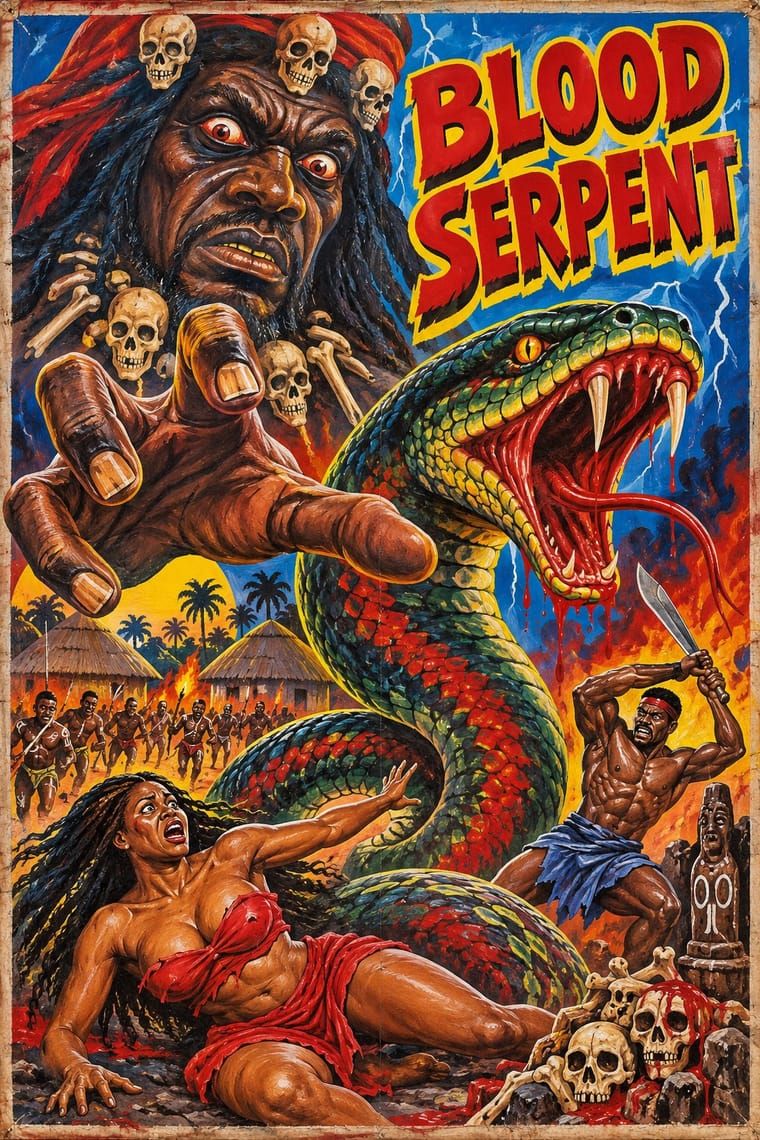
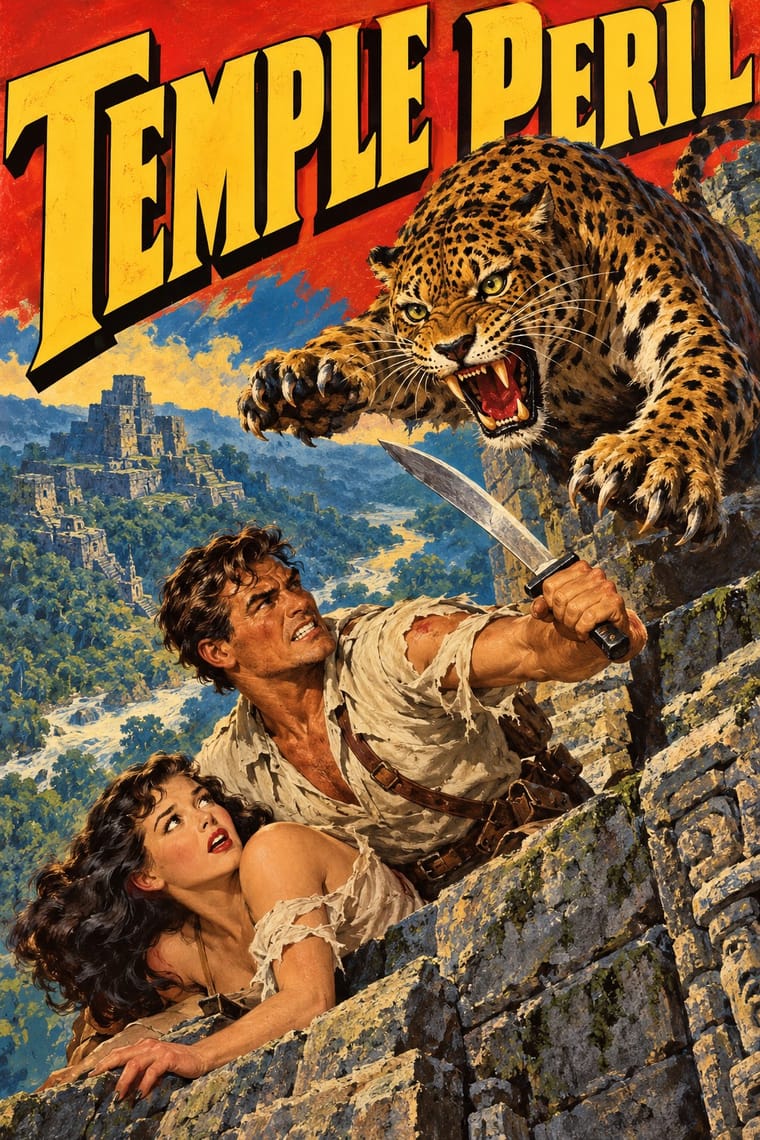
05
More combinations
With Ghanaian Movie Poster
- Surrealist Graphics Pairs well · Share dream logic and monstrous hybrids; use Surrealist juxtaposition to frame Ghana-style painted figures in an editorial layout.
- Hand-Painted Bollywood Poster Pairs well · Combine Ghana's lurid invented scenes with Bollywood's glossy star portraits for a painted, maximalist film identity.
- Minimalist Graphic Design Contrasts · Minimalist film posters reduce a story to one symbol while Ghanaian posters cram in everything; reach for the latter when a brief needs maximal spectacle.
- Afrobeat Sleeve Art Pairs well · Another West African painted vernacular with bodies crowding the frame; borrow its looming heads for a sleeve's front and Afrobeat's strips for the back.
- Nollywood Video Jacket & Film Poster Contrasts · Its painted neighbour: Ghanaian video clubs had sign painters hand-paint posters for many of the same Nigerian films, alongside Hollywood, Hong Kong and Indian ones. Swap the cut-out photographs for brushwork on flour sacks to move from one to the other.
- Ghanaian Funeral Poster & Banner Contrasts · They share the walls of Ghanaian towns, but the movie poster is painted by hand on flour sacks with invented, lurid scenes, while the funeral poster is typeset on a computer around a real photograph; set one painted, exaggerated figure against a funeral poster's sober portrait for a deliberate clash of registers.
- Matatu & Nganya Art Contrasts · Both are commissioned African street art built on looming painted heads, but Ghana's posters are gestural sign-painter enamel on flour sacks that invent gore and muscle for a film, while the nganya's stars are smooth, airbrushed likenesses fitted to a glossy vehicle body.
- Kinshasa Popular Painting Contrasts · Same sign-painter roots, opposite use of words: Ghanaian posters letter only a film title to sell a lurid scene, while Kinshasa paintings fill the scene with commentary to be read.
With Pulp Magazine Cover
- Penguin Paperback Design (Three Bands to the Marber Grid) Pairs well · The paperback cover is the later successor on the newsstand and bookstall; it trades the shouting masthead and painted peril for a restrained, systematic cover.
- American Four-Colour Comic Book (Golden to Bronze Age) Pairs well · Both are newsstand sensationalism; add panels, balloons and Ben-Day dots to turn a single painted scene into a comic.
- Victorian Letterpress & Wood Type Pairs well · Slab and shaded display faces from jobbing printing give the masthead its loud, crowded voice.