Style combination · Contrasts
Fotoromanzo × Lianhuanhua Picture-Story Books
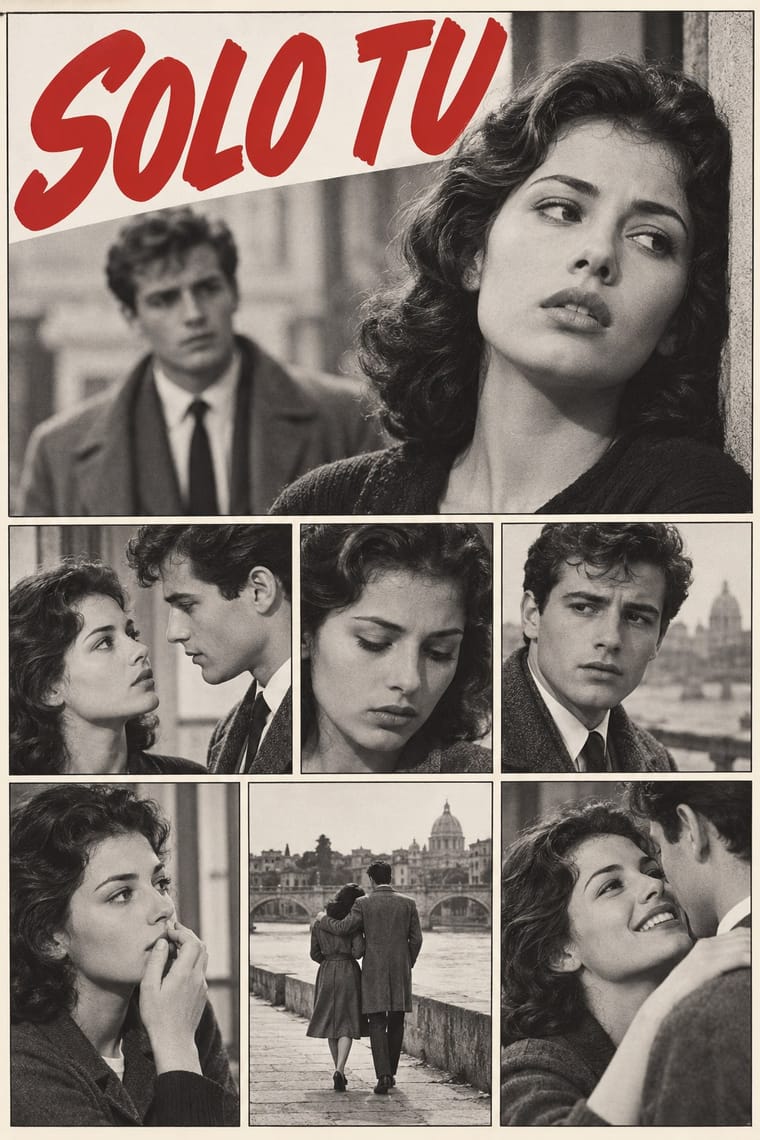
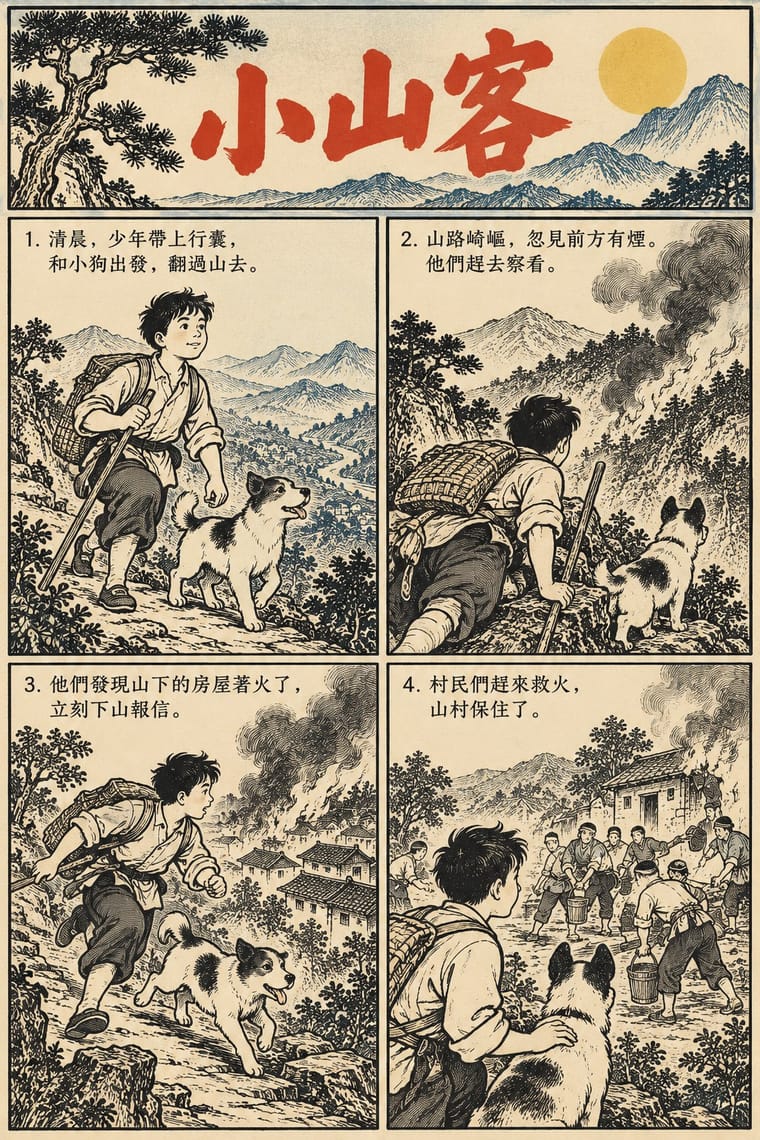
Both are cheap picture stories read by millions in monochrome; lianhuanhua draws one framed picture per pocket-sized page with a caption beneath, while the fotoromanzo photographs actors and sets several frames to a magazine page with balloons.
Mix them and make something Fotoromanzo Lianhuanhua Picture-Story Books
01
What each style brings
Each part of the design comes from the style with the stronger say in it, and each style gives at least two.
Fotoromanzo (Italian Photo-Romance) Lianhuanhua Picture-Story Books
- Type from Lianhuanhua Picture-Story Books
- Colour from Fotoromanzo
- Form from Fotoromanzo
- Composition from Lianhuanhua Picture-Story Books
- Surface from Fotoromanzo
02
The type
Open fonts standing in for each style’s own type, which is often hand-drawn or commercial.
Display · Lianhuanhua Picture-Story Books
Square
Shippori Mincho, standing in for Songti (Ming) and Kaiti printing types for captions
Text · Fotoromanzo
The photo-romance of the Italian women's weeklies: a melodrama told in staged photographs, first printed by Il mio sogno and Bolero Film in May 1947 and copied from France to Brazil. Actors pose on modest sets or in familiar places, and the stills sit in a plain grid of ruled frames, often two or three to a row. Dialogue in balloons and boxes, lettered by hand or typeset, is pasted over the pictures, and close-ups of faces carry the drama. The weeklies printed the stories in black and white until colour took over in the mid-1970s; covers sold each issue with a photograph of the stars.
Comic Neue; Fotoromanzo used Hand-lettered capitals for narration and balloons and Typeset sans in later work
03
The colours
The ground and leading colours come from Fotoromanzo, with a counter-accent from Lianhuanhua Picture-Story Books. The ink reads on the ground at 4.5:1 or more.
Fotoromanzo (Italian Photo-Romance) Lianhuanhua Picture-Story Books
-
#f3f0e8ground · 36% -
#151515ink · 14% -
#c62a2faccent · 18% -
#e2b84aaccent · 14% -
#2b5ba6accent · 10% -
#e3a888accent · 8%
As CSS
:root {
  --ground: #f3f0e8;
  --ink: #151515;
  --accent-1: #c62a2f;
  --accent-2: #e2b84a;
  --accent-3: #2b5ba6;
  --accent-4: #e3a888;
  --font-display: "Shippori Mincho", serif;
  --font-text: "Comic Neue", cursive;
}
Use it with care
Fotoromanzo (Italian Photo-Romance): Photo-romances starred real actors, some later famous (Gina Lollobrigida, Sophia Loren), and their photographs belong to publishers' archives such as the Fondazione Arnoldo e Alberto Mondadori: cast your own models, never ask an image model for a real star's likeness, and never present a generated still as a vintage photo-romance.
04
The two styles
05
More combinations
With Fotoromanzo
- American Four-Colour Comic Book (Golden to Bronze Age) Contrasts · Both read as ruled panels with speech balloons; choose the fotoromanzo when the cast should be real people posed in black-and-white photographs and the text may run long, and the comic book when drawn heroes, sound effects and flat colour tints should carry the action.
- Drum Magazine & Sophiatown Photojournalism Contrasts · Drum's photographs report real township life under condensed headlines; the fotoromanzo stages fiction for the camera and runs it as a grid of stills with balloons.
- Pop Art Graphics Pairs well · Blow up a single photo-romance frame with its balloon to poster size for a Pop-style quotation of mass romance, as Lichtenstein did with drawn romance comics. Rewriting the balloons is a different precedent: Hara-Kiri's parodies and the Situationists' détournements of Nous Deux, not Pop.
- Onitsha Market Pamphlets Contrasts · Both are cheap popular romance print from 1947; the Onitsha pamphlets tell their stories in letterpress text with a recycled photograph only on the cover, while the fotoromanzo tells the whole story in staged photographs with balloons.
- International Typographic Style Pairs well · Set the photo-story on an exact modular grid with a neutral grotesque in the dialogue boxes, so the melodrama sits in a clean editorial frame.
- Situationist Détournement Graphics Pairs well · The photo-romance was a raw material René Viénet named in Internationale situationniste no. 11 (1967), calling for photo-romances to be détourned by adding or altering their speech bubbles: keep the photographed lovers and the grid of frames untouched and change only the balloons, so that the melodrama speaks against itself.
- Illustrated Rom-Com Book Cover (Cartoon Couple Cover) Contrasts · The postwar photo-romance sold love stories with photographed couples in close-up; the illustrated cover gives up the photograph so that readers can picture themselves in the role and the cover tells nothing of the heat level.
- Giallo Mondadori Covers (I Libri Gialli) Contrasts · Both sold weekly at Italian kiosks, but the photo-romance told melodrama in staged photographs and ruled grids, the giallo in one painted window; set them side by side to contrast photographic and painted suspense.
With Lianhuanhua Picture-Story Books
- Shanghai Modern & Yuefenpai Pairs well · Its parent print culture: pair a lianhuanhua line sequence with a yuefenpai-style painted cover for a period Shanghai feel.
- Chinese Modern Woodcut Movement Pairs well · Woodcut picture-stories and lianhuanhua share the one-image-per-page sequence; mix carved frames with drawn ones for documentary storytelling.
- Pop Art Graphics Contrasts · Pop blew one comic panel up to gallery scale; lianhuanhua keeps hundreds of quiet frames small, a useful test of scale and pace.
- Nianhua & Chinese Folk Print Pairs well · Both retell opera and folk stories for a popular audience; borrow nianhua colour for the cover and keep the inside in line.
- Ligne Claire (Franco-Belgian Clear Line) Contrasts · Both tell stories in outlined drawings; lianhuanhua gives each pocket-sized page one framed black-ink picture with a caption and keeps colour for the cover, ligne claire fills tiered multi-panel pages with balloons and flat, bright colour, caricatural figures in realistic settings.
- Amar Chitra Katha Comics Contrasts · Both are didactic picture-story series of classical and historical tales; lianhuanhua gives each page one black-ink picture over a printed caption, Amar Chitra Katha puts several coloured panels with balloons on every page.
- Chinese National-Style Animation (Shanghai Animation Film Studio) Contrasts · Its printed contemporary: both told myths and fables, the Monkey King among them, to a mass audience under the same state, but the palm-sized picture-story books drew in black ink line, one framed picture to a page with a caption, while the studio moved painted and cut-paper figures over empty grounds with few or no words.
- Story Manga (Postwar Japanese Comics) Contrasts · Both are cheap, widely rented East Asian picture-story books; lianhuanhua gives each palm-sized page one framed drawing with a caption beneath and no balloons, while story manga packs a page with panels of changing size, balloons, speed lines and drawn sound effects.