Style combination · Pairs well
West African Barbershop × Tingatinga Painting
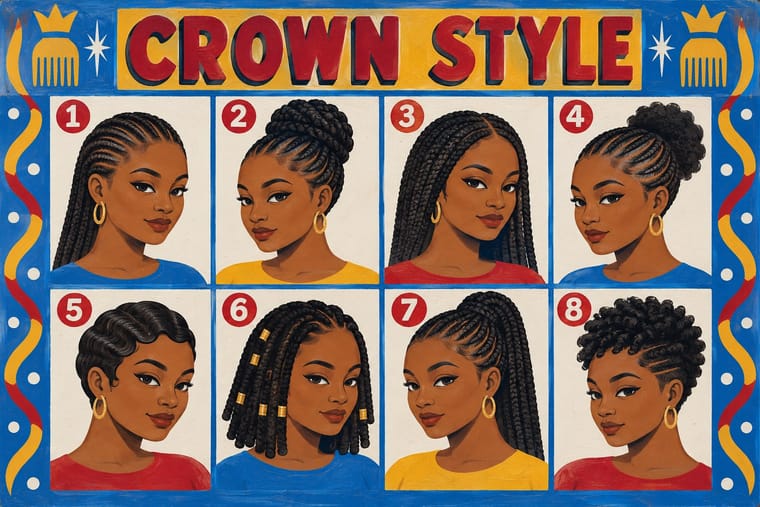
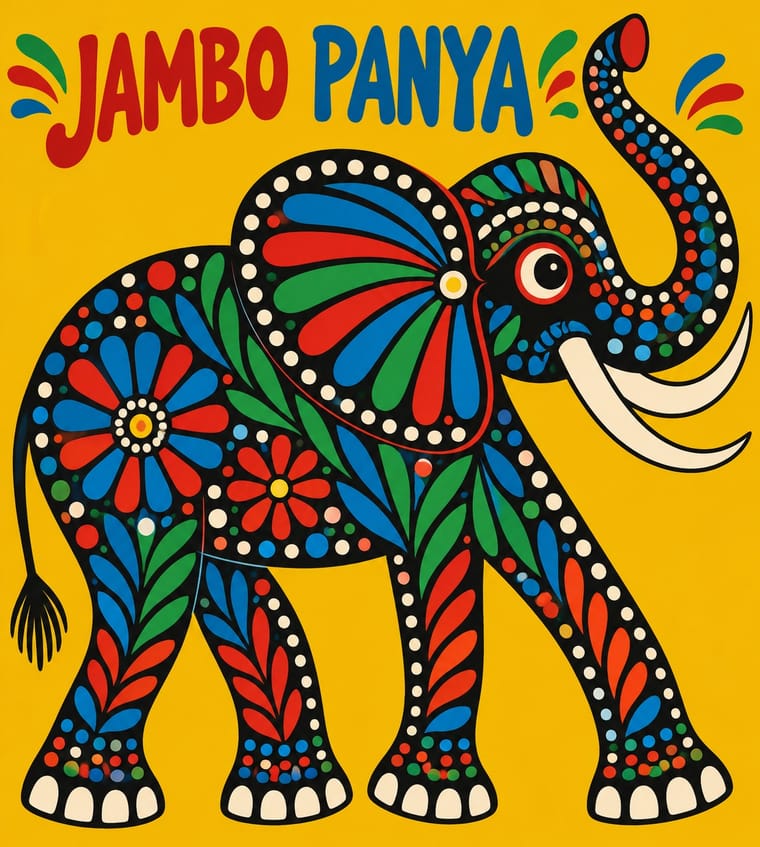
Both are hand-painted enamel on board for a street market; borrow the sign painter's outlined capitals to give Tingatinga figures a title or shop name.
Mix them and make something West African Barbershop Tingatinga Painting
01
What each style brings
Each part of the design comes from the style with the stronger say in it, and each style gives at least two.
West African Barbershop & Hair Salon Signs Tingatinga Painting
- Type from West African Barbershop
- Colour from Tingatinga Painting
- Form from Tingatinga Painting
-
West African Barbershop avoids distortion & exaggeration: this is where the two pull against each other.
- Composition from West African Barbershop
- Surface from West African Barbershop
02
The type
Open fonts standing in for each style’s own type, which is often hand-drawn or commercial.
Display · West African Barbershop
Square
Bungee, standing in for Outlined, drop-shadowed block capitals by sign painters
Text · Tingatinga Painting
A Tanzanian popular painting school begun in Dar es Salaam by Edward Tingatinga (1932–1972), who from 1968 painted animals, birds and village scenes in glossy bicycle enamel on square hardboard ceiling boards for residents and tourists. One flat ground colour carries black-outlined, caricatural animals with patterned bodies. Its roots are debated: Makua and Makonde hut-wall painting, Congolese pictures sold in the city. Relatives and pupils carried it on, moving to canvas from 1989, organising as the Tingatinga Arts Cooperative Society in 1990 and adding crowded city scenes and spirit themes.
Space Grotesk; Tingatinga Painting used Enamel-painted block-capital artist's signatures along the lower edge of the panel and Irregular hand-painted capitals for any Swahili or English title or caption that must accompany Tingatinga-derived graphics
03
The colours
The ground and leading colours come from Tingatinga Painting, with a counter-accent from West African Barbershop. The ink reads on the ground at 4.5:1 or more.
West African Barbershop & Hair Salon Signs Tingatinga Painting
-
#f5f1e6ground · 36% -
#111111ink · 14% -
#f2b705accent · 18% -
#d7261eaccent · 14% -
#1c75bcaccent · 10% -
#2e9e48accent · 8%
As CSS
:root {
  --ground: #f5f1e6;
  --ink: #111111;
  --accent-1: #f2b705;
  --accent-2: #d7261e;
  --accent-3: #1c75bc;
  --accent-4: #2e9e48;
  --font-display: "Bungee", sans-serif;
  --font-text: "Space Grotesk", sans-serif;
}
Use it with care
Tingatinga Painting: Tingatinga is the living livelihood of named Tanzanian painters, many in the Tingatinga Arts Cooperative Society in Dar es Salaam, and its market has long been undercut by fakes: copies of the founder's lion, peacock, leopard and buffalo were sold signed 'E. S. Tingatinga'. Never add Tingatinga's or any painter's signature, or a cooperative name, to generated work, and never present it as an original painting; commission, buy from or credit the painters by name instead. Do not call it generic 'African' or 'tribal' art, or dismiss it as 'airport art'. Its roots are debated, so do not present it as rootless or as a mere copy of Makua and Makonde hut-wall painting, and do not repeat the disputed claim that Tingatinga was Mozambican, which his family and the cooperative reject. Shetani and witchcraft scenes draw on Makua and Makonde belief; picture them as the brief's community understands them, not as spooky decoration.
04
The two styles
05
More combinations
With West African Barbershop
- Isotype Pictorial Statistics Pairs well · Treat the hairstyle board as a humane pictogram chart: one consistent figure per cell, labelled, for comparison at a glance.
- Hand-Painted Signage & Vernacular Lettering Pairs well · Use the sign writer's shaded capitals for the shop band and the barbershop grid of painted heads below it, as the boards themselves do.
- Pop Art Graphics Pairs well · Both repeat one head in a grid with small variations; pair Warhol's serial portraits with painted, named hairstyles for a warmer, hand-made take on repetition.
- Ghanaian Movie Poster Contrasts · Same painters' media and cities but opposite temperament; set the calm, catalogue-like heads against the lurid, distorted drama of the movie posters.
- Lotería Card Imagery (Mexican Lotería) Contrasts · Both lay out named, numbered pictures in rows and columns, but a barbershop sign is one hand-painted menu of heads that differ only in their hairstyle, under the shop's boast, while a lotería tabla is a printed board of unrelated emblems, one of a set of boards that each hold a different selection from the same deck.
- Matatu & Nganya Art Pairs well · Another African street commission built on painted heads; pair the barbershop board's frontal, stylised faces with the matatu's airbrushed, foreshortened star portraits for a Nairobi street layout.
- South African Vernacular Design (Ijusi) Pairs well · Hair-salon boards were among Ijusi's sources; pair a painted grid of named hairstyles with a many-typeface layout and found photographs.
With Tingatinga Painting
- Đông Hồ & Hàng Trống Folk Prints Pairs well · Both are cheap popular pictures of plump, joking animals on a plain ground; combine them for a children's or folk-humour series across two continents.
- Kanga (Swahili Message Cloth) Pairs well · Both belong to the Swahili coast of Dar es Salaam; frame a Tingatinga animal in a kanga border with a real, checked Swahili saying for an East African identity that feels local rather than safari-generic.
- Rorke's Drift Linocut Contrasts · Rorke's Drift cuts dense black-and-white narrative bands; Tingatinga floats a few glossy, many-coloured animals on one ground. Use the contrast between carved monochrome story and painted colour field.
- Kinshasa Popular Painting Contrasts · Both are African urban popular painting in bright, outlined colour, and Congolese paintings sold in Dar es Salaam may have spurred Tingatinga; but Kinshasa painting argues in painted titles, captions and speech balloons, while Tingatinga floats near-wordless animals on one glossy ground.