Style combination · Contrasts
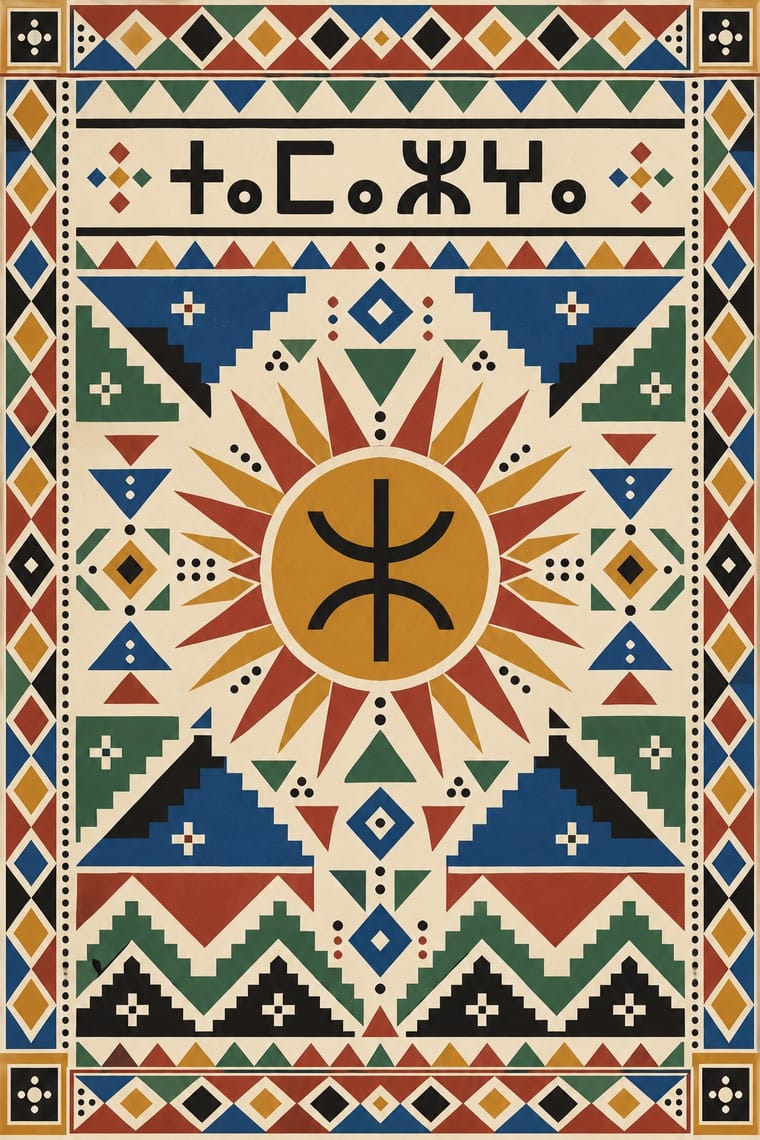
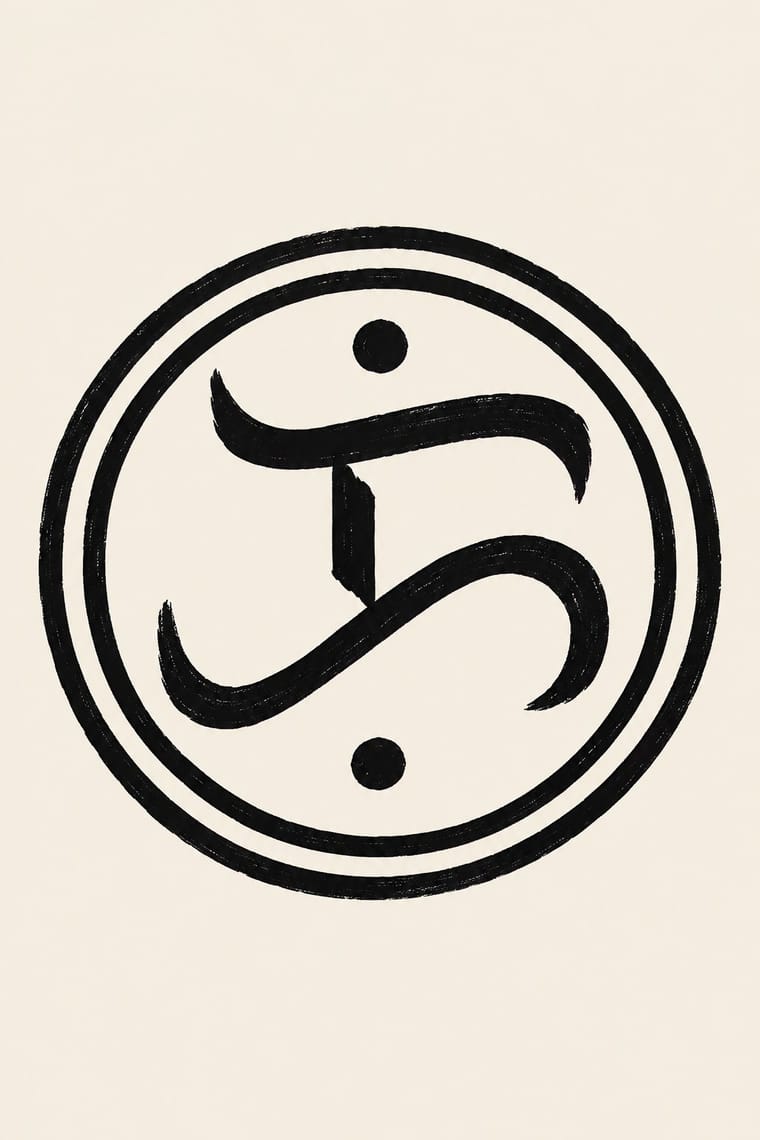
Amazigh Sign System × Baybayin Revival Graphics
Both turn a revived script into an identity sign, but Tifinagh is carried by a woven and painted geometric repertoire and appears on public signage, while baybayin is a looped brush or pen hand used almost only as emblem; do not swap one script's look for the other's.
Mix them and make something Amazigh Sign System Baybayin Revival Graphics
01
What each style brings
Each part of the design comes from the style with the stronger say in it, and each style gives at least two.
Amazigh Sign System & Tifinagh Baybayin Revival Graphics
- Type from Baybayin Revival Graphics
-
Amazigh Sign System avoids brush & pen calligraphy: this is where the two pull against each other, which is the point of the contrast.
- Colour from Amazigh Sign System
- Form from Amazigh Sign System
- Composition from Baybayin Revival Graphics
- Surface from Baybayin Revival Graphics
02
The type
Open fonts standing in for each style’s own type, which is often hand-drawn or commercial.
Display · Baybayin Revival Graphics
Ours
Yatra One; Baybayin Revival Graphics used The woodblock letterforms of the Doctrina Christiana (Manila, 1593), the model most modern baybayin fonts follow and Noto Sans Tagalog (Google Noto, SIL Open Font License; the 2022 build covers the Unicode 14 additions ra U+170D and pamudpod U+1715), the safe choice for real Unicode text
Text · Amazigh Sign System
The visual language shared by Amazigh communities from the Rif, Atlas and Kabylie to the Aurès and the Tuareg Sahara. Women weave a common repertoire of geometric signs (lozenges, chevrons, triangles, crosses, zigzags, dots) into rugs and capes, paint it on pottery and tattoo it on the face, and smiths, many of them Jewish in Morocco and Kabylie until the 1950s, cast and engrave it in silver. Its script, Tifinagh, descends from Libyco-Berber writing. Since 2003 Neo-Tifinagh has marked Amazigh identity on Moroccan public signs; the red yaz ⵣ has stood on the Amazigh flag since 1970.
Jost; Amazigh Sign System used IRCAM standard Neo-Tifinagh and Noto Sans Tifinagh
03
The colours
The ground and leading colours come from Amazigh Sign System, with a counter-accent from Baybayin Revival Graphics. The ink reads on the ground at 4.5:1 or more.
Amazigh Sign System & Tifinagh Baybayin Revival Graphics
-
#efe7d6ground · 36% -
#1b1916ink · 14% -
#c48a2caccent · 18% -
#ce1126accent · 14% -
#a23a2aaccent · 10% -
#0038a8accent · 8%
As CSS
:root {
  --ground: #efe7d6;
  --ink: #1b1916;
  --accent-1: #c48a2c;
  --accent-2: #ce1126;
  --accent-3: #a23a2a;
  --accent-4: #0038a8;
  --font-display: "Yatra One", cursive;
  --font-text: "Jost", sans-serif;
}
Use it with care
Amazigh Sign System & Tifinagh: These signs belong to living Amazigh communities, and much of the repertoire is women's work: weavers, potters, and older women whose facial tattoos belong to a fading practice that many Moroccans now regard as sacrilegious. Signs and jewellery are worn for protection against the evil eye and to mark region, tribe and life stage, so do not merge regional motifs into a generic 'Berber' pattern or put tattoo signs on throwaway goods. The best-known photographs of Kabyle women's facial tattoos, Marc Garanger's portraits of 1960, were made by a French army conscript for compulsory identity cards, with the women made to unveil; do not use them as neutral pattern sources, and prefer documentation made with the women's consent or by Amazigh researchers. The choice of script is itself political: IRCAM's 2003 adoption of Neo-Tifinagh was a palace compromise that many Amazigh activists criticised, most Moroccan speakers and Kabyle writers use Latin script, and Tuareg Tifinagh is its own living variant. Have any Tifinagh text spelled and checked by a speaker and set it in a proper Unicode font rather than inventing pseudo-letters. The yaz and the Amazigh flag are political emblems of the Amazigh identity movement, and the flag was banned in Algeria during the 2019 Hirak. Much historical Moroccan and Kabyle 'Berber' silver was made by Jewish silversmiths, and Tuareg pieces by Tuareg smiths: credit them accurately, commission and credit Amazigh weavers, potters and type designers, and do not sell printed 'Berber' rug pattern as hand-woven.
Baybayin Revival Graphics: Baybayin is shared heritage, but its revival touches living Indigenous scripts and contested claims. Hanunóo, Buhid and Tagbanwa are still written by their communities, the Mangyan of Mindoro and the Tagbanwa and Pala'wan of Palawan, and their documents are on UNESCO's Memory of the World register (1999, 'Philippine Paleographs'); do not use their letters, ambahan verses or community signage as generic 'baybayin', and work with the communities and bodies such as the Mangyan Heritage Center when their scripts are involved. Baybayin wrote Tagalog and neighbouring lowland languages, and Kapampangan Kulitan has its own form and keepers, so do not present baybayin as the old writing of every Filipino people; even the bills moved in 2022 from a baybayin-only national script to baybayin 'and other indigenous and traditional writing systems'. 'Alibata', coined by Paul Versoza in 1914 from the Arabic alif-ba-ta, is a misnomer. Have every word spelled by a reader of the script: it writes syllables, so English spelled letter by letter, wrong or missing kudlit, mirrored glyphs and invented letters read as nonsense, and a tattoo makes the error permanent; write personal and organisation names in Latin unless the bearer has chosen a baybayin spelling. Image models cannot write baybayin and invent glyphs: leave the sign blank or set real text in a Unicode font (one that covers ra and the pamudpod, with the text entered as Unicode, not typed on Latin keys mapped to glyphs), and never present generated pseudo-script as genuine. Some of the best-known baybayin emblems carry politics: the CCP's triple ka is, in the Inquirer's words, a remnant of the Marcos New Society, and the ka in a rayed sun, attributed to the Katipunan, was flown by the July 2003 mutineers the press called the Magdalo Group and is the logo of the Magdalo party-list; do not use them as neutral Filipino marks. Agency seals, state insignia and the peso notes are official marks, so draw new emblems instead of copying them. Baybayin tattoos sit beside batok, the Indigenous hand-tapped tattooing whose patterns, placements and rituals belong to particular ethnolinguistic groups and their practitioners: a baybayin word does not license batok patterns or hand-tapping outside those lineages, and invented tribal motifs must not pass as Indigenous designs. Credit or commission Filipino calligraphers, type designers and tattoo artists.
04
The two styles
05
More combinations
With Amazigh Sign System
- Adinkra & Kente Symbol Systems Contrasts · Both are sign systems that carry meaning, but adinkra stamps named symbols into a ruled grid of squares. Amazigh weavers and tattooists vary the size and spacing of their signs by hand within bands and lattices, and share them with a script.
- Bògòlanfini Mud Cloth Contrasts · Bògòlan leaves pale signs in a dark mud-painted ground, while Beni Ouarain rugs and Kabyle pots draw dark signs on cream wool or white slip. Black-ground Amazigh weavings, such as Middle Atlas tent bands and the akhnif cape, are the exception; there, tell the two apart by the stepped, woven construction rather than by the ground.
- Islamic Geometric & Calligraphic Tradition Contrasts · Islamic pattern builds compass-drawn star tilings and calligraphic hierarchy; Amazigh signs are freehand, stroke-built and non-calligraphic. Choose one logic for a Maghrebi brief instead of blending them into generic 'Moroccan' pattern.
- Contemporary Arabic & Dual-Script Type Design Pairs well · Matched Arabic–Latin families such as Qandus and Awal add Tifinagh as a third script. Give Tifinagh the same weight and baseline as its partners on trilingual signs.
- Diné (Navajo) Weaving Design Contrasts · Both are rug-weaving traditions of stepped geometry, made largely by women. Amazigh weavers share a repertoire of protective signs with pots, silver and tattoos, and let a lattice drift or break off by hand, while a Diné rug is one field planned and mirrored around a centre, in a grammar and palette set by period and region. Do not merge them into a generic 'tribal rug'.
With Baybayin Revival Graphics
- Jeepney Art Contrasts · Both speak for Filipino identity, but jeepney art crowds chrome, airbrush and polychrome lettering, while baybayin revival sets a single one-ink character in open space; use the contrast to decide between festive abundance and a quiet mark of origin.
- Arabic Calligraffiti Pairs well · Kabuay applies calligraphy and graffiti methods to baybayin; borrow calligraffiti's large painted gesture for murals, but keep each glyph legible and correctly spelled.
- Thai Yantra (Yant) Diagrams Contrasts · Both put a Southeast Asian script on skin and cloth, but a yantra packs sacred formulae into a consecrated diagram, while a baybayin tattoo or shirt carries a word of identity rather than a consecrated formula; never borrow yantra structure or Khom letters for a baybayin design.
- Kamon (Japanese Family Crests) Pairs well · Set one baybayin character inside a kamon-style monochrome roundel with compass-drawn rings for a seal or mark, as Philippine cultural agencies already do; draw a new emblem rather than copying an agency's.
- Mongol Bichig Calligraphy & Ugalz Ornament Contrasts · Both revive an old script as a national mark beside a dominant one, Cyrillic in Mongolia and Latin in the Philippines, but bichig runs in vertical columns framed by ugalz ornament, while baybayin stands as one bare horizontal character or word; choose between a framed ornamental seal and a single unadorned sign.
- Contemporary Arabic & Dual-Script Type Design Pairs well · Borrow dual-script matchmaking to give baybayin and its Latin companion matched weight, stroke and proportion on bilingual signs, labels and certificates, even where the Latin is set smaller as the reading line.
- Out-of-Square Hangul Typography Pairs well · Both modernise a national script from its own structure; borrow out-of-square Hangul's monoline, enlarged letters for a modern baybayin poster, keeping the kudlit placement and the spelling correct.