What should the picture argue?
“See for yourself”
5 ideas that make a picture say it, the plainest first. Each is a move you can make on any style.
What the viewer does: The viewer checks the claim with their own eyes, or produces the proof by doing something.
The pictures are AI-generated: a style from the atlas with the idea put on it. None is a real or historical work.
-
01 · Prove the point
Demonstration
The subject is shown doing or surviving the very thing claimed, as a test with a visible result.
Makes a claim believable: strength, safety, speed, capacity. The viewer checks it with their own eyes.

In Within the Lines -
02 · Prove the point
With and without
The same subject twice at the same moment, alike in everything but one thing; the difference is the claim.
Isolates what one thing changes: product claims, policy, science, what an absence costs.

In Techno-Futurist Graphics -
03 · Address the viewer
Something to do
The picture is a small test or task for the viewer (lines of ever-smaller text, a maze, a pair to compare), and what happens when they do it is the message.
The viewer supplies the proof and stays far longer than a glance; good for a need people don’t know they have, such as eyesight or attention.
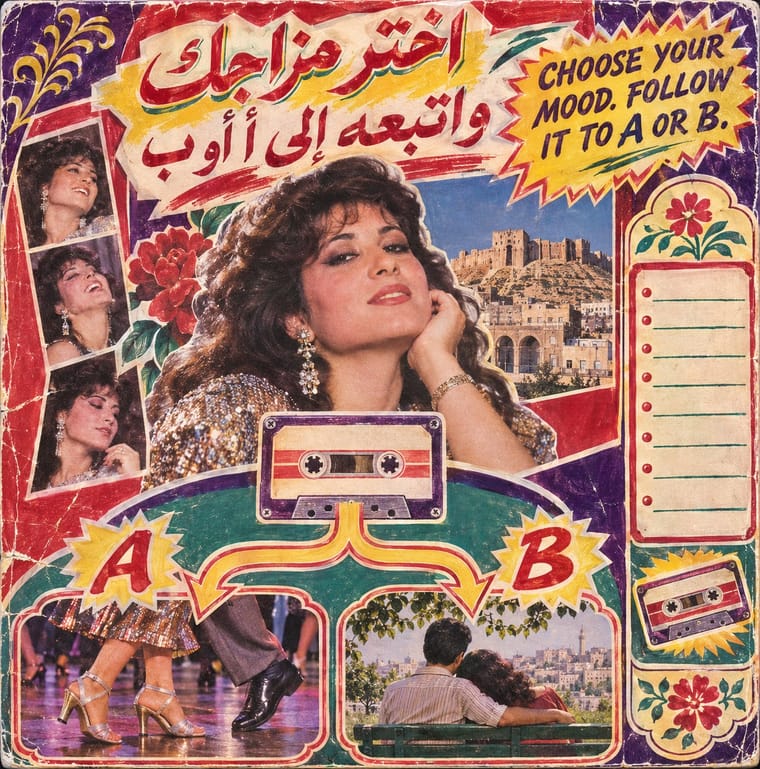
In Syrian Cassette Cover Vernacular -
04 · Bend reality
X-ray view
The inside of something shown through its surface: what it is made of, swallows or hides.
Exposes the truth behind a front; explains how something works.
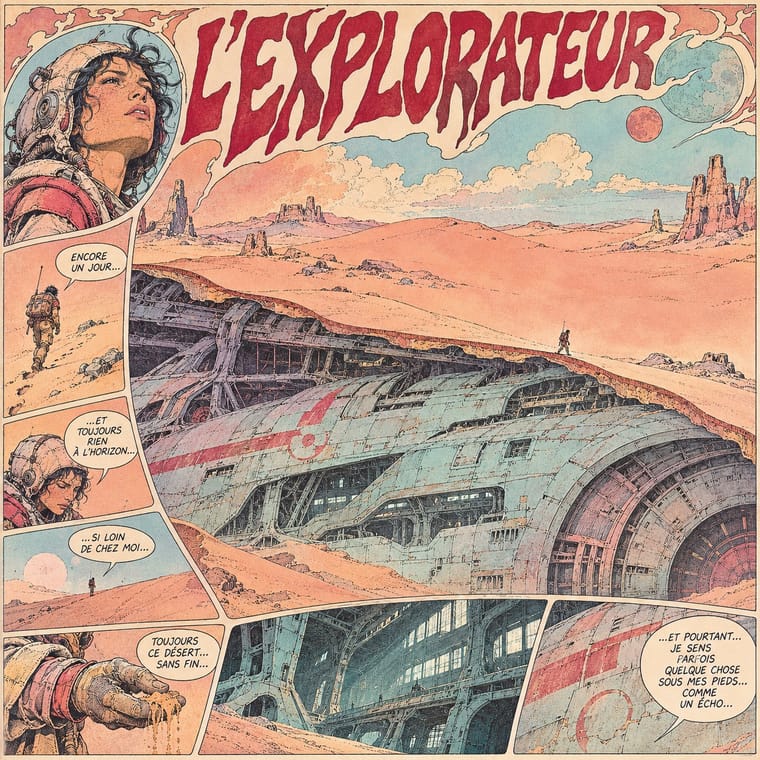
In Métal hurlant Science-Fiction Comics (Mœbius, Druillet & Les Humanoïdes Associés) -
05 · Time and change
Steps and panels
The same subject at different moments: panels, steps or a before-and-after pair.
Explains a process, tells a story, proves a result.
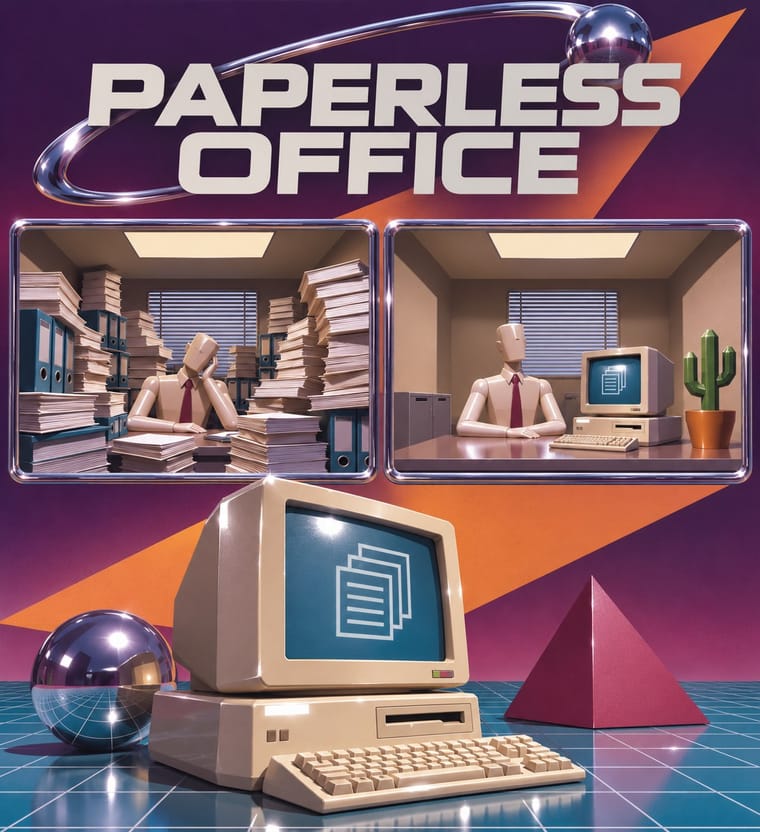
In Silicon Dreams (Early 3D Surrealism)
Something else to argue
Where the claim comes from
- Werner Gaede, Vom Wort zum Bild: Kreativ-Methoden der Visualisierung (1981)
- Jacob Goldenberg, David Mazursky & Sorin Solomon, “The fundamental templates of quality ads”, Marketing Science 18 (1999)
- Mario Pricken, Creative Advertising: Ideas and Techniques from the World’s Best Campaigns (2002; German original Kribbeln im Kopf, 2001)