Style combination · Pairs well
Story Manga × Yōkai Illustration
Mizuki's pages add panels and characters to the specimen idiom.
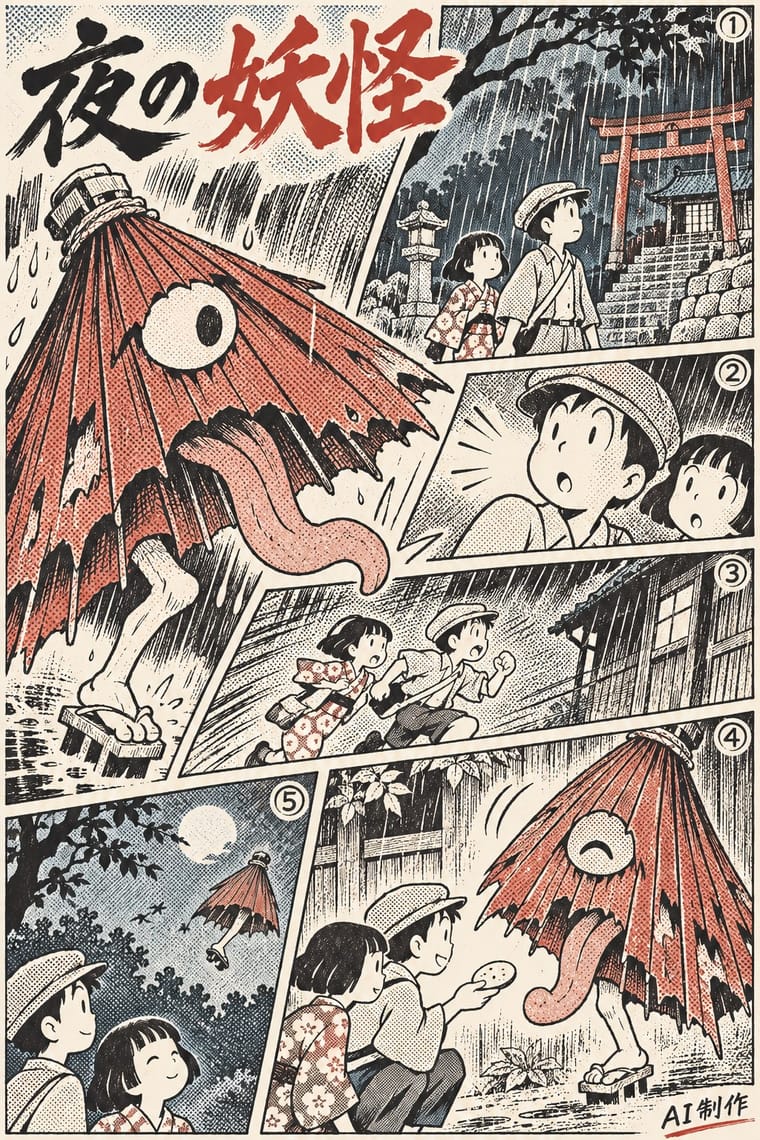
01
What each style brings
Each part of the design comes from the style with the stronger say in it, and each style gives at least two.
Story Manga (Postwar Japanese Comics) Yōkai Illustration (Sekien to Mizuki)
- Type from Yōkai Illustration
- Colour from Story Manga
- Form from Yōkai Illustration
- Composition from Story Manga
- Surface from Story Manga
02
The type
Open fonts standing in for each style’s own type, which is often hand-drawn or commercial.
Text · Story Manga
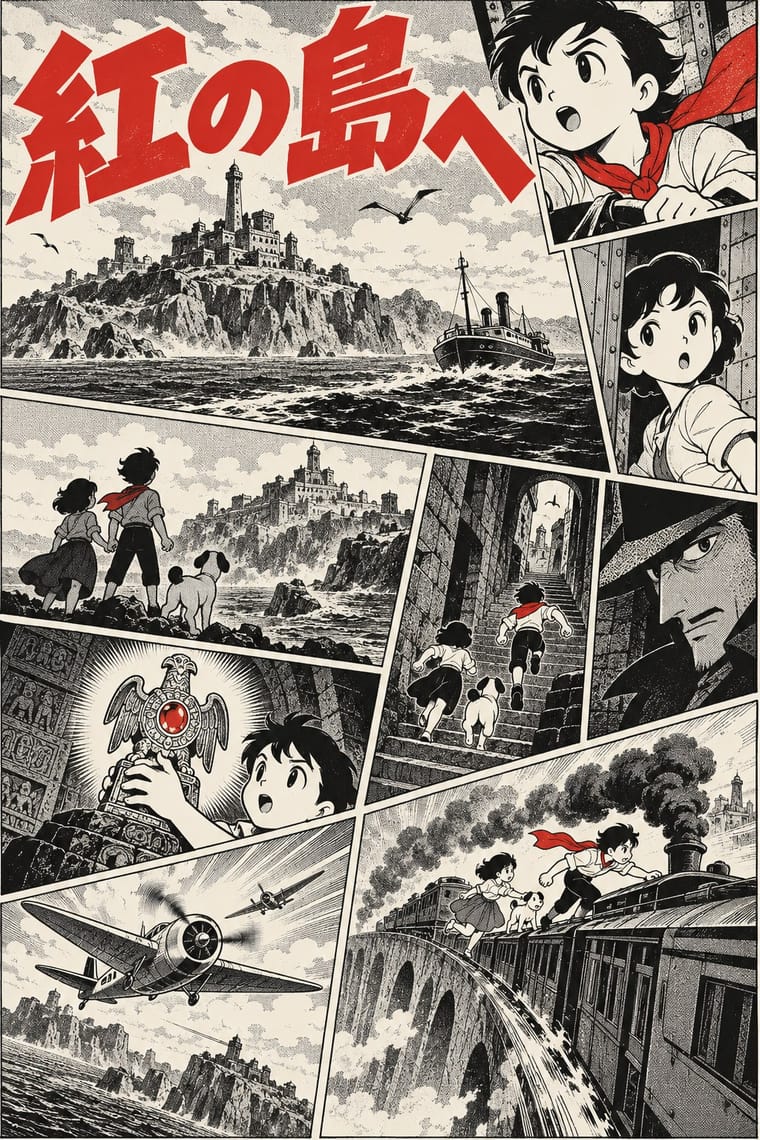
The black-and-white narrative comic of postwar Japan, from Tezuka Osamu's Shin Takarajima (1947) to the weekly boys' magazines of 1959 and 1968 and the paperbacks that collect them. Pages read right to left; panels change size and slant, bleed off the page and are broken by figures, cutting like film. Grey comes from dot screentone; motion and feeling from speed lines, focus lines and a codified set of symbols. Dialogue runs vertically in tall balloons, sound effects are drawn into the picture, and big-eyed, simplified characters act against detailed backgrounds.
Shippori Mincho; Story Manga used Anchi-goshi balloon setting and Fine Mincho balloon setting
03
The colours
The ground and leading colours come from Story Manga, with a counter-accent from Yōkai Illustration. The ink reads on the ground at 4.5:1 or more.
Story Manga (Postwar Japanese Comics) Yōkai Illustration (Sekien to Mizuki)
-
#f6f3eaground · 36% -
#141414ink · 14% -
#d32f2faccent · 18% -
#8a2f2aaccent · 14% -
#cfcfcfaccent · 10% -
#3f5a6baccent · 8%
As CSS
:root {
  --ground: #f6f3ea;
  --ink: #141414;
  --accent-1: #d32f2f;
  --accent-2: #8a2f2a;
  --accent-3: #cfcfcf;
  --accent-4: #3f5a6b;
  --font-display: "Londrina Solid", cursive;
  --font-text: "Shippori Mincho", serif;
}
Use it with care
Story Manga (Postwar Japanese Comics): Manga characters and series, from Astro Boy to Dragon Ball and One Piece, are in copyright and belong to their creators and publishers, and manga is the living work of professional artists and assistants: draw original characters in the shared idiom, never ask an image model for a named series, character or artist's hand, and label generated pages as AI-made rather than presenting them as a manga artist's work. Some of Tezuka's own books drew foreigners, including Black Africans and Asians, in exaggerated caricature; after protests from September 1990 by the Osaka-based Association to Stop Racism Against Blacks, Tezuka Productions put a disclaimer slip into his books. Give every character the same drawing care, and never use skin, lips or dress as ethnic shorthand.
Yōkai Illustration (Sekien to Mizuki): Yōkai are bound up with animism and local belief: a being may be a kami in one region and a yōkai in another, and some are tied to shrines or places. Credit Toriyama Sekien and Mizuki Shigeru (Mizuki's estate is active), do not present newly invented creatures as regional folklore (critics say mixing classical and new yōkai makes light of tradition and local legend), and treat shrine-linked or local beings with care.
04
The two styles
05
More combinations
With Story Manga
- Korean Webtoon Graphics Contrasts · The Korean webtoon turned manhwa, Korean comics shaped in part by Japanese manga, into a single full-colour scroll column with long empty gutters, first on PC portals and then on phones; return to story manga for a printed spread of black-and-white panels read right to left, with screentone and panels that bleed and break.
- American Four-Colour Comic Book (Golden to Bronze Age) Contrasts · Both are mass-market pen-and-ink comics with balloons and sound effects; the American comic book reads left to right in four-colour dot tints with hand-lettered capitals in a steadier grid, while story manga stays black and white, reads right to left, greys with screentone and sets its dialogue vertically.
- Lianhuanhua Picture-Story Books Contrasts · Both are cheap, widely rented East Asian picture-story books; lianhuanhua gives each palm-sized page one framed drawing with a caption beneath and no balloons, while story manga packs a page with panels of changing size, balloons, speed lines and drawn sound effects.
- Superflat Contrasts · Murakami's Superflat lifts anime and manga figures out of the story onto one flat, glossy, polychrome plane for the gallery; story manga keeps the sequence, the depth of its backgrounds and its single black ink.
- Taishō Roman & Lyrical Illustration Pairs well · Jojōga's large, highlighted, long-lashed eyes passed from Nakahara Jun'ichi to Takahashi Macoto, who added stars and dots to the iris, and so into shōjo manga; add Taishō lyrical faces, kimono patterns and soft lines to a manga page for a period romance.
- Ligne Claire (Franco-Belgian Clear Line) Contrasts · Ligne claire closes every form with one even contour and flat colour, with no hatching or tone; story manga varies its line weight and builds grey and mood from screentone, solid blacks, speed lines and focus lines.
- Kawaii Design Pairs well · Kawaii takes manga's round faces and symbols but not its page; borrow its pastel mascots and rounded type for a comedy chapter, a character goods tie-in or a super-deformed aside, and keep the panels and screentone.
- Shōjo Manga (Japanese Girls' Comics) Pairs well · Girls' manga grew out of story manga from Tezuka's Princess Knight on and took its flowers, screentone moods and floating monologues furthest; borrow those when a story-manga page needs interior feeling rather than action.