Style combination · Contrasts
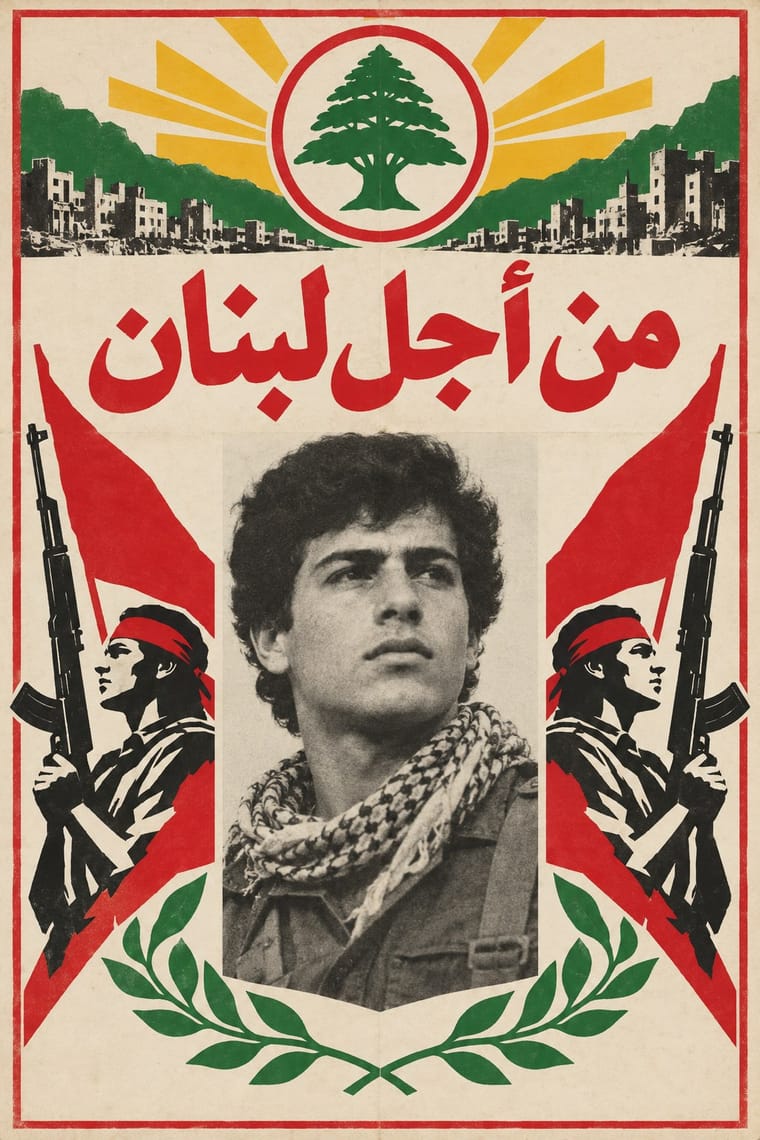
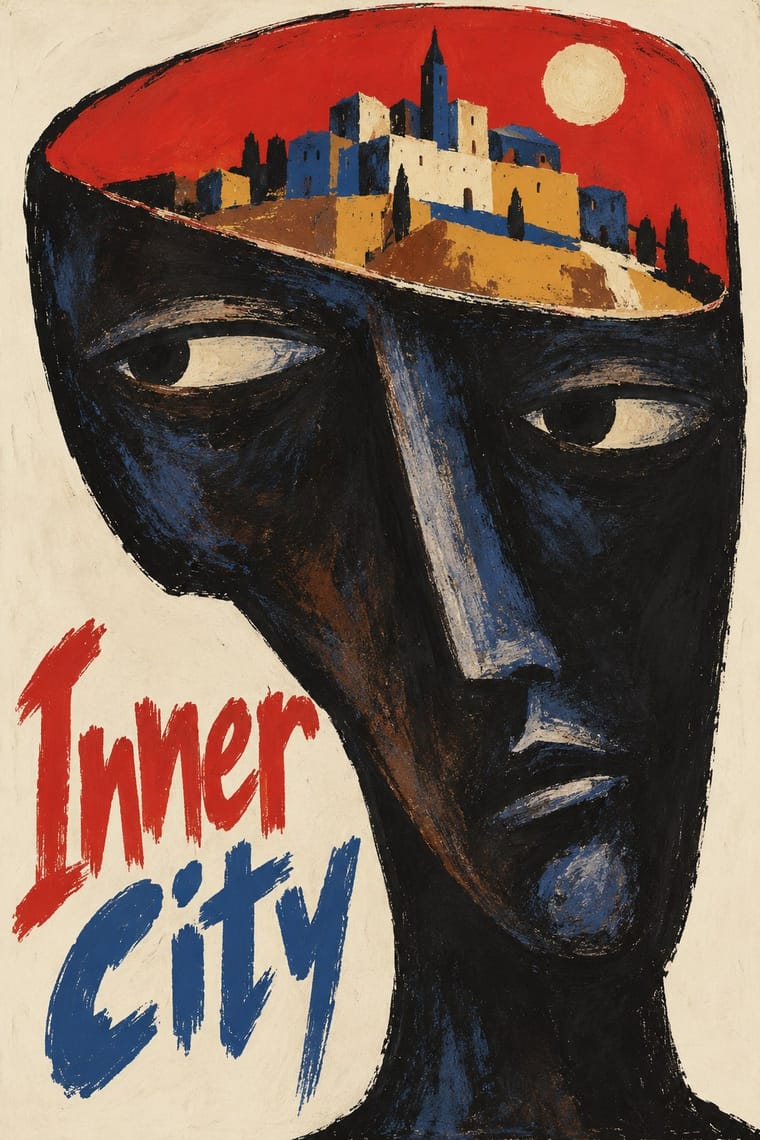
Lebanese Civil War Party Poster × Polish Poster School
Polish metaphor and ambiguity are the opposite of a literal face, name and date; use the contrast to decide whether a commemoration needs an idea or a record.
Mix them and make something Lebanese Civil War Party Poster Polish Poster School
01
What each style brings
Each part of the design comes from the style with the stronger say in it, and each style gives at least two.
Lebanese Civil War Party Poster Polish Poster School
- Type from Lebanese Civil War Party Poster
- Colour from Polish Poster School
- Form from Lebanese Civil War Party Poster
-
Polish Poster School avoids naturalistic depiction: this is where the two pull against each other, which is the point of the contrast.
- Composition from Lebanese Civil War Party Poster
- Surface from Polish Poster School
02
The type
Open fonts standing in for each style’s own type, which is often hand-drawn or commercial.
Display · Lebanese Civil War Party Poster
Riot
Rakkas, standing in for Hand-lettered Arabic headlines in Naskh, Thuluth and Ruqʿa styles for martyr names, epithets, slogans and Qur'anic verses
Text · Polish Poster School
A painterly, metaphorical poster culture that flourished in communist Poland, chiefly for film, theatre, opera and circus. Working for state publishers, free of commercial pressure but under censorship, designers such as Henryk Tomaszewski, Jan Lenica and Roman Cieślewicz replaced star photographs with a single witty or unsettling visual idea, painted or collaged by hand and lettered in the artist's own handwriting.
Archivo; Polish Poster School used Henryk Tomaszewski's casual handwritten capitals and Brush- and crayon-drawn title lettering
03
The colours
The ground and leading colours come from Polish Poster School, with a counter-accent from Lebanese Civil War Party Poster. The ink reads on the ground at 4.5:1 or more.
Lebanese Civil War Party Poster Polish Poster School
-
#1c1c1cground · 36% -
#efe9dcink · 14% -
#d4352baccent · 18% -
#f2c12eaccent · 14% -
#2f5d9eaccent · 10% -
#7b4b2aaccent · 8%
As CSS
:root {
  --ground: #1c1c1c;
  --ink: #efe9dc;
  --accent-1: #d4352b;
  --accent-2: #f2c12e;
  --accent-3: #2f5d9e;
  --accent-4: #7b4b2a;
  --font-display: "Rakkas", cursive;
  --font-text: "Archivo", sans-serif;
}
Use it with care
Lebanese Civil War Party Poster: These posters show real people who were killed, many of them young partisans whose families are alive, and some glorify attacks carried out as 'martyrdom operations'; most of the parties that issued them are still active and the war's memory remains contested in Lebanon. Do not use martyr portraits, party emblems or Shiʿa devotional imagery as edgy 'war poster' decoration: cite the posters as historical documents with their archive, have every Arabic line read by a fluent reader, and remember that a party's colours and symbols still align a design with one camp. Hizbullah is banned in several countries, for example the UK (proscribed in full in 2019) and Germany (a 2020 ban on its activity that covers its symbols), where displaying its emblem can itself be an offence. The collections and Maasri's book also lean towards the Left and its Palestinian allies, while the Christian right fought its image war mainly on television, so the leftist look is not the whole war.
04
The two styles
05
More combinations
With Lebanese Civil War Party Poster
- Spanish Civil War Poster Contrasts · Another civil war fought on the walls by rival factions, but with painted allegorical heroes; set them side by side to see what the straight photograph of a named dead partisan does that a drawn fighter cannot.
- Syrian Revolution Graphics (Kafranbel Banners & Poster Collectives) Contrasts · Party-branded martyr obituaries with emblems and leaders against irreverent sheets, signed only by a town or a collective, that answer one leader's cult; the contrast shows what a poster without a party looks like.
- Ghanaian Funeral Poster & Banner Contrasts · Both are public obituaries pasted on walls, with a straight photograph of the dead, the name and the dates, but a martyr poster is issued in series by a party under its emblem and slogans to claim a quarter, while a Ghanaian funeral poster is commissioned by one family to invite mourners and rank its kin; take the portrait-and-header format without the partisan voice.
- Egyptian Revolutionary Street Art (Mohamed Mahmoud Murals) Contrasts · Beirut's martyr posters were issued by parties marking walls as territory; Cairo's martyrs were painted by artists who said they had nothing to do with any party. Compare them to judge whose voice a commemoration speaks in.
- Arab Independent Comics (Samandal, TokTok, Lab619, Skefkef) Contrasts · The party posters glorified martyrs and leaders; Lena Merhej said Samandal refused to write about the war, 'a subject that exasperates us', and turned instead to religion, politics and sex, with irony rather than tribute.
With Polish Poster School
- International Typographic Style Contrasts · Painterly ambiguity versus objective grid and photography; borrow one hand-painted image to warm a Swiss-style cultural series.
- Socialist Realist Propaganda Poster Contrasts · The school defined itself against official heroic realism; use the pairing to show metaphor outperforming literal propaganda.
- Iranian Modernist Graphic Design Pairs well · Iranian designers absorbed the Polish metaphor poster; combine one surreal image with calligraphic lettering for cultural posters.
- Push Pin Style Pairs well · Both prize the illustrator-designer's hand and wit; pair Polish metaphor with Push Pin lettering for theatrical, idea-led posters.
- Polish Cold War Neon (PRL Neonisation) Pairs well · Some of the same artists drew posters and neons; take the poster's single witty idea and hand-drawn title and translate it into one line of light for a night version of a campaign.
- Polish Information Picture Book (Dwie Siostry) Contrasts · The poster designer and teacher Henryk Tomaszewski is credited with a role in the revival, but the poster school puts one painted, metaphorical image on a poster, while the picture books refuse paint and fill a spread with a hundred small labelled facts. Choose between a single idea that provokes and a dense page that informs.
- Turkish Modernist Poster & Graphic Design Contrasts · The same conceptual-poster network: Turkish designers showed at the Warsaw Poster Biennale from 1966 and Ertel's posters entered the Wilanów archive in 1968. The Polish school paints, collages and distorts its single idea; the Turkish posters cut it into flat shapes in two or three clean inks. Choose Warsaw for unease, Istanbul for a crisp visual pun.
- West German Conceptual Film & Culture Poster (Hillmann and Rambow) Contrasts · Its contemporary in art-film posters: the Polish school paints the metaphor and letters the title by hand in loose brushwork; take the Kassel route when the same single idea should come from a cropped photograph or a hard silhouette with set grotesque type.