Style combination · Pairs well
European Heraldry × French-Pattern Playing Cards
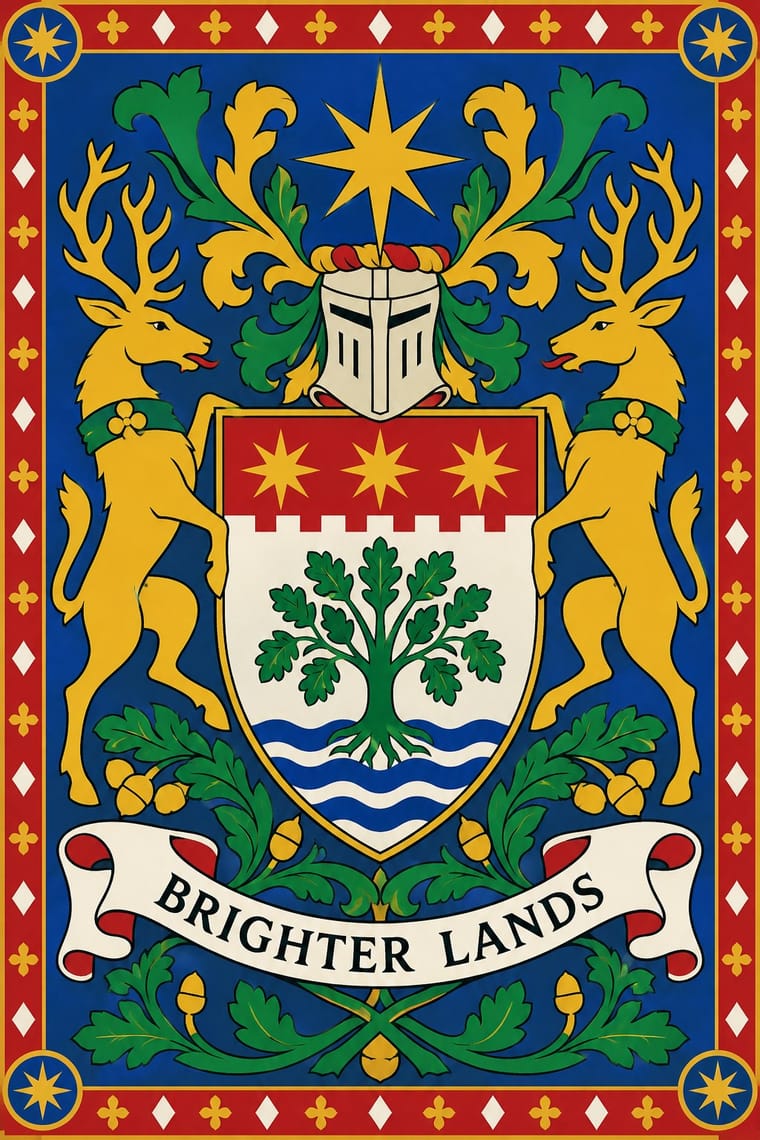
Flat tinctures, emblems and mirrored figures give a court card its crest-like look; pair heraldic charges with a double-headed court for an armorial deck or label.
Mix them and make something European Heraldry French-Pattern Playing Cards
01
What each style brings
Each part of the design comes from the style with the stronger say in it, and each style gives at least two.
European Heraldry French-Pattern Playing Cards (Court Cards and Indices)
- Type from European Heraldry
-
- Colour from French-Pattern Playing Cards
- Form from European Heraldry
- Composition from French-Pattern Playing Cards
- Surface from European Heraldry
02
The type
Open fonts standing in for each style’s own type, which is often hand-drawn or commercial.
Display · European Heraldry
Atlas
UnifrakturMaguntia, standing in for Otto Hupp's Neudeutsch (1899), Hupp-Gotisch, Hupp-Fraktur and Hupp-Antiqua, typefaces by the German heraldic artist
Text · French-Pattern Playing Cards
The standard 52-card deck, a design system for playing rather than a single allegorical image: four reduced suit signs in red and black, thirteen ranks, and court cards drawn as flat-coloured, outlined figures. In the English pattern the courts are mirrored double-headed figures so they read from either side, and small numerals and suit signs in the corners (indices) name every card at a glance, even in a fanned hand. Printed from blocks and plates, later by lithography.
Libre Caslon Text; French-Pattern Playing Cards used Small roman numerals and letters (A, K, Q, J) in the corner indices, in serif or later sans forms and Hand-cut or engraved suit signs and court emblems drawn as part of the card design
03
The colours
The ground and leading colours come from French-Pattern Playing Cards, with a counter-accent from European Heraldry. The ink reads on the ground at 4.5:1 or more.
European Heraldry French-Pattern Playing Cards (Court Cards and Indices)
-
#f4efe2ground · 36% -
#1a1a1aink · 14% -
#e8b923accent · 18% -
#c8202aaccent · 14% -
#2a4f9eaccent · 10% -
#1d7a3aaccent · 8%
As CSS
:root {
  --ground: #f4efe2;
  --ink: #1a1a1a;
  --accent-1: #e8b923;
  --accent-2: #c8202a;
  --accent-3: #2a4f9e;
  --accent-4: #1d7a3a;
  --font-display: "UnifrakturMaguntia", serif;
  --font-text: "Libre Caslon Text", serif;
}
Use it with care
European Heraldry: A coat of arms belongs to a particular bearer, lineage or (in Polish heraldry) clan, not to everyone with a surname: in Scotland it can belong to only one person at a time and the Court of the Lord Lyon can fine those who usurp arms and have the offending items removed or destroyed, state arms are protected against unauthorised registration and use as trademarks under Article 6ter of the Paris Convention, and many European cities and universities protect their arms as trademarks. Design new arms by the rules of the tradition rather than copying a real family's, city's or state's arms for decoration or branding, and do not present invented arms as a family's historic coat of arms. Crusader and Templar shields and knights with crosses on their chests or shields have also become far-right insignia (Charlottesville 2017, the US Capitol 2021), and neo-Nazis use an eagle loosely based on German coats of arms, though not every eagle derives from it; check how a cross, an eagle or a crusading knight will read before using it, and avoid pairing them with militant or ethnic-nationalist themes.
04
The two styles
05
More combinations
With European Heraldry
- Hipster Artisanal Revival Contrasts · The craft badge borrows heraldry's air of lineage with an 'Est.' date and crossed arrows on kraft paper, while a real coat of arms is a granted or inherited, blazoned identity in strong tinctures; set the two side by side to show the difference between quoting heritage and holding it.
- Corporate Identity Modernism Pairs well · A coat of arms already is an identity defined by a specification rather than one drawing, applied to seals, banners, buildings and documents; Finnish municipal arms of the 1950s show how its flat two-tincture discipline reads as a modern mark, so use blazon-like rules to write a logo that can be redrawn without losing itself.
- Gothic Blackletter & Fraktur Tradition Pairs well · Medieval armorials name their shields in Gothic hands and German heraldic artists such as Otto Hupp also drew Fraktur; pair a flat Gothic shield with a blackletter name or motto for a certificate, diploma or civic document, checking how the broken script will read politically.
- Kamon (Japanese Family Crests) Contrasts · Both are hereditary emblem systems that began in the twelfth century and mark kinship by small codified variations, but a mon is a single-colour silhouette drawn round a centre while a coat of arms is a shield of contrasting tinctures read by the rule of tincture; compare them to choose between a one-ink crest and a coloured, partitioned one.
- Ultras Graphics (Curva Banners and Tifo) Contrasts · Both raise colours and emblems over a fighting company, but heraldry codifies one bearer's arms by rule, while a curva borrows the city's arms, a skull or a film villain for one afternoon and paints it the size of a stand; choose between a fixed blazon and a crowd-made, temporary emblem.
- Tarot de Marseille Woodcut Cards Pairs well · The Emperor's and Empress's eagle shields and the maker's escutcheon on the 2 of Coupes come from armory; pair heraldic tinctures and charges with a tarot figure for a crest-like card or label.
- Icelandic Magical Staves (Galdrastafir) Contrasts · Heraldry fixes an emblem by blazon and fills it with colour on a shield; a stave has no fixed form, no colour and no blazon.
- Natural Wine Label Art Contrasts · The crest is the device of the classic château label that natural wine replaced with a face or an animal; put one heraldic charge beside a doodle to show which side of the wine world a bottle stands on.
With French-Pattern Playing Cards
- Tarot de Marseille Woodcut Cards Contrasts · Both use outlined figures in a few flat colours, but the tarot card isolates one allegorical subject under a numeral and a title, while the playing card mirrors its court and counts its suit signs; choose tarot for a single symbol, the playing card for a repeatable system.
- Mamluk Playing-Card Design (Mulūk wa-Nuwwāb) Contrasts · Same job of ranking suit and court at a glance, but this one names courts in script and emblem where the French pattern draws double-headed figures with corner indices.