Style combination · Pairs well
Ancient Egyptian Hieroglyphic × Isotype Pictorial Statistics
Otto Neurath called his visual autobiography From hieroglyphics to Isotype, with chapters on hieroglyphics through the centuries and their renaissance; borrow the rule-bound sign family and rows of standing figures, but note the opposite rule of size: Isotype shows more by adding signs of equal size, Egypt shows rank by making one figure bigger.
Mix them and make something Ancient Egyptian Hieroglyphic Isotype Pictorial Statistics
01
What each style brings
Each part of the design comes from the style with the stronger say in it, and each style gives at least two.
Ancient Egyptian Hieroglyphic & Register Composition Isotype Pictorial Statistics
- Type from Ancient Egyptian Hieroglyphic
- Colour from Isotype Pictorial Statistics
- Form from Ancient Egyptian Hieroglyphic
- Composition from Ancient Egyptian Hieroglyphic
- Surface from Isotype Pictorial Statistics
02
The type
Open fonts standing in for each style’s own type, which is often hand-drawn or commercial.
Display · Ancient Egyptian Hieroglyphic
Form
Cinzel; Ancient Egyptian Hieroglyphic used Monumental hieroglyphs, carved in raised or sunk relief and usually painted, grouped in square blocks (quadrats) in columns or rows and Cursive hieroglyphs (hieroglyphic book hand), written with a reed brush in black and red ink on papyrus, wood or leather, usually in columns, for religious texts such as the Book of the Dead and the Coffin Texts
Text · Isotype Pictorial Statistics
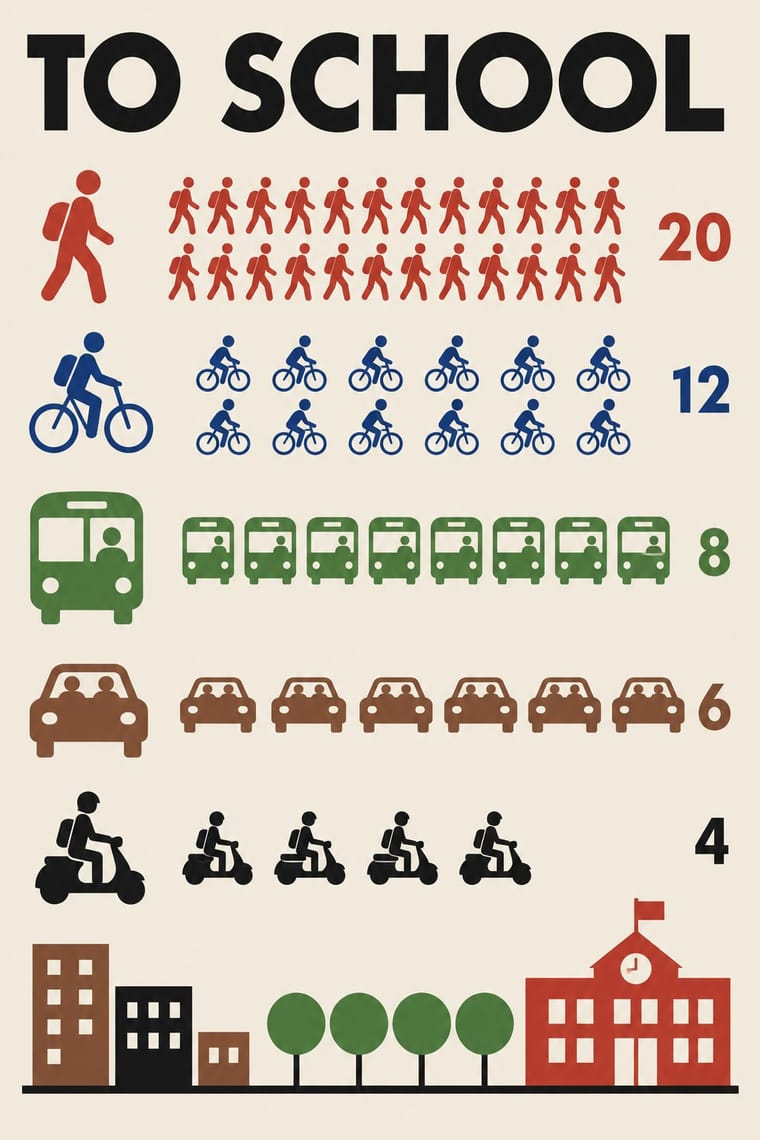
A method of visual education developed by Otto Neurath, Marie Neurath (Reidemeister) and Gerd Arntz in Red Vienna from 1925, which turns statistics into rows of identical pictograms where a greater quantity is shown by more signs, never by bigger ones. Continued in The Hague and Oxford until 1971, its standardised symbols, flat colours and sans-serif captions laid the foundations of modern information graphics and pictogram systems.
Jost; Isotype Pictorial Statistics used Futura and Gerd Arntz's linocut pictogram set (c. 4,000 signs), used like a fount of picture-type
03
The colours
The ground and leading colours come from Isotype Pictorial Statistics, with a counter-accent from Ancient Egyptian Hieroglyphic. The ink reads on the ground at 4.5:1 or more.
Ancient Egyptian Hieroglyphic & Register Composition Isotype Pictorial Statistics
-
#f2ecdfground · 36% -
#1a1a1aink · 14% -
#c8372daccent · 18% -
#d4a03aaccent · 14% -
#2c5aa0accent · 10% -
#8a5a3baccent · 8%
As CSS
:root {
  --ground: #f2ecdf;
  --ink: #1a1a1a;
  --accent-1: #c8372d;
  --accent-2: #d4a03a;
  --accent-3: #2c5aa0;
  --accent-4: #8a5a3b;
  --font-display: "Cinzel", serif;
  --font-text: "Jost", sans-serif;
}
Use it with care
Ancient Egyptian Hieroglyphic & Register Composition: Hieroglyphs were 'the words of the gods', and most surviving pages and walls are funerary and temple texts written for named people, spells for the afterlife and royal names that carried sacred power: do not use them as random texture, invent pseudo-hieroglyphs, or put an ordinary name in a cartouche as if it were ancient practice, since cartouches enclosed royal names; nor scatter the ankh, djed, wedjat eye, scarab or winged sun disc as décor, since the first four were protective amulets and the winged disc was the emblem of Behdety, Horus of Edfu, protector of the pharaoh. Image models cannot write hieroglyphs and make up signs, so leave text areas blank in generated images, have any real text composed or checked by an Egyptologist from Gardiner's sign list, and never present a generated image as an ancient work. Many key works left Egypt in contested ways: the Papyrus of Ani was found in 1888 by Egyptians trading in illegal antiquities and obtained by E. A. Wallis Budge for the British Museum, by his own account smuggled out after the police had sealed the dealers' houses (locals tunnelled in while he kept the guards busy with a meal), for which the Treasury later paid him a £150 'gratuity'; the Nebamun paintings were hacked from the tomb walls around 1820 and sold by Henry Salt; and the Egyptologist Zahi Hawass, formerly in charge of Egypt's antiquities, has repeatedly called for the Rosetta Stone's return as the 'icon of our Egyptian identity'. Credit objects with their findspots and holding institutions, treat pharaonic heritage as part of modern Egypt's identity rather than as exotic 'Egyptomania' décor, and avoid casting the ancient Egyptians to fit modern racial claims.
04
The two styles
05
More combinations
With Ancient Egyptian Hieroglyphic
- Egyptian Revolutionary Street Art (Mohamed Mahmoud Murals) Pairs well · In 2012 Luxor-trained muralists such as Alaa Awad recast tomb painting on Cairo's Mohamed Mahmoud Street: profile processions of mourning women, registers, a sarcophagus and the weighing of the heart, brushed in acrylic around the faces of the martyrs. Look there for a living Egyptian use of the register and the procession, credited to its painters, rather than Egyptomania décor.
- Art Deco Pairs well · The expeditions that led to Howard Carter's discovery of Tutankhamun's tomb in 1922 set off a 1920s Egyptian Revival often counted as part of Art Deco (the papyrus-plant elevator doors of the Chrysler Building); a deco treatment can borrow lotus and papyrus motifs, stepped frames and flat colour, but should not invent pseudo-hieroglyphs.
- Ethiopian Ge'ez Manuscript & Haräg Illumination Contrasts · Both write black text with red rubrics in ruled columns, but Ethiopian books are Christian parchment codices in the Ge'ez abugida with haräg interlace bands, while Book of the Dead papyri are rolls of cursive hieroglyphs with framed vignettes set between the text columns.
- Egyptian Painted Film Poster Contrasts · A brief that just says 'Egyptian' need not mean pharaonic: the painted cinema posters of 20th-century Cairo float naturalistic star heads in a painterly collage under Arabic calligraphic titles, the opposite of flat registers ruled by ground lines and columns of signs.
- Mixteca-Puebla Codex Painting Contrasts · Both are sacred pictorial records in contour and flat colour with no depth, but Mixtec screenfolds lead the eye in a zigzag along red guidelines past big-headed figures and name glyphs, while Egyptian pages keep strict horizontal registers and ruled columns of a largely phonetic script, with figures sized by rank and drawn to a canon; do not merge them as generic 'ancient glyphs'.
- Egyptian Cigarette Packaging (Cairo Tobacco Houses) Pairs well · Draw the pharaonic motifs from real register compositions rather than souvenir clichés to give the vignettes more weight and accuracy.
With Isotype Pictorial Statistics
- International Typographic Style Pairs well · Set Isotype rows of pictograms on a Swiss grid for public information that is rigorous yet friendly.
- Socialist Realist Propaganda Poster Contrasts · Socialist Realism dramatises with heroic figures while Isotype persuades by counting; choose evidence over emotion when trust matters.
- Flat Design Pairs well · Flat icon sets are Isotype's heirs; apply its one-symbol-one-meaning rule to keep an icon family consistent.
- Corporate Memphis Contrasts · Corporate Memphis uses flat figures for mood; Isotype's figures always count something, so use people icons only when they carry data.
- Data Humanism Contrasts · Isotype fixes one standard sign per thing and counts by repeating it so anyone can read the chart; data humanism invents a new code for each dataset and asks for slow reading. Choose Isotype for public information, data humanism for portraits of particular lives.
- Schematic Transit Diagram (Beck Tube Map Idiom) Pairs well · Add pictorial statistics beside the diagram to carry quantities as well as connections.
- Warli Painting Contrasts · Both build people from a few reduced shapes and repeat them in rows; Isotype's figures count data in flat colours on a light ground, Warli's narrate ritual and village life in white on earth, so borrow the repetition but not the meaning.
- Nutri-Score (Front-of-Pack Colour-Grade Label) Pairs well · Both turn data into a sign anyone can read at a glance; borrow Isotype's repeated pictograms to explain the five grades on shelf talkers, leaflets or school material.