Style combination · Contrasts
Filipino Komiks × Lianhuanhua Picture-Story Books
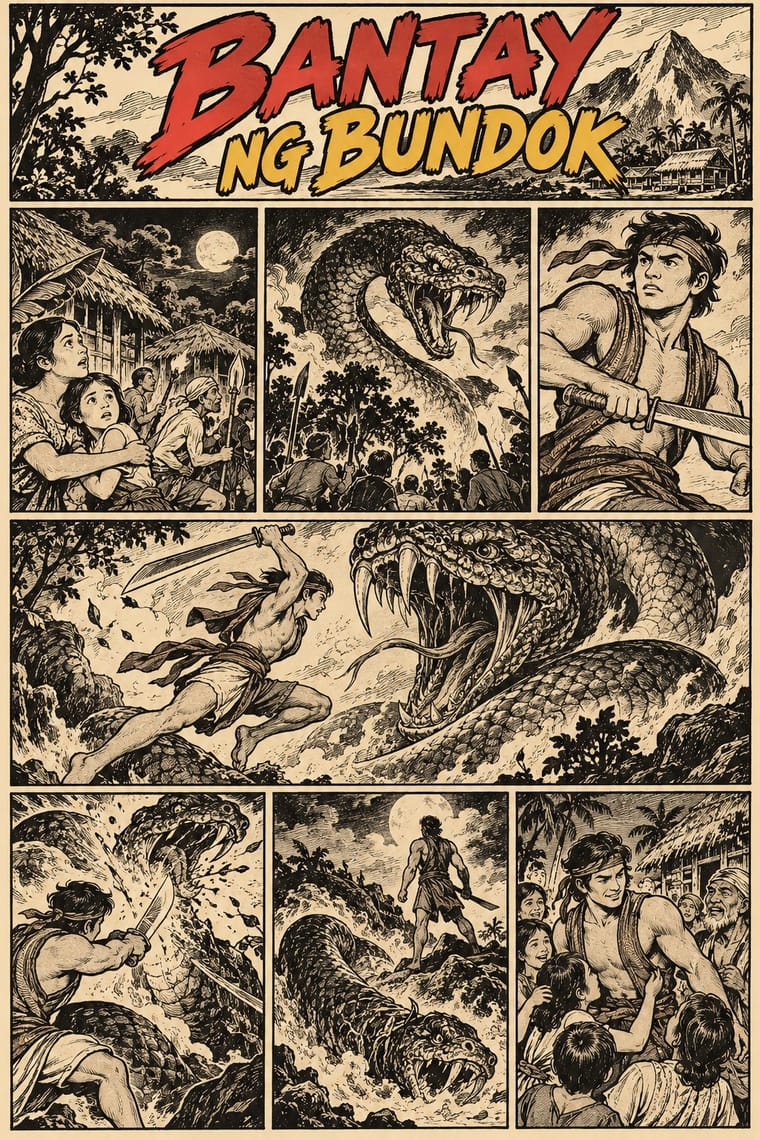
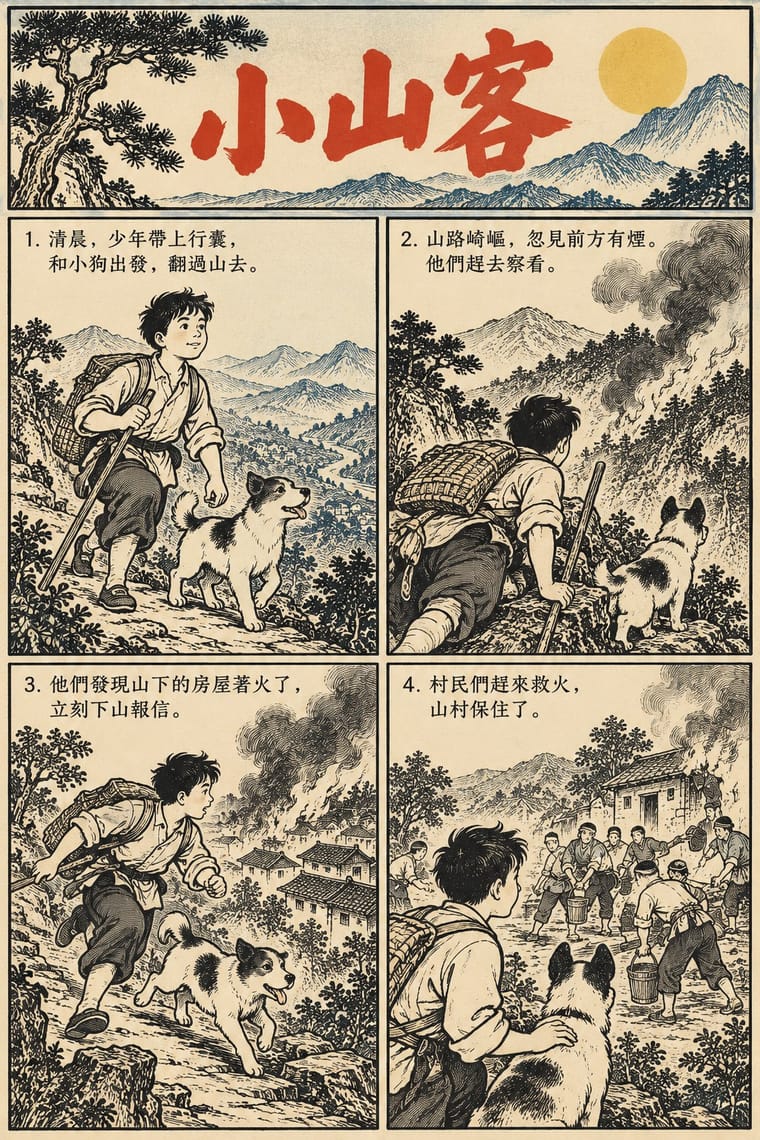
Both are cheap black-line picture stories rented and read at street-level shops. Lianhuanhua give each palm-sized page one framed picture with a caption beneath; komiks pack several panels with speech balloons onto an anthology magazine page.
Mix them and make something Filipino Komiks Lianhuanhua Picture-Story Books
01
What each style brings
Each part of the design comes from the style with the stronger say in it, and each style gives at least two.
Filipino Komiks Lianhuanhua Picture-Story Books
- Type from Filipino Komiks
- Colour from Lianhuanhua Picture-Story Books
- Form from Filipino Komiks
- Composition from Lianhuanhua Picture-Story Books
- Surface from Filipino Komiks
02
The type
Open fonts standing in for each style’s own type, which is often hand-drawn or commercial.
Display · Filipino Komiks
Together
Comic Neue, standing in for Hand-lettered Tagalog balloons (captions in boxes; capitals on the 1946 Halakhak Komiks cover; mixed-case pen lettering in Velasquez's 1929 Kenkoy strip, which mixed Tagalog, Spanish and English; Tony DeZuniga started at Liwayway as a letterer at 16)
Text · Lianhuanhua Picture-Story Books
Palm-sized Chinese picture books, about three by five inches, that tell a novel, opera, film or revolutionary story in hundreds of single framed drawings, one to a page, each with a short caption. Interiors are black ink line drawings, from fine classical-costume outline to realist sketching, with colour kept for the cover. Rented and read at street stalls, they were the most popular reading of 20th-century China until television and manga displaced them from the late 1980s.
Shippori Mincho; Lianhuanhua Picture-Story Books used Songti (Ming) and Kaiti printing types for captions and Hand-drawn meishuzi ('art lettering') cover titles
03
The colours
The ground and leading colours come from Lianhuanhua Picture-Story Books, with a counter-accent from Filipino Komiks. The ink reads on the ground at 4.5:1 or more.
Filipino Komiks Lianhuanhua Picture-Story Books
-
#f0ead8ground · 36% -
#1b1b1bink · 14% -
#e2b84aaccent · 18% -
#c23b2eaccent · 14% -
#3d6e8faccent · 10% -
#7d7466accent · 8%
As CSS
:root {
  --ground: #f0ead8;
  --ink: #1b1b1b;
  --accent-1: #e2b84a;
  --accent-2: #c23b2e;
  --accent-3: #3d6e8f;
  --accent-4: #7d7466;
  --font-display: "Comic Neue", cursive;
  --font-text: "Shippori Mincho", serif;
}
Use it with care
Filipino Komiks: Darna, Pedro Penduko and other komiks characters are still in copyright and keep being adapted for film and television, and the artists' pages belong to them and their estates: draw your own heroes, mastheads and roundels in the shared idiom, never ask an image model for these characters or for a named artist's hand, and label generated pages as AI-made. Publishers shredded thousands of original pages and few issues were archived or reprinted, so a fake 'vintage komiks' page easily pollutes a thin record. Aswang, amulets and the other creatures and figures of Philippine folk belief belong to living communities, and pre-colonial warriors stand for a national self-image: draw them with the dignity and research the tradition gave them, never as exotic decoration. Aswang lore has stigmatised a real province, Capiz, many of whose people object to its name as the 'hometown of Aswang', and village gossip has branded real neighbours, such as a widow with no one to help her, as aswang: never tie a monster to a named province, town or community. Do not costume living Indigenous peoples (the Igorot, Lumad, Aeta and others) as pre-colonial warriors or as creatures.
04
The two styles
05
More combinations
With Filipino Komiks
- American Four-Colour Comic Book (Golden to Bronze Age) Contrasts · Postwar komiks took over the American comic book's format, and from 1971 DC recruited Nestor Redondo, Alfredo Alcala and Alex Niño. Choose the American comic book for flat four-colour dot tints over a keyline; choose komiks for black-and-white pages modelled entirely in hatched and feathered brush ink.
- Jeepney Art Pairs well · Both are Manila's popular street graphics from the same postwar decades. Put a komiks hero, drawn in black brush line, on a jeepney's polychrome panel, chrome trim and shaded sign-painter lettering for a piece that reads as Manila.
- Ligne Claire (Franco-Belgian Clear Line) Contrasts · Both tell stories in ruled panels with hand-lettered balloons, but ligne claire closes forms with one even, unhatched line and flat colour. Komiks swell the brush line and build light and volume from hatching in black and white.
- Story Manga (Postwar Japanese Comics) Contrasts · Manga gets its greys from dot screentone and simplifies faces into big-eyed types; komiks model naturalistic figures with brush hatching. Gerry Alanguilan criticised Filipino professionals for adopting a style so closely tied to Japanese identity.
- Amar Chitra Katha Comics Contrasts · Both retell local myth and history as comics in Asian languages. Amar Chitra Katha prints flat colour on every page in an educational, authoritative voice; komiks keep black-and-white interiors for melodrama, fantasy and folk heroes.
- Underground Comix Contrasts · Both put black-and-white hatched interiors behind colour covers, but komiks drew naturalistic folk heroes and romances for the country's most widely read periodicals, while comix push big-footed caricature into adult taboo for a head-shop audience.
- Argentine Adventure Historieta (Oesterheld–Breccia) Contrasts · Both are black-and-white anthology magazines of long serials with colour kept for the cover; komiks model romantic, naturalistic figures in hatched and feathered brush on a light page, while the historieta builds its pages from black masses, hard light and, in its darkest work, distorted faces.
- Bonelli Fumetto (Italian Popular Adventure Comics) Contrasts · The nearest style by genome: both are black-and-white newsstand comics drawn in naturalistic brush and pen, with colour kept for the cover. Komiks pack short instalments of about four pages into anthology magazines; Bonelli gives one hero a book-length episode in a constant three-strip cage, under the same cover trade dress every month.
With Lianhuanhua Picture-Story Books
- Shanghai Modern & Yuefenpai Pairs well · Its parent print culture: pair a lianhuanhua line sequence with a yuefenpai-style painted cover for a period Shanghai feel.
- Chinese Modern Woodcut Movement Pairs well · Woodcut picture-stories and lianhuanhua share the one-image-per-page sequence; mix carved frames with drawn ones for documentary storytelling.
- Pop Art Graphics Contrasts · Pop blew one comic panel up to gallery scale; lianhuanhua keeps hundreds of quiet frames small, a useful test of scale and pace.
- Nianhua & Chinese Folk Print Pairs well · Both retell opera and folk stories for a popular audience; borrow nianhua colour for the cover and keep the inside in line.
- Ligne Claire (Franco-Belgian Clear Line) Contrasts · Both tell stories in outlined drawings; lianhuanhua gives each pocket-sized page one framed black-ink picture with a caption and keeps colour for the cover, ligne claire fills tiered multi-panel pages with balloons and flat, bright colour, caricatural figures in realistic settings.
- Amar Chitra Katha Comics Contrasts · Both are didactic picture-story series of classical and historical tales; lianhuanhua gives each page one black-ink picture over a printed caption, Amar Chitra Katha puts several coloured panels with balloons on every page.
- Chinese National-Style Animation (Shanghai Animation Film Studio) Contrasts · Its printed contemporary: both told myths and fables, the Monkey King among them, to a mass audience under the same state, but the palm-sized picture-story books drew in black ink line, one framed picture to a page with a caption, while the studio moved painted and cut-paper figures over empty grounds with few or no words.
- Story Manga (Postwar Japanese Comics) Contrasts · Both are cheap, widely rented East Asian picture-story books; lianhuanhua gives each palm-sized page one framed drawing with a caption beneath and no balloons, while story manga packs a page with panels of changing size, balloons, speed lines and drawn sound effects.