Style combination · Pairs well
Dojinshi × Itasha
Both are fan culture built around a fan-art character shown at full size as the hook.
01
What each style brings
Each part of the design comes from the style with the stronger say in it, and each style gives at least two.
Dojinshi & Comiket Circle Graphics Itasha (Anime Character Car Graphics)
- Type from Dojinshi
- Colour from Itasha
- Form from Dojinshi
- Composition from Dojinshi
- Surface from Itasha
02
The type
Open fonts standing in for each style’s own type, which is often hand-drawn or commercial.
Text · Itasha
Private cars, motorbikes and bicycles that Japanese fans of anime, manga and games cover with their favourite characters, named by the mid-2000s with the self-mocking word itasha, 'painful car'. Printed or cut vinyl, designed panel by panel, puts a large character on the bonnet and each flank, against the car's own paint or in a full wrap, with the series logo and parody racing decals. Owners show them at Comic Market car parks, in Akihabara and at meets of up to about 1,000 cars.
Zen Kaku Gothic New; Itasha used Series title logos reproduced as decals from the anime's or game's own artwork, such as the 'HARUHI ISM' logo of The Melancholy of Haruhi Suzumiya, the most common design among the itasha at Comic Market 71 (ASCII.jp, 3 January 2007) and Parody tuning and sponsor logotypes that keep a real brand's letterforms but change its words
03
The colours
The ground and leading colours come from Itasha, with a counter-accent from Dojinshi. The ink reads on the ground at 4.5:1 or more.
Dojinshi & Comiket Circle Graphics Itasha (Anime Character Car Graphics)
-
#f4f5f7ground · 36% -
#16161dink · 14% -
#ffd84aaccent · 18% -
#2f6fdeaccent · 14% -
#6ec1e4accent · 10% -
#ff5fa2accent · 8%
As CSS
:root {
  --ground: #f4f5f7;
  --ink: #16161d;
  --accent-1: #ffd84a;
  --accent-2: #2f6fde;
  --accent-3: #6ec1e4;
  --accent-4: #ff5fa2;
  --font-display: "Mochiy Pop One", sans-serif;
  --font-text: "Zen Kaku Gothic New", sans-serif;
}
Use it with care
Itasha (Anime Character Car Graphics): Itasha is a living fan community, and its own self-mocking name is not an invitation to sneer at owners, whose cars have been vandalised (the Japanese Wikipedia records 'itasha-gari', itasha hunting) and who have courted goodwill with tidy meets and even traffic-safety prayers at Kawasaki Daishi (Web Japan, 2019). The characters belong to publishers and studios: the Japanese Wikipedia notes that most itasha are made without licences and tolerated rather than approved, and AUTOCAR Japan (2020) reports that very few makers hold official permission, while a specialist shop reports more than 150 officially licensed works and calls licensing standard practice for reputable makers (Kuruma News, 2018), so design original characters or secure the rights rather than copying key art. Some itasha carry characters from adult (eroge) games (English Wikipedia), and the Japanese Wikipedia notes that such wraps may breach youth-protection ordinances, while local outdoor-advertising and landscape ordinances can apply to any vehicle wrap; stickers on the windscreen can break road traffic law and fail inspection (Kuruma News, 2019).
04
The two styles
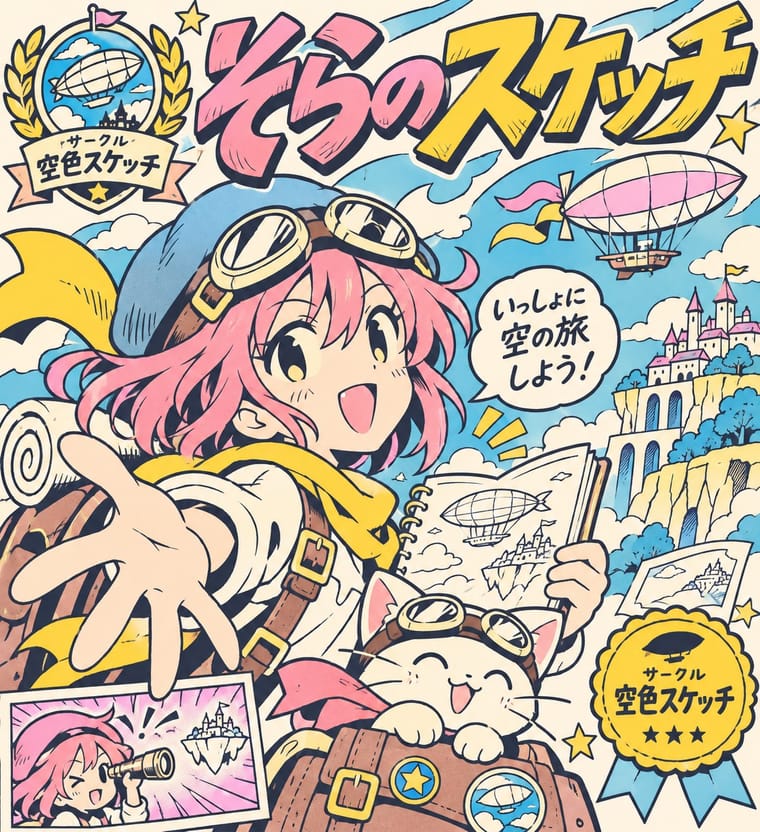
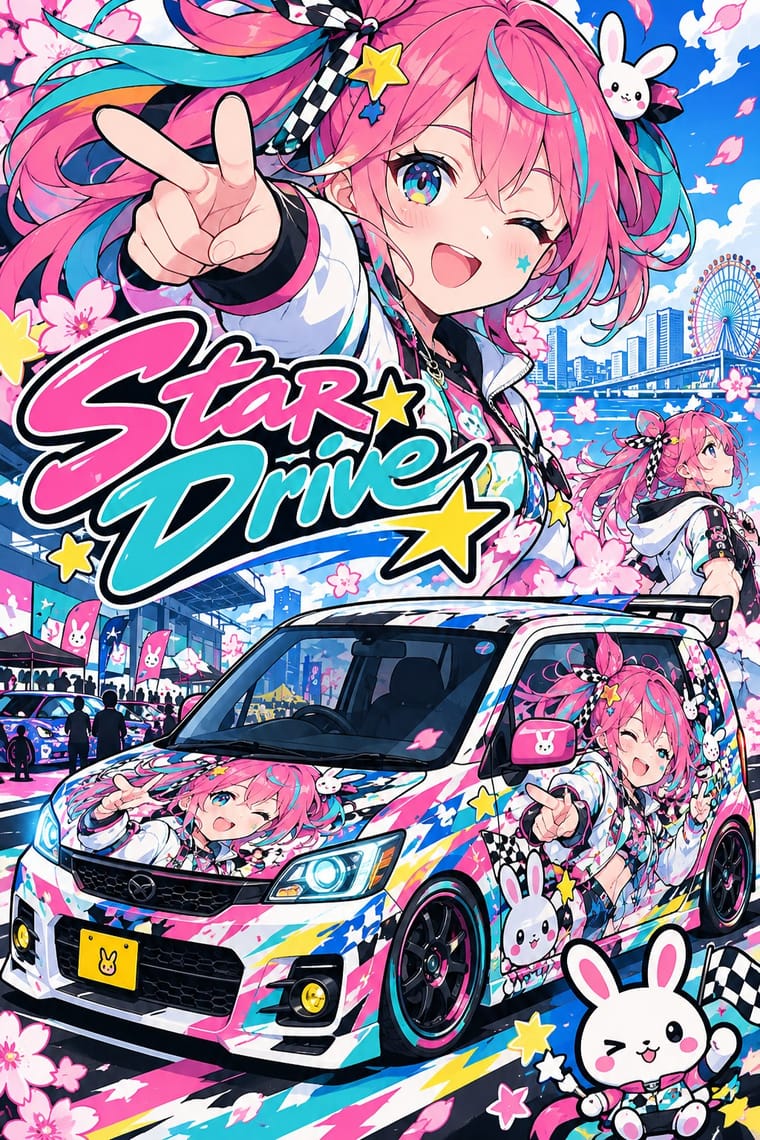
05
More combinations
With Dojinshi
- Story Manga (Postwar Japanese Comics) Pairs well · Keep the panel interior and the outlined character, but replace magazine layout with a cover that sells the book.
- Light Novel Cover Illustration Pairs well · Both sell a book by an illustrated character on the cover; light-novel-cover is commercial, dojinshi is self-published.
- Garo and Heta-uma (Japanese Underground Manga and 'Bad-Good' Illustration) Contrasts · Rough personal drawing against recognisable fan-art; use it to roughen a too-slick cover.
With Itasha
- Matatu & Nganya Art Contrasts · Both run pop-culture pictures full bleed over a vehicle, but a matatu is airbrushed by painters with celebrities and graffiti capitals to win passengers, while an itasha is printed vinyl of flat-coloured anime characters for other fans; contrast the matatu's painterly realism with itasha's cel-coloured outlines.
- Jeepney Art Contrasts · Both cover a vehicle in saturated colour, figures and emblems, but a jeepney is a passenger vehicle painted by hired sign painters with chrome, scripts and folk symbols, while an itasha is a private car wearing one fan's printed characters; borrow the jeepney's chrome and lettering only to show what itasha leaves out.
- Superflat Contrasts · Superflat lifts otaku characters into the gallery as art-world theory; itasha keeps them in the car park as fan practice, so use Superflat for an ironic, flattened all-over field and itasha for a single beloved character at vehicle scale.
- VTuber Avatar and Stream Graphics Pairs well · VTuber fans are among the growing clients of itasha shops (Kuruma News, 2019), and hololive cars were especially numerous at Odaiba Itasha Tengoku 2024 (Response, 2024); pair a VTuber's character art and outlined name logo with a bonnet-and-flanks layout for fan merchandise that reads at road scale.
- Light Novel Cover Illustration Pairs well · Fans put light-novel heroines and title logos on cars; the cover art is a source the car graphics quote.