Idea · Borrow and quote
Common symbol
A widely known sign (a dove, a heart, a fist, a skull) carries the idea at a glance.
It answers the question Which existing image, format or sign does it borrow, and what meaning comes with it?
What it does
Speed and reach across languages; strongest when the symbol is renewed, weakest as cliché.
Common symbol, put on a style
Each picture is a style from the atlas with this idea put on it, beside the same style as it is. All are AI-generated: none is a real or historical work.
-
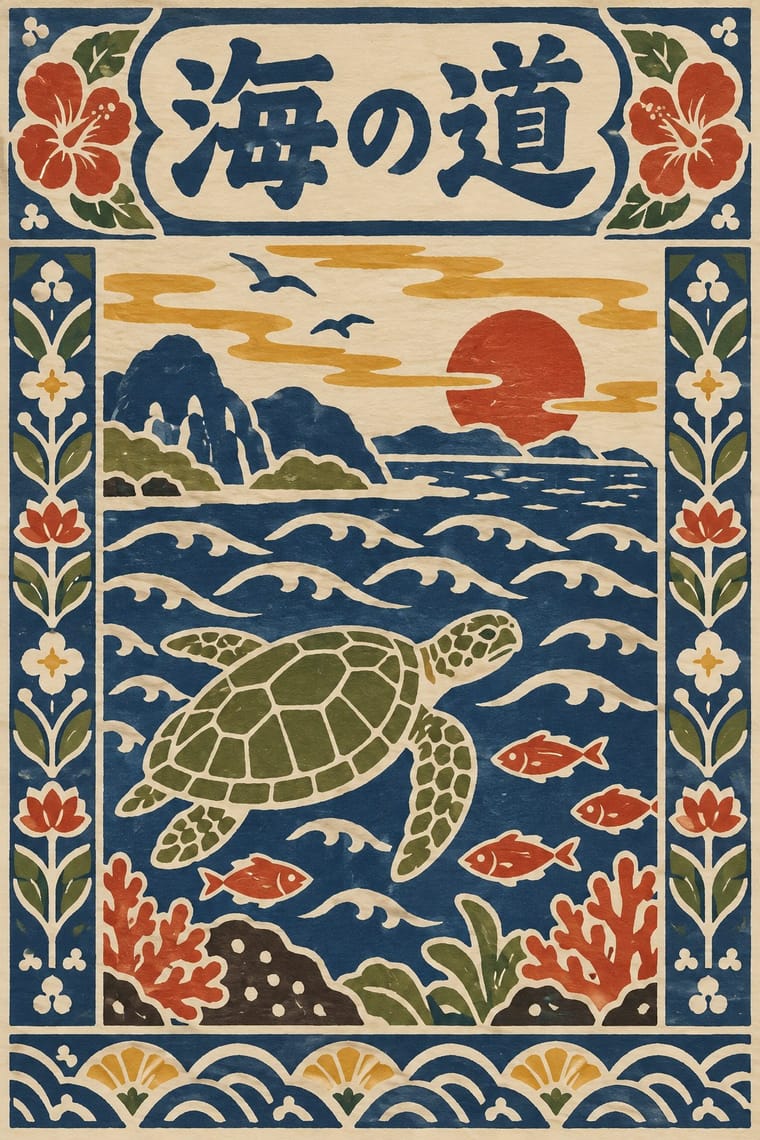
As it is 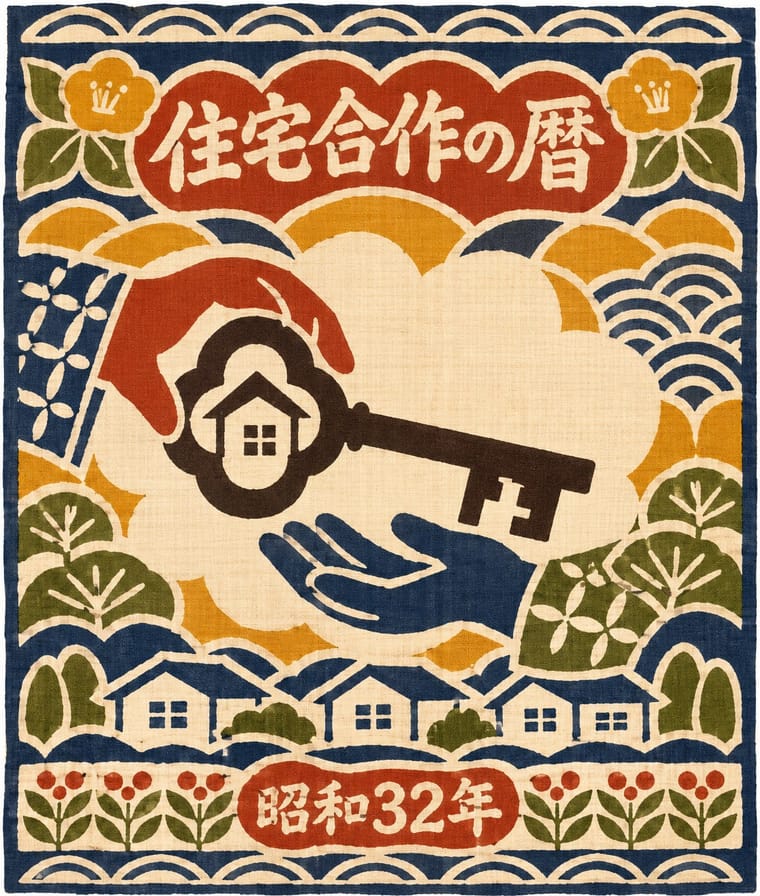
With common symbol Serizawa Katazome and Mingei Stencil-Dye Graphics One hand passes a single large old house key into another open hand, the key filling the middle of the cloth: the key alone says a home of your own.
Its Japanese lettering has not been checked by a fluent reader, so it may contain errors.
-
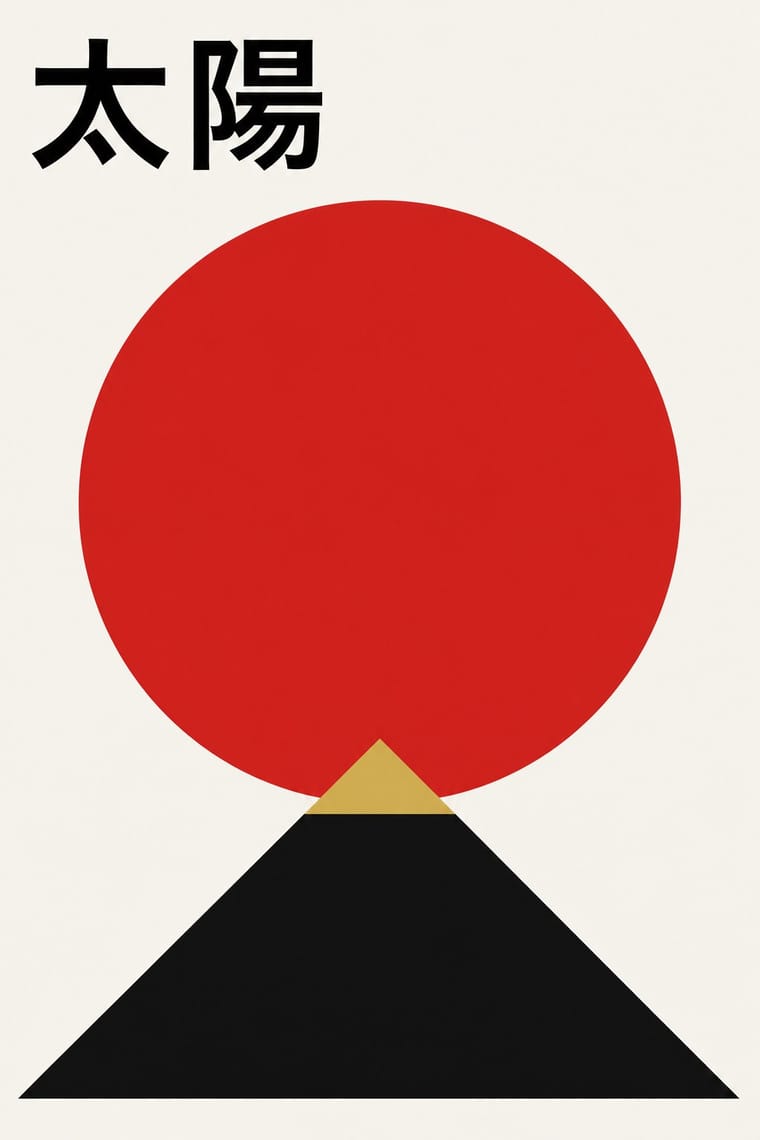
As it is 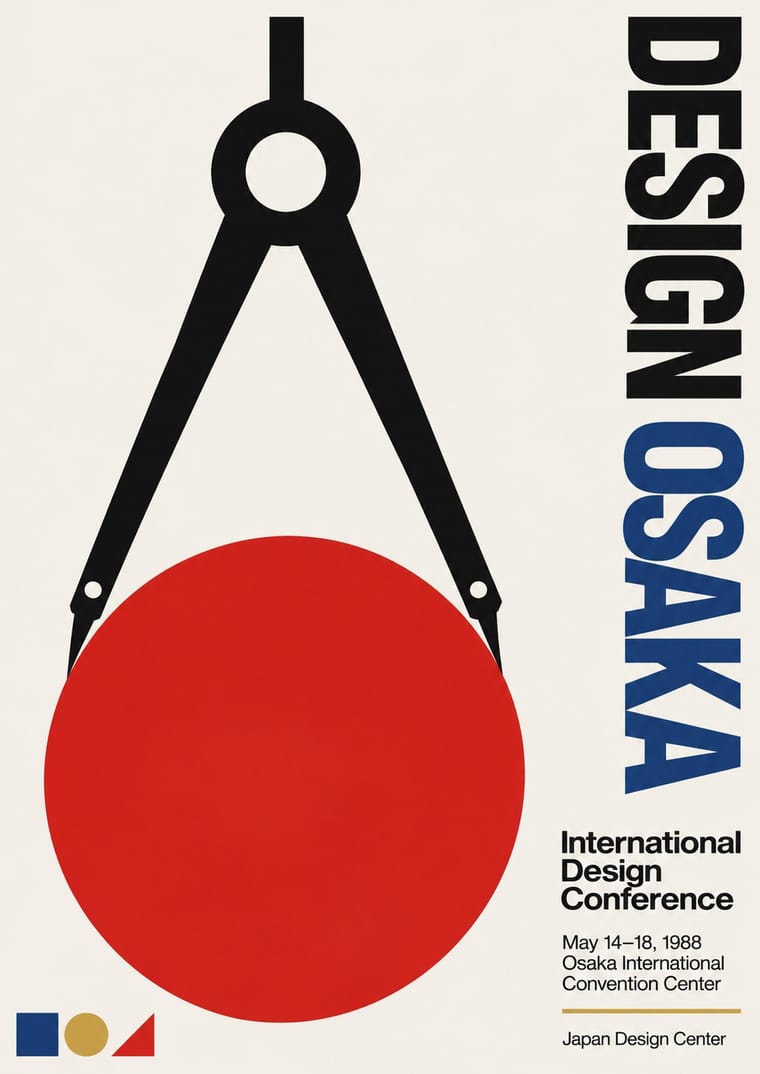
With common symbol Japanese Postwar Modernism The red sun disc of the national flag is drawn as the circle a drafting compass has just traced, its two steel legs still standing on it: the national sign becomes the act of designing.
Try it on any style
Pick a style, any style, and tell the image model:
Build the image around one widely understood symbol that carries the idea at a glance, drawn afresh.
Then write the idea in one sentence, saying what the picture shows and what that gets across. If the idea leans on the words, check it against them. A tap for the O in a headline that has no O breaks the word.
Mix styles writes the rest of the prompt for any style in the atlas, or a blend of a few. Add the line above and your sentence to it.
Where it has been used
Real works that use it, named so you can look them up. Stylogeny shows no pictures of them.
- Pablo Picasso’s dove for the Paris Peace Congress (1949)
- Gerald Holtom’s nuclear disarmament symbol (1958)
What it helps to say
It can argue
Styles known for it 6
These styles use it often. For those marked signature, it is part of what they are. Any other style can take it too.
- Angura Theatre Poster signature Recasts Mount Fuji and imperial rising-sun imagery as an uneasy national backdrop to underground theatre, quoting politically charged Japanese signs rather than neutral decorative rays.
- Japanese Postwar Modernism signature One renewed national or heraldic sign carries the poster: Kamekura's Tokyo 1964 emblem sets the hinomaru red sun above the gold Olympic rings, and family crests (kamon) are redrawn as geometric emblems.
- ACT UP & Gran Fury AIDS Activist Graphics The Nazi camps' pink triangle is reclaimed and turned to point up, alone on black above SILENCE=DEATH (1987), then repeated like a logo on posters, stickers, buttons and T-shirts.
- AIZ Political Photomontage (Heartfield) Turns a stock emblem into a verdict: the dove of peace spiked on a bayonet before the League of Nations palace in Der Sinn von Genf (1932); a raised fist rising on radio waves in 1937.
- Cuban Revolutionary Poster (OSPAAAL & ICAIC) OSPAAAL causes are carried by widely known signs drawn afresh in flat colour, a rifle, a raised fist, a star, a broken chain, so a poster captioned in Spanish, English, French and Arabic reads without words.
- Fante Asafo Flags (Frankaa) Signs the town reads at a glance carry rank and power: a leader known by his weapon and stool, and heraldic beasts such as the griffin or many-headed monster, taken from European imagery and recast for Fante proverbs.