Style combination · Pairs well
Festival of Britain 'Contemporary' Pattern × Thaw Modernism
Thaw graphics share the light utopian line and flat pastel shapes; its stylised figures and stars give the repeat a narrative accent.
Mix them and make something Festival of Britain 'Contemporary' Pattern Thaw Modernism
01
What each style brings
Each part of the design comes from the style with the stronger say in it, and each style gives at least two.
Festival of Britain 'Contemporary' Pattern (Lucienne Day and the Festival Pattern Group) Thaw Modernism (Soviet and Czechoslovak)
- Type from Thaw Modernism
- Colour from Thaw Modernism
- Form from Festival of Britain 'Contemporary' Pattern
- Composition from Festival of Britain 'Contemporary' Pattern
- Surface from Festival of Britain 'Contemporary' Pattern
02
The type
Open fonts standing in for each style’s own type, which is often hand-drawn or commercial.
Display · Thaw Modernism
Hello
Jost, standing in for Zhurnalnaya rublenaya (Polygraphmash type bureau under Anatoly Shchukin, released 1947, Latin added 1962), the Soviet geometric sans after Erbar and Metro
Text · Thaw Modernism
The light, stylised modernism that replaced Socialist Realist illusionism and Stalinist pomp in Soviet and Czechoslovak graphic and applied design, from the 1956 Secret Speech, the 1957 Moscow youth festival and Expo 58 to the crushing of the Prague Spring in 1968 (a political cut-off; the manner ran on into the 1970s). Laconic flat figures, a few flat inks and clear pastels, airy asymmetric pages and the parabolas, trapezoids and spirals of the new architecture carried civic, scientific optimism into animation, children's books, magazines, tourism posters and Sputnik-age orbits and rockets.
Jost; Thaw Modernism used Zhurnalnaya rublenaya (Polygraphmash type bureau under Anatoly Shchukin, released 1947, Latin added 1962), the Soviet geometric sans after Erbar and Metro and Tyfa (Josef Týfa, 1959, cast by Grafotechna from 1960), a Czech book roman its designer said was inspired by modern architecture
03
The colours
The ground and leading colours come from Thaw Modernism, with a counter-accent from Festival of Britain 'Contemporary' Pattern. The ink reads on the ground at 4.5:1 or more.
Festival of Britain 'Contemporary' Pattern (Lucienne Day and the Festival Pattern Group) Thaw Modernism (Soviet and Czechoslovak)
-
#f2ead8ground · 36% -
#2b2b2bink · 14% -
#d8452faccent · 18% -
#f1c95eaccent · 14% -
#3ea39baccent · 10% -
#9fc4d8accent · 8%
As CSS
:root {
  --ground: #f2ead8;
  --ink: #2b2b2b;
  --accent-1: #d8452f;
  --accent-2: #f1c95e;
  --accent-3: #3ea39b;
  --accent-4: #9fc4d8;
  --font-display: "Jost", sans-serif;
  --font-text: "Jost", sans-serif;
}
Use it with care
Thaw Modernism (Soviet and Czechoslovak): This was the official design culture of one-party states, and its years ended with the Warsaw Pact invasion of Czechoslovakia in 1968: use its optimism knowingly rather than as innocent retro, and draw new figures and emblems instead of copying Soyuzmultfilm characters or state insignia; Soviet and communist symbols are restricted by law in Lithuania, Latvia and Ukraine, and the Czech Republic has criminalised promoting communist ideology since 2026; films such as Khitruk's (he died in 2012) remain in copyright.
04
The two styles
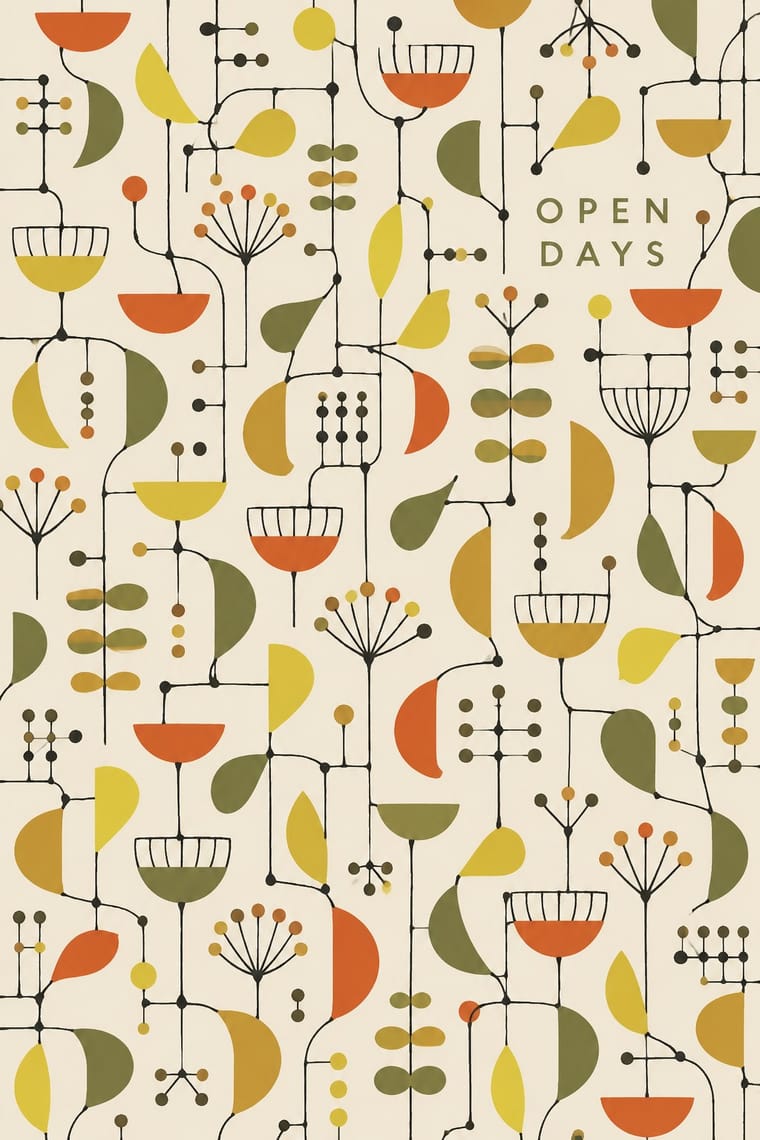
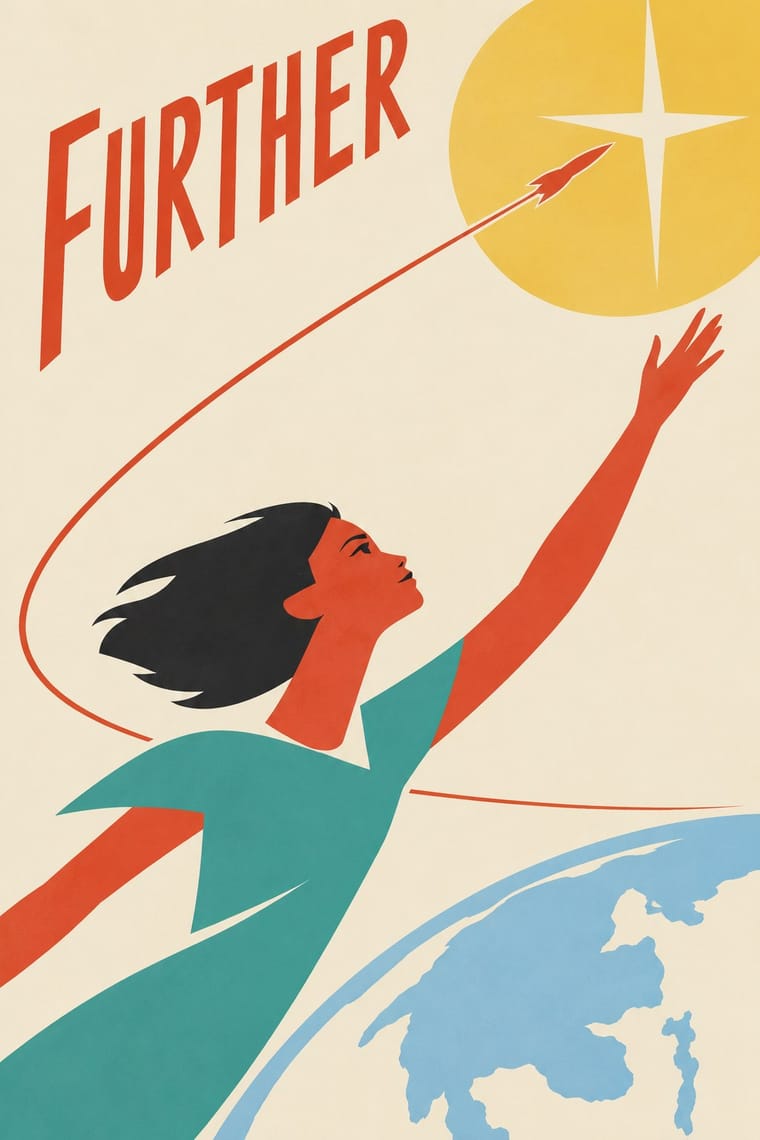
05
More combinations
With Festival of Britain 'Contemporary' Pattern
- UPA & Cartoon Modern Pairs well · Both draw a spindly, child-like modern line in flat colour; put a UPA figure in front of a Contemporary repeat for a full 1950s scene.
- Finnish Bold Print (Marimekko Modernism) Contrasts · Same decade, same screen-printed furnishing cloth, but Marimekko fills one huge silhouette where Day scatters small shapes on thin lines; compare to see what scale does to a repeat.
- Googie & Atomic Age Contrasts · Both are atomic-age optimism, but Googie shouts from roadside signs in neon and boomerangs while this stays a quiet domestic pattern in earth tones.
- Surrealist Graphics Pairs well · Borrow a Miró-like biomorphic blob or floating sign to push a Contemporary repeat further toward painting.
- NK Textilkammare Geometric Print (Astrid Sampe, Signerad Textil) Pairs well · The British contemporary prints of the same years share screen-printed, all-over repeats in limited flat colour; borrow their spindly drawn line for a lighter variant of a ruled NK stripe.
With Thaw Modernism
- Polish Poster School Pairs well · Add the Polish poster's single painted metaphor and hand lettering to push Thaw illustration towards darker, more personal wit.
- Scandinavian Functionalism Pairs well · Nordic calm and natural colours make the Thaw's pastel optimism quieter and more domestic.
- Googie & Atomic Age Pairs well · Its capitalist cousin shares the parabolas, boomerangs and sputniks; borrow its starbursts for a louder space-age mood, but drop the neon and roadside salesmanship to keep the civic tone.
- Socialist Realist Propaganda Poster Contrasts · The idiom the Thaw replaced: set a flat, witty Thaw figure against heroic, illusionist realism to make the break visible.
- Polish Cold War Neon (PRL Neonisation) Pairs well · The thaw's laconic figures, few flat colours and civic optimism are the daytime print counterpart of these signs; pair them for a cinema, café or festival identity that has to work on paper and on a facade.
- Soviet Central Asian Ornamental Modernism Pairs well · Borrow its laconic flat figures, orbits and rockets for posters and booklets that sit beside a mosaic wall about science and space.
- UPA & Cartoon Modern Contrasts · The nearest genome in the atlas, and close kin in animation: critics found that Khitruk's Story of a Crime (1962) looked more like UPA than Disney, and called it a rare example of Soviet cartoon modern design. It shares the limited movement and the set cut down to its props. But Thaw modernism prints a few clear pastel inks on a light ground and aims at civic, Sputnik-age optimism, while UPA sets one or two caricatures on a single, often saturated, flat field, often lets the colour slip off the line and pokes fun at American folkways.
- Polish Information Picture Book (Dwie Siostry) Pairs well · Borrow the airy pages and laconic pastel figures of 1960s Eastern European illustration, which the Mistrzowie Ilustracji reissues keep in view, to open up a spread that has grown too crowded.