Style combination · Contrasts
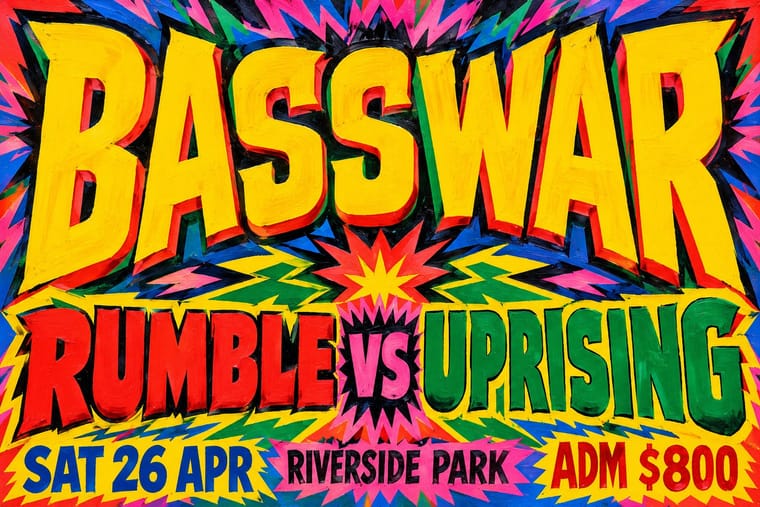
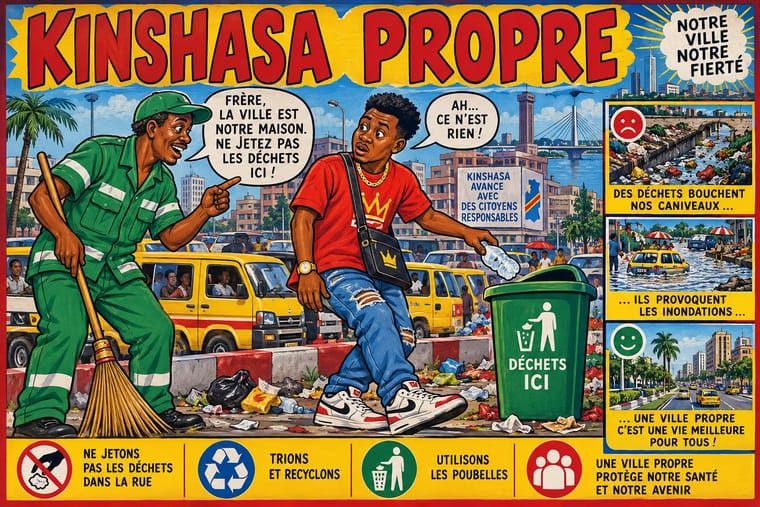
Jamaican Dancehall Signs × Kinshasa Popular Painting
Same sign-painter parent, opposite balance: dancehall makes the lettering the picture, while Kinshasa paints a scene of city life and lets the words comment on it.
Mix them and make something Jamaican Dancehall Signs Kinshasa Popular Painting
01
What each style brings
Each part of the design comes from the style with the stronger say in it, and each style gives at least two.
Jamaican Dancehall Signs & Sleeve Art Kinshasa Popular Painting
- Type from Kinshasa Popular Painting
- Colour from Jamaican Dancehall Signs
- Form from Kinshasa Popular Painting
- Composition from Jamaican Dancehall Signs
- Surface from Jamaican Dancehall Signs
02
The type
Open fonts standing in for each style’s own type, which is often hand-drawn or commercial.
Display · Kinshasa Popular Painting
Square
Londrina Solid, standing in for Sign painter's hand-lettered capitals for painted titles and banners
Text · Jamaican Dancehall Signs
The street graphics of Jamaica's dancehall era. One-off hand-painted signs, nailed to light poles and trees, announce sound-system dances and clashes, with sound-system and artist names stacked in bold, bright letters. On record sleeves, Wilfred Limonious's crowded comic caricatures gave the music its face. Both are ephemeral and topical: the signs are mostly unsigned, rarely dated and burned as litter once the dance is over.
Archivo; Jamaican Dancehall Signs used Hand-painted block and outlined capitals with drop shadows and Wilfred Limonious's hand-drawn cartoon titling and speech balloons
03
The colours
The ground and leading colours come from Jamaican Dancehall Signs, with a counter-accent from Kinshasa Popular Painting. The ink reads on the ground at 4.5:1 or more.
Jamaican Dancehall Signs & Sleeve Art Kinshasa Popular Painting
-
#ffd400ground · 36% -
#111111ink · 14% -
#e3241baccent · 18% -
#1d5fd0accent · 14% -
#ff4f9aaccent · 10% -
#00933faccent · 8%
As CSS
:root {
  --ground: #ffd400;
  --ink: #111111;
  --accent-1: #e3241b;
  --accent-2: #1d5fd0;
  --accent-3: #ff4f9a;
  --accent-4: #00933f;
  --font-display: "Londrina Solid", cursive;
  --font-text: "Archivo", sans-serif;
}
Use it with care
Kinshasa Popular Painting: This is the signed work of named Congolese painters, not anonymous folk art: Chéri Samba and younger painters such as JP Mika are living, and the work of the late Moké, Bodo and Chéri Chérin is still exhibited and sold, as in Magnin-A's 2024 Moké show. Borrow the method of words inside a painted scene, but do not copy a particular painter's self-portrait, signature or 'artiste populaire' tag. The caricature is self-critique from inside Kinshasa, aimed at conduct, money and power: never exaggerate racial features or sexualise Black bodies for a laugh, the colonial cartoon language of Tintin au Congo, which Zairian newspapers reissued as a serial in the 1970s, just as this school began. Never fill balloons and captions with invented pseudo-Lingala; write real French or Lingala checked by a speaker, and commission Congolese artists where you can.
04
The two styles
05
More combinations
With Jamaican Dancehall Signs
- Graffiti & Hip-Hop Graphics Pairs well · Add graffiti's outlines and drop blocks to dancehall's stacked names for wall-scale event lettering.
- International Typographic Style Contrasts · Grid, white space and one neutral sans are everything the dance sign refuses; quote a painted sign inside a Swiss layout to make it shout.
- Afrobeat Sleeve Art Pairs well · Limonious's comic dancehall sleeves and Lagos album art share crowded caricature and speech balloons; mix them for satirical music packaging.
- Fania and Nuyorican Salsa LP Sleeves Pairs well · Shares community-facing hand lettering and star billing; use for sound-system scenes in another city.
- Matatu & Nganya Art Pairs well · Matatus quote dancehall crews and singers (the 'Portmore Empire', Tarrus Riley); dancehall's hand-painted lettering suits the nganya's sound-system culture.
With Kinshasa Popular Painting
- Ligne Claire (Franco-Belgian Clear Line) Pairs well · Chéri Samba learned to draw by copying the Congolese comic magazine Jeunes pour jeunes, and his line recalls Hergé's clear line; use its even outline and flat colour to keep a crowded, text-heavy painted scene readable. The debt is entangled: Nancy Rose Hunt traces how Tintin and other Belgian comics shaped Congolese comics, for or against them, and Tintin au Congo was reissued as a serial in Zairian newspapers in the 1970s. Take the clear line, never its colonial caricature.
- ROSTA Windows Pairs well · Both are hand-painted satire with words in the picture for a street audience; borrow ROSTA's panel sequence to break a Kinshasa-style scene and caption into a strip.
- Mexican Popular Graphics (Posada) Pairs well · Posada's broadsheets and Kinshasa canvases are both topical, moralising pictures with long texts for ordinary readers; pair a Posada-style headline with a painted, captioned scene.
- Ghanaian Movie Poster Contrasts · Same sign-painter roots, opposite use of words: Ghanaian posters letter only a film title to sell a lurid scene, while Kinshasa paintings fill the scene with commentary to be read.
- Tingatinga Painting Contrasts · Both are African urban popular painting in bright, outlined colour, and Congolese paintings sold in Dar es Salaam may have spurred Tingatinga; but Kinshasa painting argues in painted titles, captions and speech balloons, while Tingatinga floats near-wordless animals on one glossy ground.