Idea · Address the viewer
Back view
A figure stands with their back to the viewer and looks into the scene, so the viewer looks with them and cannot see their face.
It answers the question What relationship does the image set up with the person looking? Also called Rückenfigur or over the shoulder.
What it does
The viewer takes the figure’s place without becoming them: longing, contemplation, a journey ahead. The figure could be anyone.
A made-up example: a child seen from behind at a school gate on the first day.
Back view, put on a style
Each picture is a style from the atlas with this idea put on it, beside the same style as it is. All are AI-generated: none is a real or historical work.
-
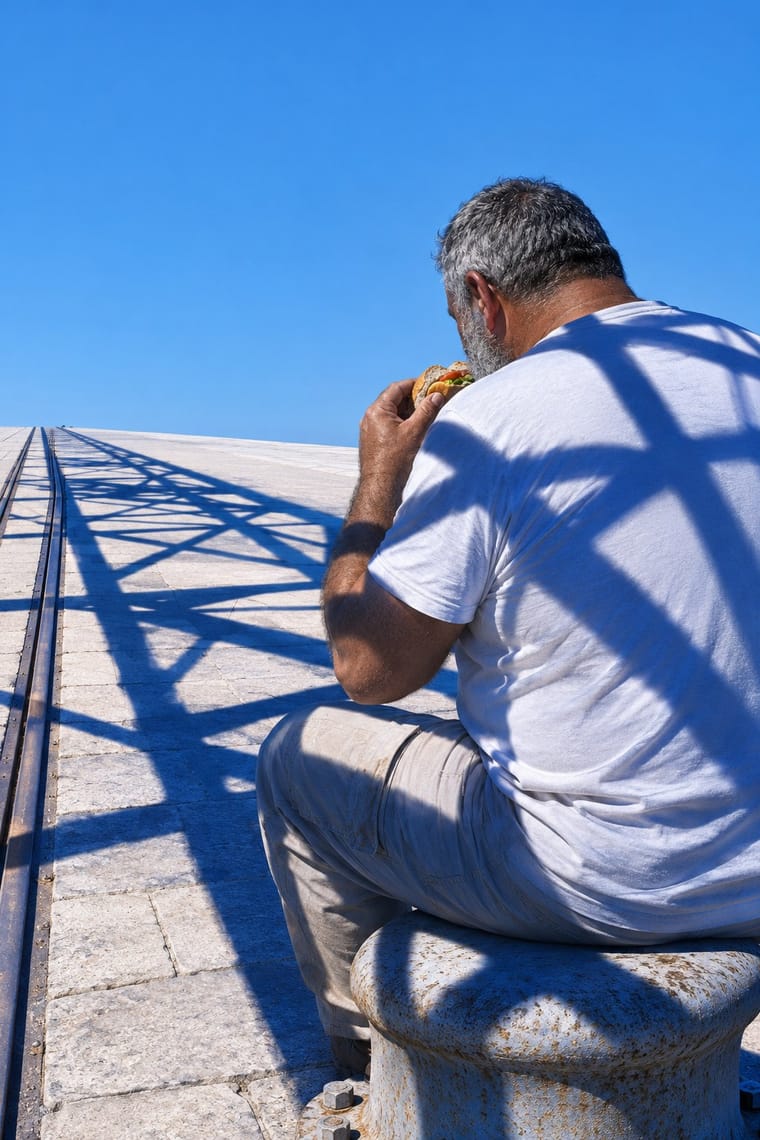
With back view Old Shadows We look past the dock worker to the rails where the crane stood under empty sky while its lattice still lies across his back, so the harbour that was is felt on him, not seen.
-

As it is 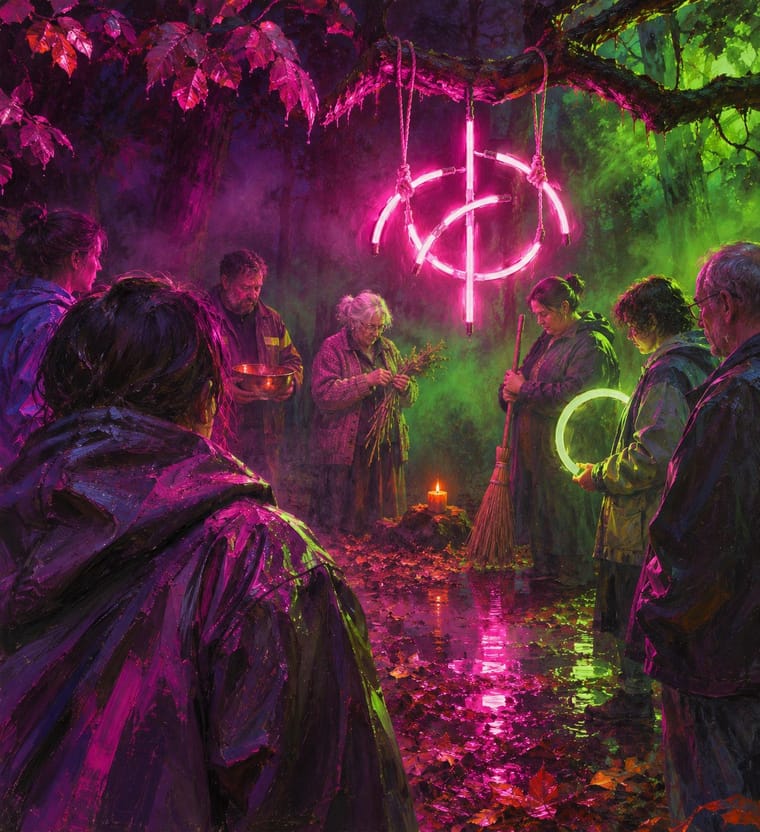
With back view Neon Witches We stand behind the last of the circle, so we are let in without being greeted.
Try it on any style
Pick a style, any style, and tell the image model:
Show the key figure from behind, facing into the scene, so the viewer looks over their shoulder at what they see.
Then write the idea in one sentence, saying what the picture shows and what that gets across. If the idea leans on the words, check it against them. A tap for the O in a headline that has no O breaks the word.
Mix styles writes the rest of the prompt for any style in the atlas, or a blend of a few. Add the line above and your sentence to it.
Where it has been used
Real works that use it, named so you can look them up. Stylogeny shows no pictures of them.
- Caspar David Friedrich’s Wanderer above the Sea of Fog (about 1818)
What it helps to say
Styles known for it 1
These styles use it often. Any other style can take it too.
- Arab Press Caricature (Rose al-Yusuf to Naji al-Ali) From 1973 Naji al-Ali's refugee child Handala stands in the panel with his back to the reader and hands clasped behind him, watching each scene as the reader does; a national symbol, not a motif to reuse.